
Local service guide
Yard Cleanup in Honolulu: Scope, Quotes and Disposal
Arrange Yard Cleanup in Honolulu by agreeing on the work areas, plants to keep and disposal method before accepting a quote. Ask for separate prices for cleanup labor and hauling. If you plan to use your green cart, check its available space and collection date: the city collects green carts every two weeks and requires the lid to close. [1]
Define the cleanup before comparing quotes
Walk through the yard and identify the finish you want: clear paths, weeded beds, collected leaves, removed fallen fronds or cut-back groundcover. Mark plants the crew should keep. Separate picking up fallen branches from cutting standing trees so both parties understand the assignment.
Send photos of the work areas, debris piles and route to the loading vehicle. Mention steps, narrow gates, steep ground and parking arrangements. Ask each provider to quote the same tasks and explain how they will charge for additional work you approve.
Request a written total that identifies labor, loading, hauling and disposal charges. For an hourly quote, ask how many workers will attend and whether the rate applies to each worker or the whole crew. Agree on a spending limit and require approval before the crew exceeds it.
Choose a disposal method before booking
Use the green cart option only after checking your collection calendar and available capacity. Honolulu collects green waste every two weeks, alternating with blue-cart recycling. The city requires material to fit inside the cart with its lid closed; it collects only material inside the cart. [1]
Ask the crew to separate vegetation from dirt, rocks, concrete and discarded yard items. The city excludes soil, rocks and construction debris from curbside refuse collection. Do not approve a plan that treats a mixed yard pile as one cart load. [1]
If you choose removal, ask the provider to identify the receiving facility and confirm that it accepts the proposed load. Request a disposal receipt where available. City resident drop-off privileges do not establish eligibility for commercial cleanup waste; the resident rules list commercial waste among prohibited items. [2]
Prepare for homeowner self-hauling
Check vehicle eligibility before renting or borrowing equipment. The city’s resident rules limit accepted delivery vehicles to sedans, SUVs, pickup trucks and minivans. For a rental, the householder must hold the rental agreement and attend delivery. Residents with trailers or larger rental vehicles need preapproval for a transfer station and cannot use a convenience center. [2]
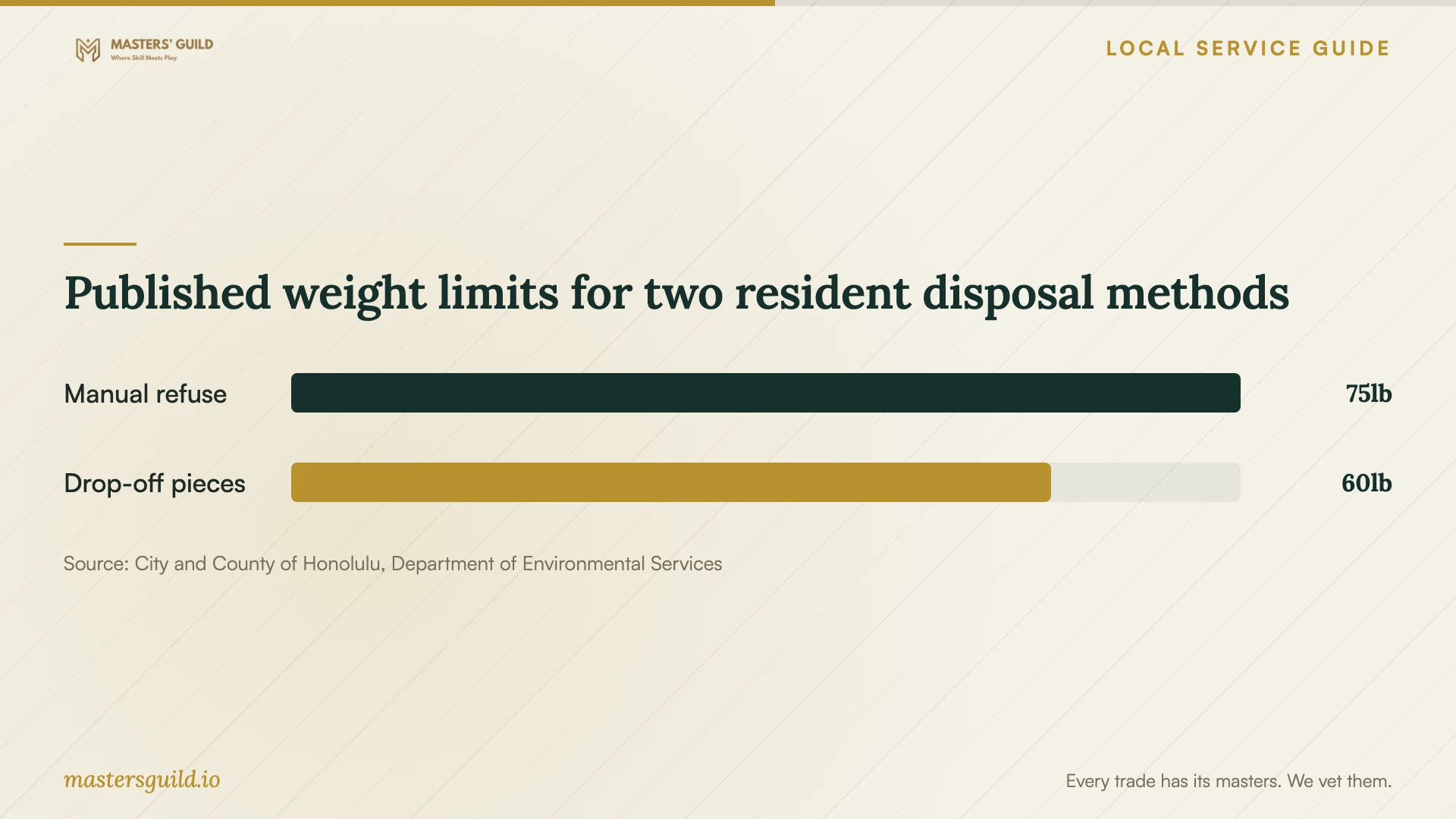
Sort the load before leaving home. At resident drop-off sites, the city accepts loose green waste without plastic bags, including leaves, grass clippings, branches, palm fronds and coconuts. It limits accepted stumps and logs to less than 9 inches in diameter. Material that can be cut or broken down must measure less than 6 feet long and weigh less than 60 pounds. [2]
Plan unloading help and allow for a change of destination. City attendants cannot assist with unloading, and facilities can close without notice because of heavy use or equipment breakdowns. Residents have a two-load daily limit at city disposal sites, including the city’s green-waste contractor in Wahiawa. [2]
Address old organic piles before moving them
Tell the provider about old compost, mulch, stumps and rotting wood. The Hawaii Invasive Species Council identifies these materials, along with grass clippings and other decomposing organic matter, as coconut rhinoceros beetle breeding habitat. Ask the crew to inspect accumulated material before loading it. [3]
If you suspect beetles or larvae, pause plans to move the material and seek handling guidance. The council advises against transporting mulch and directs Oʻahu residents to the CRB Response team at 808-679-5244 for assistance. It also advises against cutting down an infested tree as a response because beetles may move to another tree. [3]
Agree on the final condition of the yard before the crew begins. Include removal of approved piles, cleanup of the loading area and a walkthrough before payment. Photograph anything you want left untouched, including compost you intend to retain.
Published weight limits for two resident disposal methods
Local details that affect your job
Extra cart requests are paused
As of October 15, 2026, the city is not accepting additional green or blue cart requests during its October 1, 2026, to January 31, 2027, suspension. Requests resume February 1, 2027. For a cleanup during this period, arrange around your existing capacity or include hauling in the quote. [1]
Dirt and rocks need a separate route
For homeowner drop-off, the city directs dirt, rock, sand, concrete and similar noncombustible waste to Kapaʻa Transfer Station or Waimanalo Gulch Sanitary Landfill. Kapaʻa accepts up to five 5-gallon buckets per day; Waimanalo Gulch accepts up to two standard pickup loads per day. Separate these materials before asking a provider to price vegetation removal. [2]
Oʻahu has a beetle assistance contact
The Hawaii Invasive Species Council lists containment as the coconut rhinoceros beetle intervention approach on Oʻahu and gives residents a local assistance number, 808-679-5244. Use that contact to clarify handling before moving suspect mulch or decomposing debris. [3]
Choose the cleanup and disposal arrangement
| Your situation | Arrangement to consider | Confirm before booking |
|---|---|---|
| Vegetation fits in your available green cart | Cleanup with cart filling | Collection date and a closed lid; green-cart collection runs every two weeks. |
| You intend to drive the debris yourself | Cleanup with sorted piles for self-hauling | Eligible vehicle, preparation limits and help unloading; attendants cannot unload. |
| You want debris gone when work ends | Cleanup with provider hauling | Receiving facility and load eligibility; resident sites prohibit commercial waste. |
| You find larvae in old mulch or compost | Seek handling guidance before moving the pile | Oʻahu CRB Response assistance at 808-679-5244. |
Your hiring checklist
- Photograph the yard, piles, gate and loading route.
- Mark plants to keep and identify areas the crew should avoid.
- Choose cart filling, homeowner self-hauling or provider hauling.
- Ask for an itemized quote and a limit on extra charges.
- Confirm the disposal destination for each material type.
- Flag suspect mulch or larvae before anyone moves the pile.
- Arrange access, secure pets and identify irrigation equipment.
- Inspect the finished areas and loading spot with the crew.
Frequently Asked Questions
How much should I budget for a cleanup?
Request a quote for your actual scope rather than relying on a citywide figure. Give providers the same photos and task list, then compare labor, loading, hauling and disposal charges. Ask whether they price the whole job or charge by worker-hour, and agree on how they will handle extra debris.
Can the crew leave bags beside my green cart?
Do not arrange overflow beside an automated cart for city pickup. Honolulu collects only material inside the cart and requires the lid to close. Agree on removal or another disposal arrangement for the excess. [1]
Can I rent a truck to take the debris to a city site?
The resident rules allow specified vehicle types, including pickup trucks, with the rental agreement in the householder’s name and the householder present. Trailers and larger rental vehicles require preapproval for a transfer station. Confirm eligibility before reserving equipment. [2]
Should I have a damaged palm removed during cleanup?
Keep that decision separate from routine debris pickup if you suspect coconut rhinoceros beetle damage. The state council identifies boreholes and V-shaped frond damage as signs of feeding and advises against cutting down an infested tree as a response. Ask the Oʻahu CRB Response team for guidance. [3]
Sources and scope
This guide combines the sources below with practical planning guidance. Figures apply to the stated geography and period; request a written quote for your property.