
Local service guide
Wall Painting in Honolulu: Quotes and Hiring Checks
Arrange Wall Painting in Honolulu by giving each painter the same room list, repair scope, and finish requirements, then compare complete written totals. Hawaii requires a contractor license for projects exceeding $1,500 in labor and materials or requiring a building, electrical, or plumbing permit. For a home built before 1978, discuss lead-safe preparation before anyone disturbs existing paint. Confirm who will protect furniture, handle cleanup, and return for agreed touch-ups before you book. [1] [2]
Define the job before requesting prices
Write down which rooms and wall surfaces you want painted. Separate walls from ceilings, trim, doors, closets, and exterior surfaces. Send photos of peeling areas, cracks, stains, and previous patches. Ask the painter to inspect those areas before giving a firm price, and identify any repair work that needs a separate quote.
Specify your preferred color and sheen, then ask each bidder to name the paint and primer products they propose. Agree on the planned coats and how the painter will handle coverage problems. Request a sample patch before approving a room-wide color change. Review it in the lighting you use during the day and evening.
For a condo, ask your building manager about contractor access, work hours, elevator reservations, parking, and protection of shared areas. Pass those instructions to bidders before they price the job. Do not assume a painter's quote includes moving heavy furniture or arranging building access.
Check Hawaii contractor credentials
Hawaii DCCA states that a contractor license is required for any project exceeding $1,500 in labor and materials, and for any project requiring a building, electrical, or plumbing permit. Use the complete project scope when discussing that threshold with the painter. Ask DCCA to clarify your situation if the proposed work or licensing requirement is uncertain. [1]
Get the contractor's business name and license number before paying a deposit. DCCA's hiring page provides official license-check resources and lists 844-808-3222 for licensing and business registration information. Verify the current status and confirm that the contractor's authorization covers your proposed work. Keep the checked details with your quote. [1]
DCCA states that licensed contractors carry workers' compensation and liability insurance. Ask for current insurance documentation and confirm which business will sign the agreement and supply the workers. Put the scope, payment stages, exclusions, and procedure for approving extra work in writing. [1]
Resolve old-paint questions before preparation
Check your home's construction date before approving sanding or scraping. Hawaii Department of Health says manufacturers used lead in house paint until 1978 and that renovation, repair, or painting in older buildings can create dangerous lead dust. Tell the painter the building's age and identify the surfaces they intend to disturb. [2]
The health department advises homeowners to check a contractor's lead-safe firm certification, ask to see training documentation, and require a clear explanation of setup, work methods, and cleanup. Ask how the crew will separate the work area from occupied rooms and protect children and pets. Record the agreed methods in the contract. [2]
If you need to establish whether lead hazards exist, ask a Hawaii State Certified Lead Inspector/Risk Assessor about an appropriate inspection. The health department cautions that home lead-test kits are not a good way to determine whether a home is safe from lead. Avoid treating a store-bought swab result as permission to start ordinary preparation. [2]
Compare complete totals and separate inspection costs
Request a total that identifies labor, materials, repairs, access charges, and any GET pass-on. Hawaii's tax department lists Honolulu's county surcharge as 0.5% for activities taxed at the 4.0% rate. Businesses may choose to pass on GET and the applicable surcharge; the maximum Honolulu pass-on rate is 4.7120%. Ask whether the bidder has included it in the total. [3]
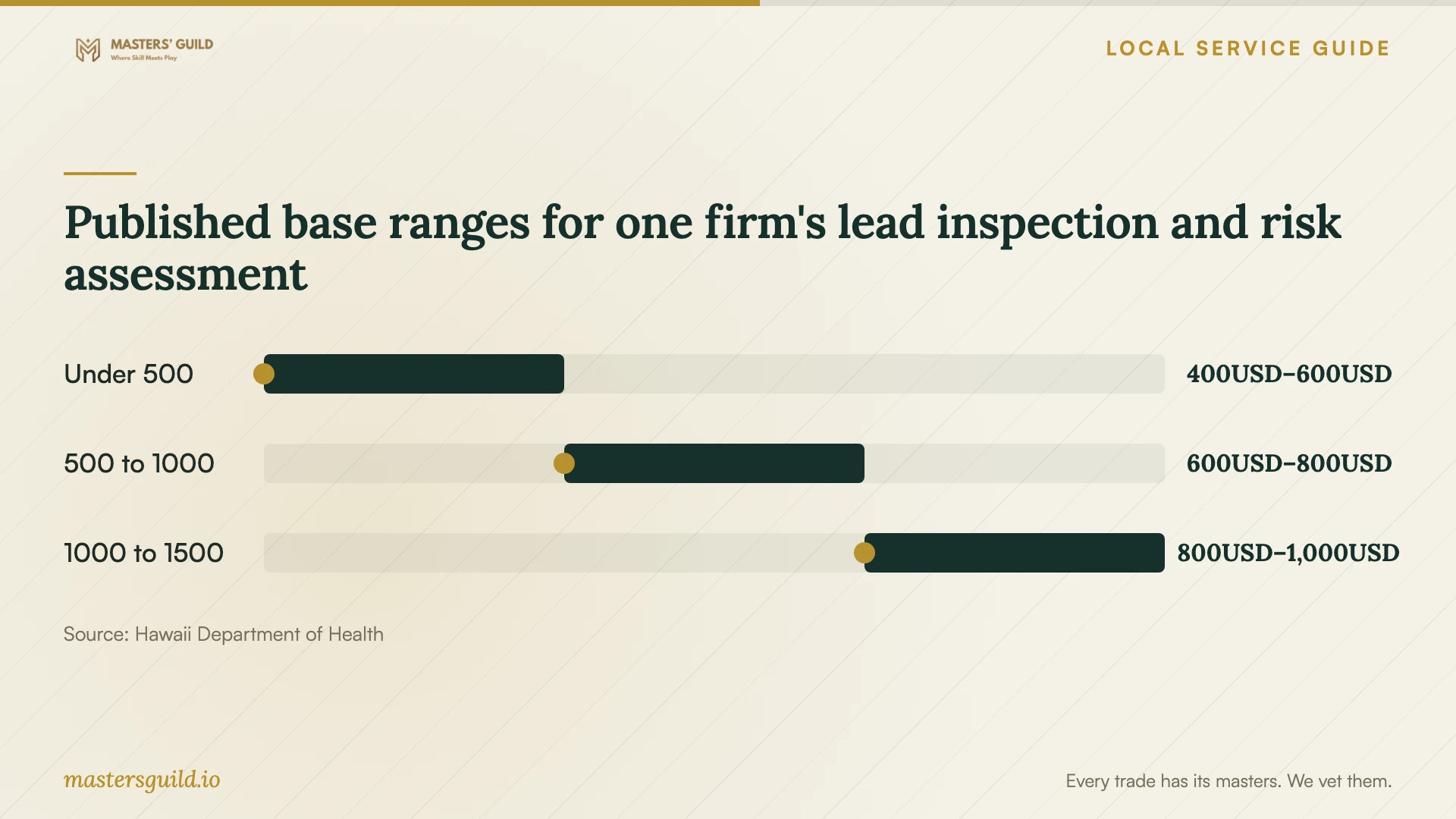
Use the inspection chart only if you are considering lead assessment. It shows one firm's base ranges published by Hawaii Department of Health for combined lead-based paint inspection and lead risk assessment using XRF. These amounts cover that inspection service, not painting, preparation, or lead removal. Confirm the scope and current price with the firm before booking. [2]
The department says its listed estimates may be lower than usual offers, advises readers to mention the HI-CLPPP website, and does not endorse or guarantee the firms' services. Its table lists potential extra charges for sampling and work outside the core Honolulu service area. Ask the inspector to identify all additions and tax in a written total. [2]
Agree on room access and acceptance
Ask for a schedule that separates preparation, priming, painting, and your final inspection. Have the painter explain product-specific drying, ventilation, and return-to-use instructions. Decide which rooms you can keep available while the crew works, where you will move belongings, and who will reconnect or replace items removed for access.
Before approving the final payment, walk through the rooms with the painter. Inspect repaired areas, coverage, edges, and any accidental paint on fixtures or flooring. Write down agreed corrections and a return date. Ask for labeled leftover paint and the product and color details so you can arrange future touch-ups.
Published base ranges for one firm's lead inspection and risk assessment
Local details that affect your job
Hawaii's licensing trigger affects your shortlist
For a project exceeding $1,500 in combined labor and materials, Hawaii DCCA requires a contractor license. A permit requirement also triggers licensing. Before accepting a multi-room quote, obtain the contractor's name and license number and use DCCA's official checking resources. Do not apply a generic assumption that painting contractors need no license. [1]
Honolulu GET changes how you compare quotes
Honolulu's maximum optional GET pass-on rate is 4.7120%. A business may choose to absorb the tax rather than pass it on. Ask each painter for the amount you will pay, including any pass-on, so you can compare bids without guessing which tax treatment the bidder used. [3]
A Hawaii program helps you arrange lead assessment
Hawaii Department of Health publishes combined inspection and risk-assessment estimates and asks residents to mention its HI-CLPPP website when arranging those services. It also offers lead-prevention help by call or text at 808-733-9012. For an older home, use that resource to discuss lead concerns before approving paint disturbance, and ask an inspector whether travel or sampling charges apply to your address. [2]
Choose your next step before booking
| Your situation | Next step | What to confirm |
|---|---|---|
| Project exceeds $1,500 in labor and materials | Verify the contractor license through DCCA | Current status and authorization for the proposed scope |
| Pre-1978 home with planned paint disturbance | Discuss lead-safe work and assessment before preparation | Firm certification, work methods, containment, and cleanup |
| Quotes use different tax wording | Request complete payable totals | Whether each bidder includes or passes on GET |
| Condo with shared access | Ask the building manager for work and access instructions | Elevator, parking, work hours, and shared-area protection |
| Walls show damage or staining | Ask for inspection and a written repair scope | Who handles the underlying issue and which repairs the price includes |
Your hiring checklist
- List the rooms, surfaces, colors, and repairs you want included.
- Confirm building access arrangements and responsibility for moving furniture.
- Get the contractor's business name, license number, and insurance documentation.
- Establish the home's construction date and discuss lead-safe preparation where relevant.
- Request named paint products, coat scope, exclusions, and a complete payable total.
- Agree on payment stages and written approval for additional work.
- Record room-access instructions, final inspection arrangements, and touch-up responsibilities.
Frequently Asked Questions
Does a Honolulu wall painter need a contractor license?
Hawaii DCCA requires a contractor license for projects exceeding $1,500 in labor and materials or requiring a building, electrical, or plumbing permit. Get the contractor's name and license number and verify the current status before accepting the agreement. [1]
Should I test older paint before repainting?
For a pre-1978 home, discuss the existing paint and planned disturbance before approving preparation. Hawaii Department of Health recommends certified inspection to identify lead hazards and cautions against using home test kits to establish that a home is safe from lead. Ask what assessment fits your project. [2]
Will the painter add tax to the quote?
Ask the painter. Businesses may choose whether to pass on GET and the applicable county surcharge. Hawaii's tax department lists Honolulu's maximum pass-on rate as 4.7120%. Request a total that makes any pass-on clear. [3]
How can I compare prices without a reliable local average?
Give bidders the same surface list and repair instructions. Compare named products, preparation, planned coats, furniture handling, cleanup, and exclusions. Ask each painter to inspect the job and give a written total before choosing.
Sources and scope
This guide combines the sources below with practical planning guidance. Figures apply to the stated geography and period; request a written quote for your property.