
Local service guide
Tree Cutting in Honolulu: Hiring and Planning
Arrange Tree Cutting in Honolulu by defining which trees need assessment, pruning, or removal, then request a written scope that covers access, debris, and stump work. Check power-line conflicts before choosing a crew: Hawaiian Electric recommends licensed and insured line-clearance-qualified contractors for work near power lines. For damaged palms, include pest assessment and a debris-handling plan before authorizing removal or hauling. [1] [2]
Choose the work before comparing quotes
Describe the outcome you want before asking for a price. Identify the tree and explain whether you want to keep it, investigate damage, clear a specific obstruction, or remove it. Ask the person assessing the tree to explain the proposed cuts and any alternative to removal. Keep that explanation with the quote so you can compare the same work across bidders.
For a removal quote, ask whether the contractor includes the trunk, stump grinding, exposed roots, hauling, and final cleanup. Specify whether you want to retain logs or chips. For pruning, identify the branches or clearance goal rather than accepting a description such as trim tree. Request a separate price for optional work so you can decide what to authorize.
Ask who will assess the tree and who will supervise the crew. Request evidence of the credentials and insurance the company claims, and ask how its proposed equipment will reach the work area. Have the contractor identify any permission or utility coordination it expects you to arrange before booking.
Resolve electrical conflicts before booking
Hawaiian Electric distinguishes its line-maintenance work from branches affecting a homeowner’s service drop, the line from the utility pole to the home. It says it does not typically prune around service drops. If branches strain or abrade that line, call its tree-trimming contact at (808) 543-7836 or hire a line-clearance tree contractor. [1]
Ask a prospective crew to explain its qualification for work near electrical lines. Hawaiian Electric defines a line-clearance-qualified contractor as a company with an ongoing safety program that includes training, equipment maintenance, and inspections. The utility recommends written quotes from licensed and insured line-clearance-qualified contractors for tree work near power lines. [1]
Explain the electrical conflict when requesting the visit, and take photographs from a safe position. Ask who will contact the utility and what must happen before cutting starts. Keep yourself and garden tools away from the affected branches; Hawaiian Electric warns that contact involving a service drop can cause injury or death. [1]
Include palm pests and debris in the scope
The Hawaii Department of Agriculture and Biosecurity identifies V-shaped cuts in palm fronds and holes through their midribs as signs of coconut rhinoceros beetle feeding. The department advises owners who suspect an infestation on private property to contact a pest control company. Ask for an assessment before treating visible damage as a reason to remove the palm. [2]
Discuss the stump and waste plan before accepting the hauling portion of a quote. The department says beetle larvae breed in decaying organic material, including mulch, green waste, and dead palm stumps. It advises against maintaining large, undisturbed piles and calls for checking transported mulch or green waste for beetles and larvae. [2]
If you suspect beetles, ask the pest professional and tree contractor to agree on handling instructions before anyone moves material. The department warns against moving or disposing of suspected beetles yourself because you could spread them. Its guidance also requires treatment and certification before transporting plants or soil from Oahu to other islands. [2]
Agree on access, scheduling, and cleanup
Walk through the proposed access route with the contractor. Point out gates, steps, irrigation, parked vehicles, and the areas you want protected. Ask where the crew plans to place equipment and debris. Agree on who will clear those spaces and how the crew will leave the site at the end of each workday.
For its tree crews, Hawaiian Electric asks residents to move vehicles and garden equipment, unlock gates when crews are in the area, and secure animals. Use those preparations as a starting point, then ask your hired contractor for instructions specific to your property. [1]
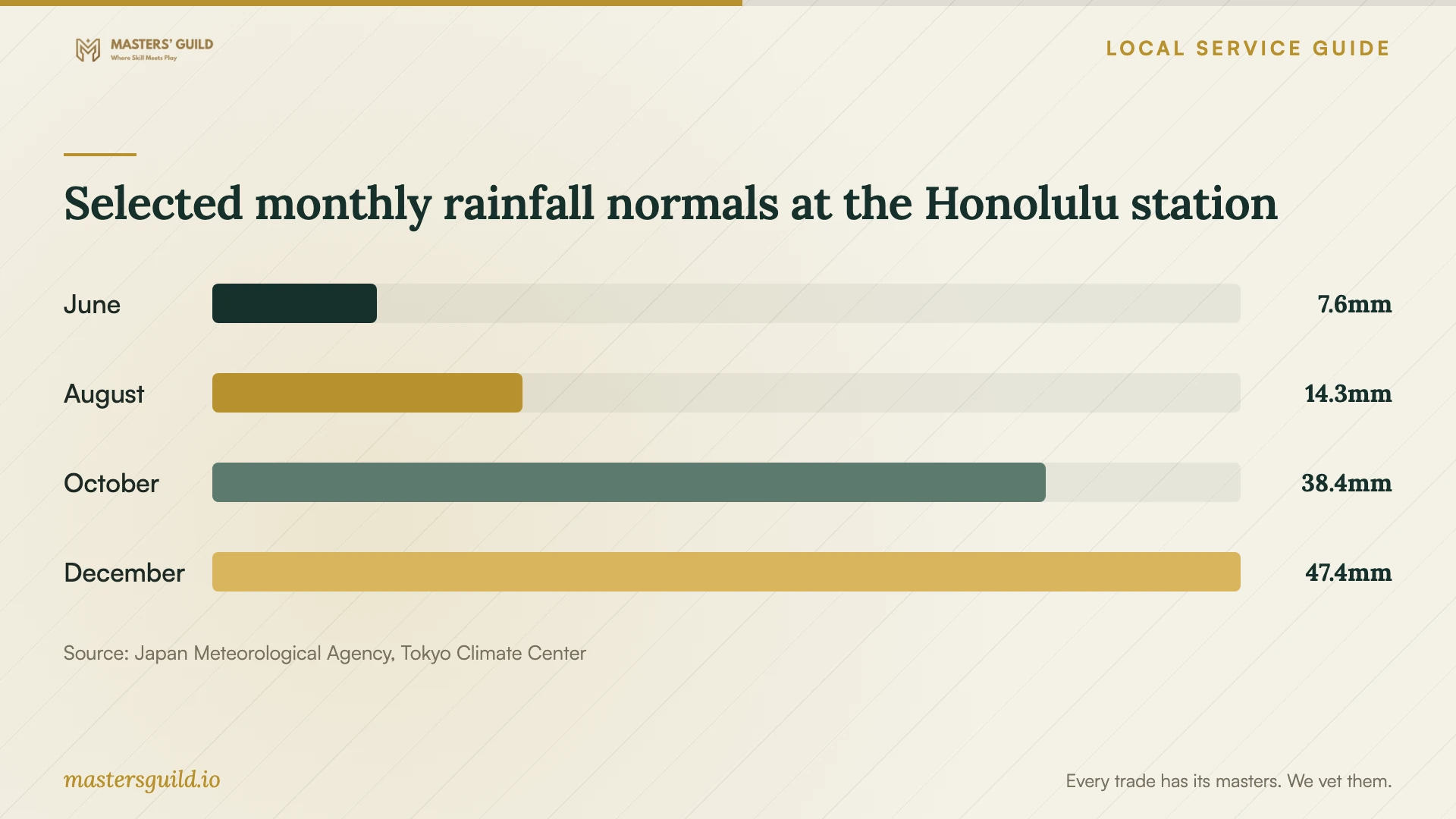
Ask how the contractor will handle weather delays and whether it needs firm ground for equipment access. The published Honolulu station climate table records monthly precipitation normals of 7.6 mm for June and 47.4 mm for December. Use the chart as background for discussing scheduling; ask the contractor to assess conditions at your property before work. [3]
Selected monthly rainfall normals at the Honolulu station
Local details that affect your job
Service-drop pruning needs a separate conversation
Do not assume Hawaiian Electric’s maintenance crews will clear the line connecting the pole to your home. The utility says it does not typically prune that service drop. For branches rubbing or straining it, call (808) 543-7836 or arrange a line-clearance tree contractor before confirming an ordinary pruning visit. [1]
Suspected palm pests change the hauling plan
For suspected coconut rhinoceros beetle damage on your property, the state department directs you to a pest control company. Include the stump, chips, and green waste in that discussion because larvae can breed in those materials. If your contractor proposes moving plants or soil from Oahu to another island, ask how it will arrange the required treatment and certification. [2]
Choose the next step for your tree
| Situation | Next step | Include in the discussion |
|---|---|---|
| Branches strain or rub the service drop | Call Hawaiian Electric or a line-clearance tree contractor | Responsibility for pruning and coordination before cutting |
| Tree work involves nearby power lines | Request a licensed and insured line-clearance-qualified contractor | Safety program, qualifications, and written quote |
| Palm fronds have suspected beetle damage | Contact a pest control company for private-property assistance | Assessment before deciding on cutting or removal |
| Removal involves suspected beetles or affected waste | Agree on handling with the professionals before moving material | Stump, mulch, green waste, and destination |
Your hiring checklist
- Identify each tree and photograph the work area from a safe position.
- Write down whether you want assessment, pruning, removal, or separate options.
- Flag nearby electrical lines when requesting the quote.
- Ask who will assess the tree and supervise the work.
- List stump work, hauling, retained chips, and cleanup in the written scope.
- Discuss suspected palm pests before authorizing debris movement.
- Agree on equipment access, pet containment, and vehicle relocation.
- Confirm weather-delay arrangements and responsibility for any permissions.
Frequently Asked Questions
Will Hawaiian Electric trim branches touching my service drop?
Hawaiian Electric says it does not typically prune around the service drop from the pole to your home. If branches strain or abrade it, call (808) 543-7836 or hire a line-clearance tree contractor. Do not attempt to clear the branches yourself. [1]
What should a tree-removal quote include?
Ask for the identified tree, removal scope, equipment access, stump treatment, hauling, cleanup, and exclusions. Request separate prices for optional work. Have the contractor explain who will arrange any needed permissions or utility coordination before you accept.
Should I remove a palm with V-shaped cuts in its fronds?
Arrange a pest assessment before authorizing removal. The state department identifies V-shaped cuts as a sign of coconut rhinoceros beetle feeding and directs private-property owners with suspected infestations to a pest control company. Discuss debris handling as part of that assessment. [2]
Can I keep the wood chips?
Ask the contractor to include retained chips in the scope and agree on where to place them. Discuss pest concerns before keeping palm debris or mulch: the state department identifies decaying organic piles as beetle breeding sites and advises against large, undisturbed piles. [2]
Sources and scope
This guide combines the sources below with practical planning guidance. Figures apply to the stated geography and period; request a written quote for your property.