
Local service guide
Tile setting in Honolulu: Hiring and Project Planning
Tile setting in Honolulu requires a licensed contractor when the project exceeds $1,500 in labor and materials or requires a building, electrical or plumbing permit, according to Hawaii DCCA. Define removal, surface preparation and installation before comparing written quotes. Include hauling and tax treatment in that comparison. For a shower, request the waterproofing scope and return-to-use instructions before agreeing to a schedule. [1]
Define the installation before requesting bids
Give each bidder room dimensions, photographs, your chosen tile and the proposed pattern. Identify whether you want the existing finish removed or want the installer to assess an installation over it. Request a surface inspection and a written preparation proposal before approving either approach.
For floors, discuss finished height at doorways, adjoining rooms and appliances. For a backsplash, mark outlets, exposed edges and stopping points. For a shower, request a description of the waterproofing system, drain connection, corners and penetrations. Name the person responsible for coordinating any plumbing changes.
Have bidders identify conditions they cannot assess until demolition. Agree on how they will document concealed damage, price additional preparation and obtain your approval before proceeding. Keep your tile and layout choices consistent while comparing proposals.
Verify licensing and assign permit responsibility
Hawaii DCCA requires a contractor’s license for projects exceeding $1,500 in labor and materials and for projects requiring a building, electrical or plumbing permit. Get the contractor’s name and license number, then use the verification resources on DCCA’s hiring page. [1]
DCCA states that electrical and plumbing contractors must employ licensed electricians and plumbers to perform the respective work. For a project involving drain changes or wiring, identify the contractor and workers responsible for those tasks before signing. [1]
Request a written explanation of whether your exact scope requires permits and who will obtain them. If you live in a condominium, obtain management’s renovation requirements before setting the start date. Discuss building approval and government permits as separate questions.
Compare complete quotes and tax treatment
Request a quote that identifies tile supply, delivery, removal, preparation, setting, grout, edge trim and disposal. For wet areas, include the proposed waterproofing work. Record allowances and exclusions, especially any preparation the contractor will price after opening the floor or wall.
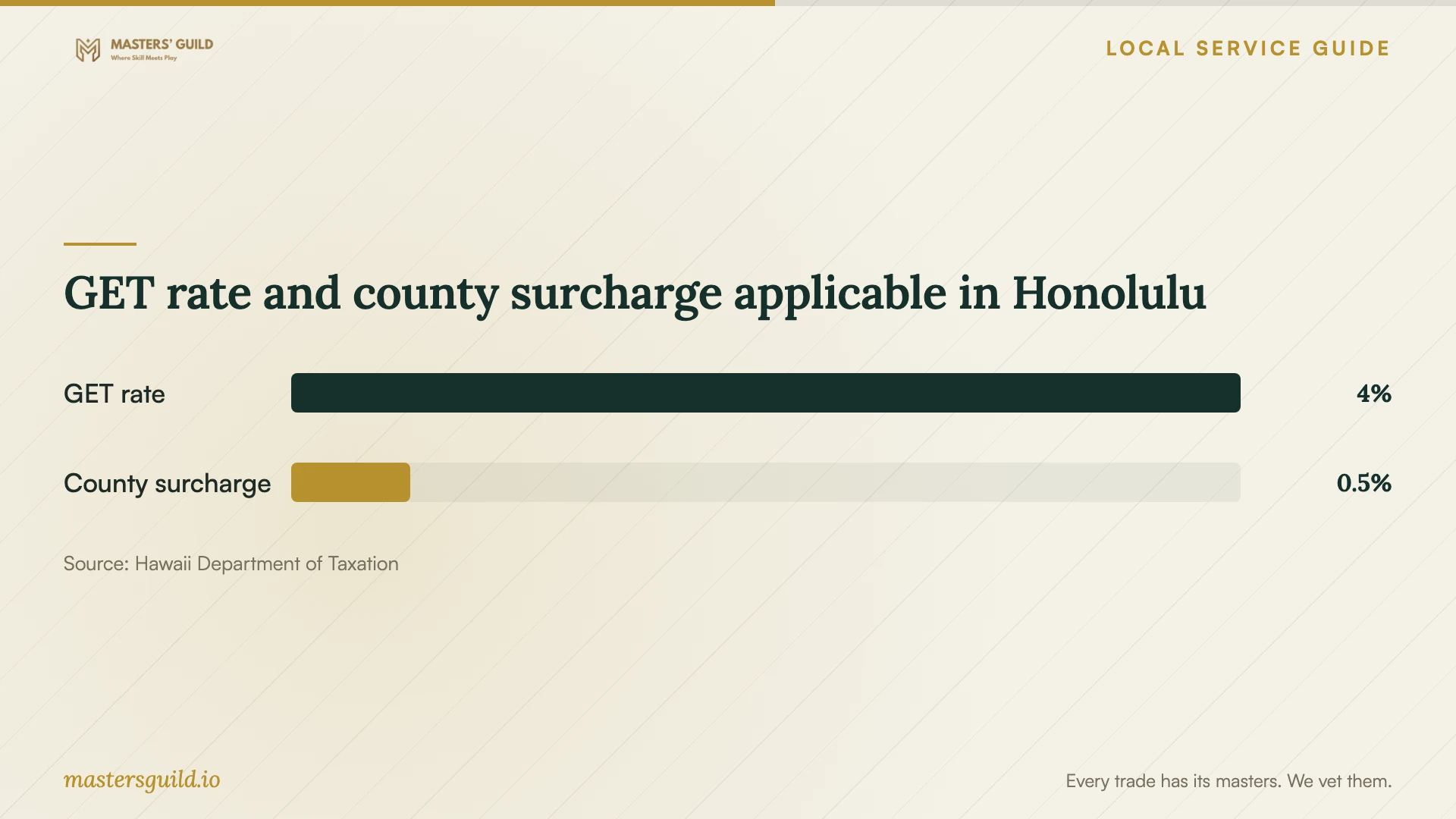
Hawaii’s Department of Taxation lists Honolulu’s county surcharge as 0.5% on activities taxed at the 4.0% rate. Businesses may choose to pass GET and the applicable surcharge on to customers. The published maximum Honolulu pass-on rate is 4.7120%, effective through December 31, 2030. [3]
Have each bidder state whether the total includes a tax pass-on or whether they will add it. Compare final payable amounts alongside the included work. Agree on payment milestones, written change approval and the documents you want at handover, including product names, care instructions and warranty terms.
Plan access, hauling and return to use
Decide where the crew can cut tile, store materials and carry debris out. Discuss protection for adjoining rooms and shared corridors. For a condominium, confirm permitted work hours, elevator reservations, loading access and the documents management wants from the installer.
Honolulu’s resident rules direct tile and other listed non-combustible materials to Kapaʻa Transfer Station or Waimanalo Gulch Sanitary Landfill, also called WGSL. Kapaʻa accepts up to five 5-gallon buckets of these materials per day; WGSL accepts up to two standard pickup truck loads per day. Vehicle and waste-origin restrictions also apply. [2]
Have the contractor name the disposal destination and include hauling in the quote if they will remove the tile. For homeowner hauling, confirm eligibility with the city before loading your vehicle. Do not assume resident drop-off privileges cover contractor debris. [2]
Request separate dates for installation completion and permission to walk on, clean or wet the finished surface. Tie those instructions to the products the installer proposes. For an exposed lanai, agree on rain protection and a contingency schedule before work begins.
GET rate and county surcharge applicable in Honolulu
Local details that affect your job
Count materials toward Hawaii’s licensing threshold
Include labor and materials when checking whether the project exceeds $1,500. DCCA requires a contractor’s license above that amount or when the project requires a building, electrical or plumbing permit. Verify the contractor before committing to demolition. [1]
Choose a disposal route before removing tile
Honolulu designates Kapaʻa Transfer Station and WGSL for resident tile disposal, with different quantity limits at each. The resident rules also restrict vehicles and prohibit commercial waste. Have the installer arrange an appropriate route for contractor debris; check eligibility before taking on hauling yourself. [2]
Resolve the GET pass-on before comparing totals
The state allows businesses to choose whether to pass GET and the applicable surcharge on to customers. Honolulu’s published maximum pass-on is 4.7120% through December 31, 2030. Request the final payable amount so an added tax charge does not obscure your comparison. [3]
Resolve the scope before approving a quote
| Project | Request in the quote | Resolve before approval |
|---|---|---|
| Dry-area backsplash | Preparation, outlet cuts and exposed-edge finish | Layout and responsibility for electrical coordination |
| Floor replacement | Removal, surface inspection, preparation and transitions | Finished height and approval of concealed repairs |
| Shower renovation | Waterproofing scope, drain coordination and return-to-use instructions | Responsibility for plumbing and permit checks |
| Exposed lanai | Proposed materials, preparation and weather protection | Rain contingency and access during installation |
| Homeowner debris hauling | A disposal plan checked against Honolulu’s resident rules | Eligible vehicle, waste origin, designated site and quantity limits |
Your hiring checklist
- Send each bidder the same photos, dimensions, tile selection and layout request.
- Request an inspection and a written surface-preparation scope.
- Verify the contractor’s name and license number; request insurance documentation.
- Assign responsibility for permit checks and plumbing or electrical coordination.
- Confirm access, work hours, cutting space and material storage.
- Name the debris hauler and disposal destination in the quote.
- Record the final payable amount and the process for approving changes.
- Get return-to-use instructions, care guidance and warranty terms in writing.
Frequently Asked Questions
Does a tile installer need a contractor’s license?
Hawaii DCCA requires a contractor’s license when the project exceeds $1,500 in labor and materials or requires a building, electrical or plumbing permit. Get the contractor’s name and license number and verify them through DCCA’s resources. [1]
Can I take removed tile to a city disposal site?
Confirm eligibility before loading. Honolulu directs resident tile disposal to Kapaʻa Transfer Station or WGSL, subject to vehicle and waste-origin restrictions. Kapaʻa accepts up to five 5-gallon buckets per day; WGSL accepts up to two standard pickup truck loads per day. Arrange contractor debris disposal with the installer. [2]
How much should I budget for installation?
Request an inspected, written quote for your selected tile and room. Have bidders itemize preparation, removal, installation, proposed waterproofing and hauling. Request the final payable amount, including any tax pass-on, and compare allowances and exclusions before choosing.
How long will I lose use of the room?
Request a schedule tied to the proposed products and scope. Have the installer identify demolition, installation, grouting and return-to-use dates. For a shower, obtain written instructions on when you can wet the finished installation before arranging your household around the completion date.
Sources and scope
This guide combines the sources below with practical planning guidance. Figures apply to the stated geography and period; request a written quote for your property.