
Local service guide
Roof Cleaning and Repair in Honolulu: Hiring Guide
For Roof Cleaning and Repair in Honolulu, arrange an inspection and separate cleaning from repairs before approving a written quote. Ask the provider to document roof-material compatibility, access arrangements and permit responsibility. Hawaii DCCA requires a contractor license for projects exceeding $1,500 in labor and materials or requiring a building, electrical or plumbing permit. Verify the contractor and confirm the proposed repair scope with Honolulu’s Department of Planning and Permitting before setting a start date. [1] [2]
Define what you want the provider to resolve
Describe visible staining, accumulated debris, damaged roofing and any water you have noticed indoors. Take photographs from the ground. Record the room, location and timing of a leak, then ask the provider to inspect that concern before you approve cleaning. Request photographs and an explanation of each proposed repair.
For cleaning, ask for the method, products and compatibility with your roof material in writing. Have the provider consult the manufacturer’s maintenance instructions. Discuss protection for landscaping, gutters, neighboring property and rooftop equipment. Identify solar panels in your request and ask who will handle any work around them.
For repairs, request the location, materials and preparation for each item. Ask what the crew will inspect before covering the repair and what completion photographs you will receive. Keep optional treatments separate so you can approve them on their own merits.
Verify the contractor and permit responsibility
DCCA requires a contractor license for projects exceeding $1,500 in labor and materials and for projects requiring a building, electrical or plumbing permit. Get the business name and license number, then use the verification resources on DCCA’s hiring page. If the scope combines cleaning and repairs, ask DCCA to clarify the licensing requirement for the complete project. [1]
DCCA states that licensed contractors carry workers’ compensation and liability insurance. Request current insurance documentation and compare the business name with the name on your quote. Ask the regulator about license coverage if the proposed work is unclear. [1]
Honolulu DPP bases building-permit requirements on ROH Chapter 18. Confirm the requirement for your repair description rather than assuming that the provider’s maintenance label establishes an exemption. Record who will submit the application, pay fees and arrange inspections. [2]
Compare written quotes
Give each provider the same photographs and requested scope. Compare the roof areas included, repair materials, gutter work, debris removal, access equipment and cleanup. Ask for a total with exclusions and applicable charges identified. Clarify any inspection charge and whether the provider credits it toward approved work.
Ask how the provider will price concealed damage discovered during the job. Require photographs, a written description and your approval before additional work starts. Agree on payment stages and obtain written warranty terms for repairs.
DPP calculates permit fees using project value based on fair-market labor and materials. It also applies plan-review fees when plans are required. Ask the contractor to distinguish government fees from their application or administration charges and show the applicable fee calculation. [2]
Plan access and weather decisions for your property
Discuss parking, equipment placement, water access and pedestrian routes before booking. Ask how the crew will protect occupants and manage wash water. For a shared roof, obtain authorization from the owner or association responsible for the building.
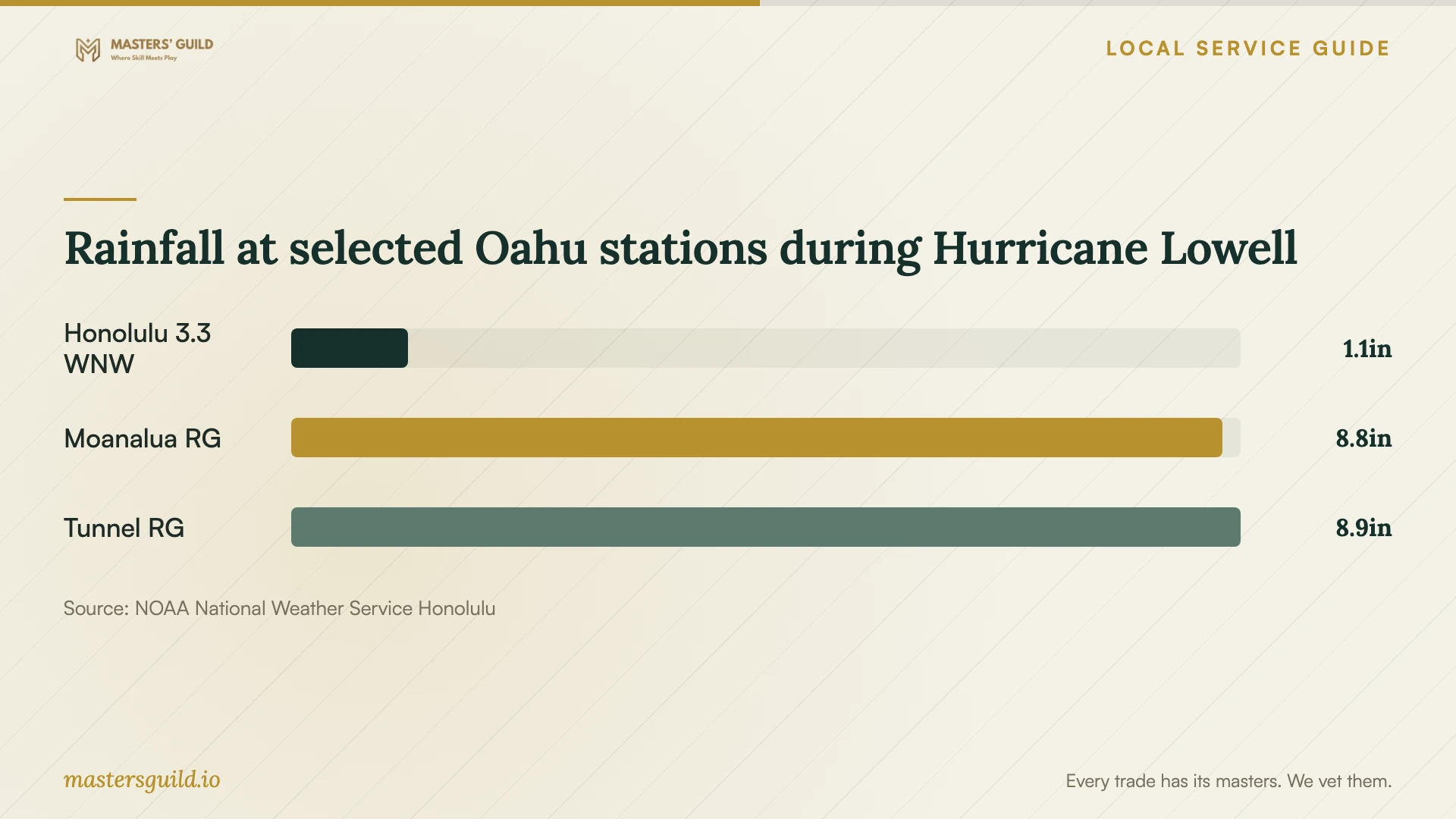
During Hurricane Lowell in September 2026, NWS Honolulu reported 72-hour rainfall totals of 1.10 inches at Honolulu 3.3 WNW and 8.77 inches at Moanalua RG. These observations describe separate stations during one event. Ask the provider to assess your roof and current conditions rather than treating a nearby station’s rainfall as a measurement at your home. [3]
Agree on the weather and surface conditions the provider requires for the proposed products and repair materials. Set a notification process for postponements. If you report a leak, request an assessment and ask what temporary protection the contractor proposes while arranging the permanent repair.
Collect completion records
Walk through the completed scope with the provider using photographs. Ask them to identify unfinished items, explain follow-up care and record any recommendation for further assessment. Keep the quote, approved changes, invoice and warranty together.
For permitted work, ask who will contact the assigned inspector and obtain closeout records. DPP directs applicants to the assigned building inspector to close a building permit. Include that responsibility in the agreement before work begins. [2]
Rainfall at selected Oahu stations during Hurricane Lowell
Local details that affect your job
Equipment staging can require street-usage permission
Honolulu DPP says construction or maintenance work on or near a city street requires a street-usage permit when it temporarily obstructs a roadway or sidewalk. The Department of Transportation Services processes these permits. Ask the provider to identify any proposed obstruction and assign responsibility for permission before confirming the work date. [2]
Emergency repairs still have an application deadline
DPP’s emergency-work provision allows emergency work to commence without a permit if the applicant submits the required building-permit application on the working day immediately following commencement. DPP instructs applicants to put emergency work in the job description and warns against using this provision for non-emergency work. Have the contractor confirm eligibility and name the person responsible for meeting the deadline. [2]
Ask the city about your proposed repair
DPP lists 808-768-8000 as its general questions line and [email protected] for building-permit questions. Prepare your address and a precise repair description before contacting the department. Ask which application route applies and whether the proposal requires plans, then request that the contractor document the agreed permit responsibility. [2]
Match the proposed work to your next step
| Situation | Next step | Confirm before approval |
|---|---|---|
| Staining or debris is your main concern | Request an inspection and written cleaning method | Roof compatibility, protection and areas included |
| You report a leak or damaged roofing | Request a repair assessment | Repair locations, materials and completion documentation |
| The project exceeds $1,500 in labor and materials or requires a building, electrical or plumbing permit | Verify the Hawaii contractor license | Business identity, license status and coverage of the work |
| Equipment will obstruct a city roadway or sidewalk | Arrange the required street-usage permit | Who obtains permission and where equipment will stand |
| The contractor proposes emergency work before permit issuance | Confirm eligibility and assign application responsibility | Required permit application on the next working day after commencement |
Your hiring checklist
- Take ground-level photographs and record the location and timing of indoor water.
- Request separate written scopes for cleaning, repairs and optional treatments.
- Obtain the business name, license number and current insurance documentation.
- Confirm permit responsibility and any sidewalk or roadway obstruction.
- Ask for the cleaning method, products and roof-material compatibility.
- Discuss solar equipment, landscaping protection, water access and wash-water handling.
- Agree on postponements, payment stages and approval of additional work.
- Collect completion photographs, warranty terms and applicable permit-closeout records.
Frequently Asked Questions
Does cleaning-only work have a blanket license exemption?
DCCA’s hiring guidance gives licensing triggers based on project cost and permit requirements: exceeding $1,500 in labor and materials, or requiring a building, electrical or plumbing permit. Ask DCCA about your complete proposed scope before relying on a cleaning-only description. [1]
Do I need a permit for my roof repair?
Confirm the specific repair with Honolulu DPP. Its general FAQ bases building-permit requirements on ROH Chapter 18. Provide your address and proposed work, then ask the contractor to record the permit decision and who will handle applications and inspections. [2]
Does the rainfall chart tell me when to book?
The chart compares station observations during Hurricane Lowell in September 2026. It does not describe seasonal averages or forecast a workday. Ask your provider to assess the current forecast, roof conditions and product requirements before confirming the start. [3]
How should I handle additional damage found during work?
Request photographs, a written description and a price before approving additional work. Ask whether the change affects permit responsibility, materials, completion timing or warranty terms. Keep the approval with your original agreement.
Sources and scope
This guide combines the sources below with practical planning guidance. Figures apply to the stated geography and period; request a written quote for your property.