
Local service guide
Pressure Washing in Honolulu: Plan a Clean Job
For Pressure Washing in Honolulu, choose a provider who explains the cleaning method, wash-water collection and disposal, and water supply before you accept a quote. Request a written scope identifying each surface and the result you expect. HDOT advises against hosing down driveways and sidewalks because the water carries pollutants toward storm drains. Include runoff control in the agreement, and check with the Board of Water Supply about applicable washing restrictions before scheduling. [1] [3]
Get a quote for the complete job
Send photographs of the surfaces, close-ups of stains and a view of the route from the work area toward the street. Identify concrete, painted surfaces, wood, tile or other materials without guessing at an unfamiliar finish. Ask the provider to name the proposed method for each surface, including detergent, pretreatment and rinsing.
Request a written total with separate explanations for optional stain treatment, moving furniture, water delivery, collection and disposal. Ask whether the provider expects to remove a stain or improve its appearance, and record that expectation. For a roof or upper-storey surface, request a separate assessment and an access plan before including it in the job.
Ask for proof of insurance and clarify who will handle a damage claim. Agree on a small test area, photograph existing defects and identify circumstances in which the crew must stop and seek your approval. Ask the provider to explain the equipment and method they propose for your material and finish.
Include wash-water handling in the scope
HDOT’s Oʻahu stormwater guidance explains that runoff can carry contaminants through storm drains into streams and the ocean. Its business guidance recommends sweeping paved surfaces and warns against hosing driveways and sidewalks because water transports pollutants toward drains. Ask your contractor to remove loose debris first and explain how the crew will prevent dirty wash water from reaching the street or a drain. [3]
Ask where the provider will take collected water and who has confirmed that the receiving location accepts it. Check a proposed drain, sink or patch of ground before accepting it as a disposal route. HDOT gives different disposal guidance for restaurant wash water and automotive liquid waste. Avoid applying advice for one waste type to another. [3]
Hawaii’s Clean Water Branch regulates point-source discharges to state surface waters, including through storm drains that reach those waters. Some pollutant-containing discharges may require NPDES permit coverage. The agency also explains that a project can face enforcement for water pollution even when it does not require coverage. If the provider proposes discharging wash water toward a drain or waterway, seek agency clarification before work starts. [4]
Agree on the water supply and cost
Tell the provider which outdoor tap you propose to use and ask whether the crew needs to check its flow before arrival. Confirm permission to use that supply, who pays for the water and whether the quote includes an alternative if the tap cannot support the equipment. For a shared property, ask the manager to approve the connection and billing arrangement.
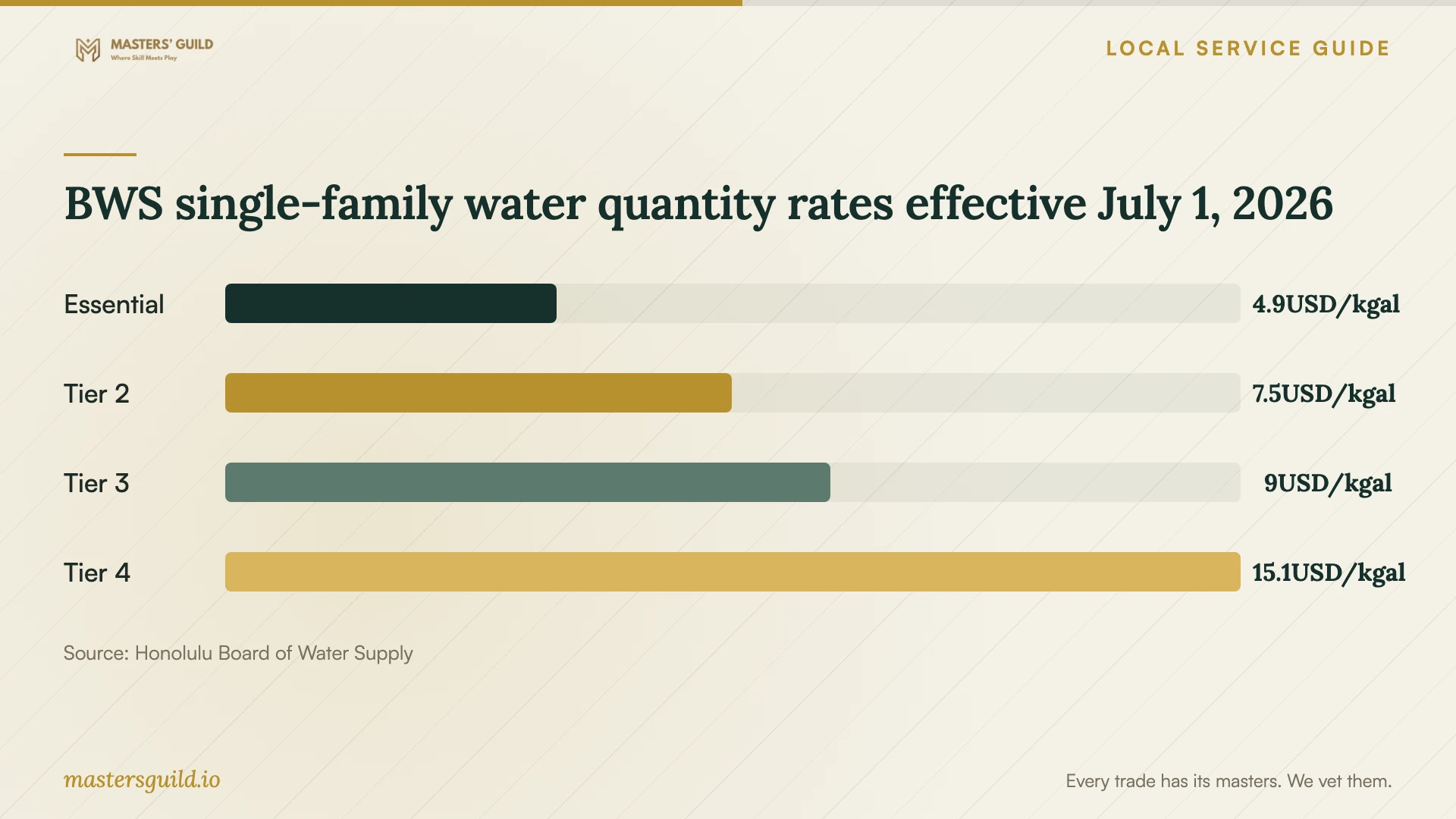
The BWS schedule effective July 1, 2026 lists single-family quantity charges from $4.92 to $15.06 per 1,000 gallons across four monthly usage tiers. BWS also charges a monthly customer fee based on meter size. Use the chart to discuss customer-supplied water; it shows utility rates rather than contractor prices or expected consumption for your cleaning job. [2]
Review the account’s monthly usage before estimating an added water charge. BWS rounds usage down to the nearest 1,000 gallons for quantity billing and applies single-family tiers according to monthly consumption. Ask the provider for expected water use, then check how that estimate fits your account’s usage. Keep the estimate separate from any promise about your bill. [2]
Prepare the site and agree on completion
Walk the site with the provider before the crew sets up. Point out damaged finishes, loose material, openings, outdoor electrical equipment and areas you want excluded. Agree on protection for plants and belongings, hose placement and household access. Ask the crew to show you the collection setup before starting.
Choose a time when you can keep children, pets and visitors away from the work area. Confirm who will move vehicles and furniture, how the crew will handle a weather interruption and when you can use the cleaned area again. At completion, inspect the agreed surfaces and remaining stains with the provider. Check waste removal and photograph the result before signing off.
BWS single-family water quantity rates effective July 1, 2026
Local details that affect your job
Check BWS restrictions before setting the date
Under Section 3-320, BWS may restrict washing sidewalks, walkways, driveways, patios, parking lots and other hard surfaces during a declared critical low-groundwater condition. Ask BWS whether restrictions apply to your address and proposed work before confirming the appointment. This provision establishes authority for restrictions; it does not confirm an active restriction on October 11, 2026. [1]
Request utility flow data if supply is uncertain
BWS says you can request flow and pressure data in writing using your address or the location of the nearest fire hydrant. It states that it will send the data within two weeks. If your provider requests utility data to plan the supply, allow that lead time and share the response. Ask the crew to check the particular tap it intends to use as well. [5]
Resolve a proposed discharge before work begins
Hawaii’s Clean Water Branch includes storm-drain routes to state surface waters within its NPDES applicability guidance. If the contractor cannot explain the collection and disposal route, pause booking and seek agency clarification about the proposed discharge. The agency’s guidance does not establish a permit requirement for every washing job, and it warns that pollution can prompt enforcement even without a permit requirement. [4]
Resolve these issues before accepting a quote
| Situation | Next step | Booking decision |
|---|---|---|
| Dirty water could reach the street or a storm drain | Request a collection and disposal plan that addresses HDOT’s Oʻahu pollution-prevention guidance. | Pause until the provider explains the route. |
| Provider proposes discharge toward state waters | Seek Clean Water Branch clarification on the discharge and possible permit coverage. | Resolve authorization before work starts. |
| You are unsure whether washing restrictions apply | Ask BWS about restrictions for the proposed hard-surface washing. | Confirm the appointment after checking. |
| Provider needs utility flow and pressure data | Submit a written address-based request to BWS; it states a two-week response period. | Allow time for the response and provider review. |
| Quotes include different cleaning areas or extras | Request matching written scopes and totals. | Compare after aligning the work. |
Your hiring checklist
- Send surface, stain and drainage photographs with your quote request.
- List the surfaces to clean and the areas to exclude.
- Request the method, chemicals and a test area for each material.
- Agree on wash-water collection, disposal and who confirms acceptance.
- Check applicable BWS restrictions before confirming the date.
- Confirm the water connection, permission and payment arrangement.
- Record existing damage and agree on protection and access.
- Inspect the result and waste removal with the provider before sign-off.
Frequently Asked Questions
How much should I budget for the cleaning?
Request site-specific written quotes. The utility figures on this page describe water charges, not pressure-washing service prices. Give each provider the same surface list and ask for stain treatment, access, collection and disposal in the total so you can compare the proposed work. [2]
Can the crew rinse dirty water into a storm drain?
Require a collection and disposal explanation before approving that approach. HDOT warns that hosing paved surfaces carries pollutants toward storm drains. Hawaii’s Clean Water Branch regulates qualifying discharges through drains to state waters, and permit applicability depends on the proposed discharge. [3] [4]
Does my washing job need an NPDES permit?
The Clean Water Branch guidance does not establish a permit requirement for every washing job. The agency says other point-source discharges containing pollutants may require coverage before discharge. Ask the agency about the proposed route if your provider plans to release wash water toward state waters. [4]
Are driveway-washing restrictions active?
The BWS rules allow hard-surface washing restrictions during declared critical low-groundwater conditions, but the cited provision does not confirm current status. Check with BWS before booking to learn whether restrictions apply to your proposed work. [1]
Sources and scope
This guide combines the sources below with practical planning guidance. Figures apply to the stated geography and period; request a written quote for your property.