
Local service guide
Personal Shopping in Honolulu: Plan Your Service
For Personal Shopping in Honolulu, choose the help you need first: household errands, clothing selection, or gift buying. Before booking, agree on the merchandise budget, service fee, purchase approvals, delivery arrangements, and who handles returns. Ask the shopper to check each store’s return policy before spending your money; Hawaii merchants can set different policies within state law. [1]
Define the job before comparing offers
Describe the result you want in your request. For groceries, provide quantities, acceptable brands, dietary restrictions, and substitution rules. For clothing, provide sizes, measurements, preferred fit, and the occasion. For gifts, describe the recipient, your relationship, and the amount you want to spend per person.
Ask prospective shoppers how they would handle your specific request. For wardrobe help, ask to see examples of their styling work and discuss whether you want advice, accompanied shopping, or purchases made on your behalf. For errands, ask how they will confirm substitutions and document spending.
Set a workable approval method. You might authorize purchases from an exact list, require photos before clothing purchases, or allow substitutions within a stated item limit. Tell the shopper what to do if you cannot answer a message, including whether to skip an item or pause the trip.
Request a complete service quote
Request separate amounts for the shopper’s work and the goods they will purchase. Ask whether consultation, advance research, travel, parking, delivery, and return trips fall within the quoted fee. If the shopper charges by time, agree when billing starts and ends and require approval before exceeding your service budget.
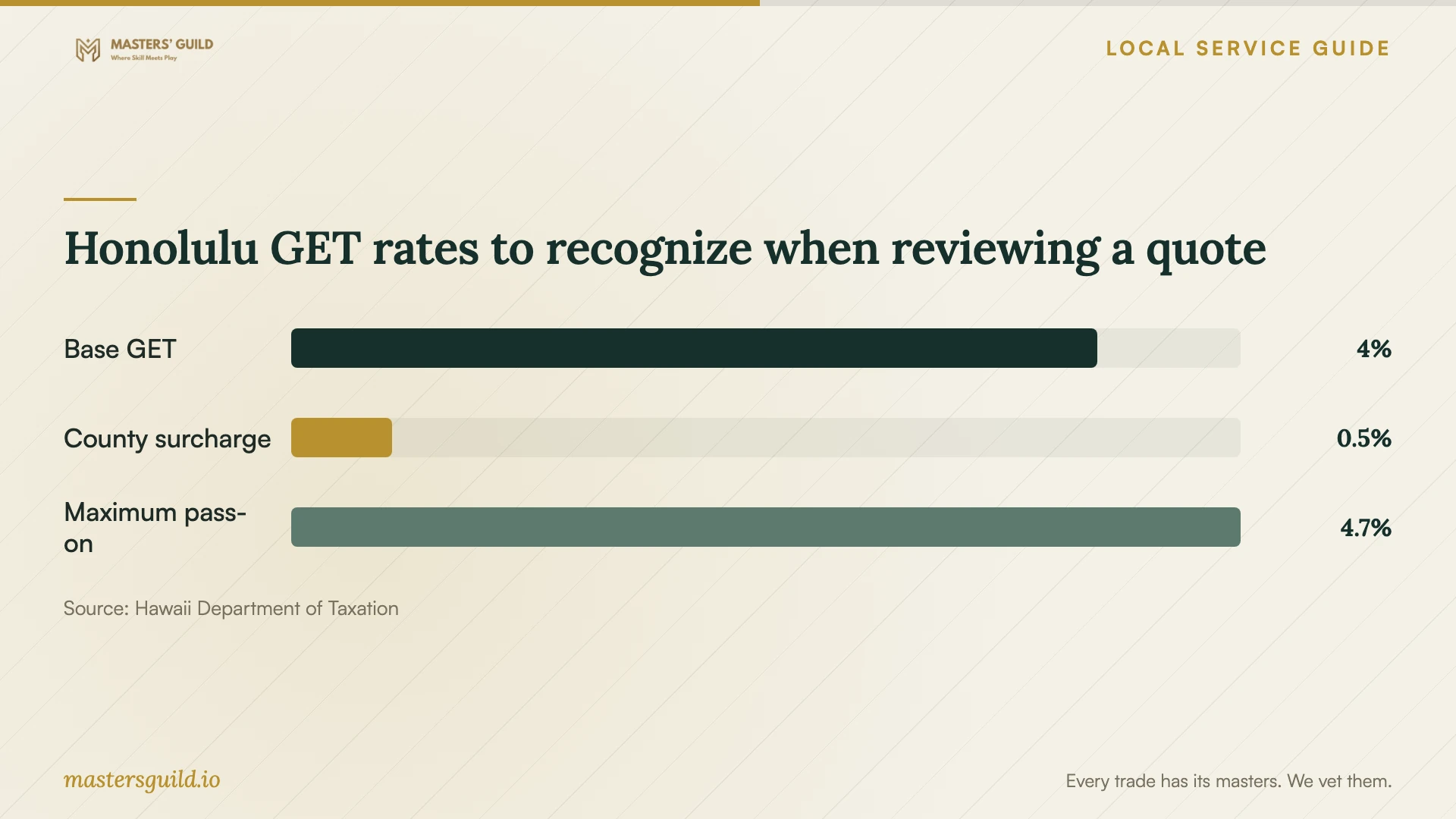
Ask whether the quoted total includes any General Excise Tax pass-on. The Hawaii Department of Taxation says businesses may pass GET and the applicable county surcharge to customers but do not have to. For Honolulu, it lists a maximum pass-on rate of 4.7120% for the period January 1, 2007 through December 31, 2030. [2]
Agree how the shopper will pay for merchandise and reconcile the balance. If you provide an advance, request an itemized record, receipts, and a deadline for returning unused funds. Ask the shopper to disclose any retailer commission or other payment connected to their recommendations so you can assess the arrangement before hiring.
Set return responsibilities before purchase
Check return terms before approving an item. Hawaii’s Office of Consumer Protection says merchants may offer refunds, refunds or merchandise credit, exchanges or merchandise credit, or no returns. Merchants must post specific notice of a return period shorter than 60 days; the merchandise return law does not apply to goods brought back more than 60 days after purchase. [1]
Do not treat that 60-day boundary as a guaranteed refund window. Ask the shopper to confirm the actual store deadline, exclusions, and proof-of-purchase requirements. The state advises extra care with custom or specially ordered goods, including Hawaiian jewelry, because merchants may exclude them from their general return policy. [1]
Write down who will return unsuitable purchases, what that work costs, and where the refund should go. Request gift receipts for gifts and retain the purchase receipts. The state notes that merchants may require proof of purchase before accepting a return. [1]
Prepare the handoff and close out spending
Give the shopper a delivery address, contact number, and instructions for building entry or meeting you. Confirm whether you expect a doorstep handoff or help carrying purchases inside. For groceries, agree on handling refrigerated or frozen purchases and a delivery time when you can receive them.
For an Oʻahu grocery trip, arrange reusable bags or authorize bag charges within the purchase allowance. The city identifies a minimum charge of 15 cents per allowable bag under its Plastic Bag Ban. Tell the shopper whether to collect your bags beforehand or bring their own. [3]
At handoff, compare purchases against the approved list and receipts. Record missing items, substitutions, and anything you want returned. Reconcile merchandise spending and service charges as separate amounts, then confirm who will complete any remaining return work and by what date.
Honolulu GET rates to recognize when reviewing a quote
Local details that affect your job
Honolulu quotes: ask about the GET pass-on
Honolulu’s county surcharge is 0.5% on activities taxed at the 4.0% GET rate. The state lists 4.7120% as the maximum customer pass-on rate, including that surcharge. Ask whether your service quote includes any pass-on and which charges it applies to; do not add it a second time to an inclusive quote. [2]
Oʻahu errands: arrange bags before departure
Oʻahu’s Plastic Bag Ban requires a minimum 15-cent charge per allowable bag, according to Honolulu’s environmental services department. For a household grocery errand, supply reusable bags or agree that the shopper can buy bags and record the expense on the receipt. [3]
Hawaii purchases: check custom-item exclusions
The state’s consumer protection office singles out Hawaiian jewelry among purchases that may require special processing and a separate return policy. Before authorizing a custom gift, ask the shopper to send you the return terms and obtain your approval. [1]
Match the shopping arrangement to your task
| Your task | Arrangement to request | Agree before booking |
|---|---|---|
| Groceries and household supplies | Shopping from a detailed list | Brands, substitutions, bags, spending cap, and delivery handoff |
| Clothing for an event | Styling advice with purchase approval | Fit preferences, photos or fittings, total budget, and return work |
| Gifts for several recipients | A list organized by recipient | Per-person limits, gift receipts, wrapping, and delivery |
| Custom jewelry or another special order | Approval of the item and return terms before purchase | Confirm exclusions; Hawaii guidance warns that custom items may fall outside a store’s general return policy |
Your hiring checklist
- Describe the purchases, quantities, sizes, preferences, and delivery deadline.
- Set separate caps for merchandise spending and service charges.
- Agree on substitutions and purchases that require your approval.
- Confirm travel, parking, delivery, return-trip fees, and any GET pass-on.
- Choose a payment method and a process for returning unused funds.
- Arrange reusable bags and delivery access.
- Request receipts and assign responsibility for returns and refunds.
Frequently Asked Questions
How much should I budget for the shopper?
Request a written quote for your exact task rather than assuming an hourly rate. Ask the shopper to separate service charges from merchandise spending and identify consultation, travel, parking, delivery, and return costs. Compare offers using the same list and spending limits.
Can I return clothing within 60 days in Hawaii?
Do not assume you have a 60-day refund window. Merchants can set return policies and shorter deadlines with the required notices. The state says its merchandise return law does not apply to goods brought back more than 60 days after purchase. Check the store’s terms before approving clothing. [1]
Does the shopper have to add 4.7120% to the quote?
No. Hawaii’s Department of Taxation says businesses may choose to pass GET and the applicable county surcharge to customers. It lists 4.7120% as Honolulu’s maximum pass-on rate. Ask whether the quoted total includes any pass-on. [2]
Who should handle purchases that do not work out?
Assign that responsibility before booking. Specify who takes items back, who pays for the return trip, and who receives refunds or credits. Keep receipts because merchants may require proof of purchase. Ask the shopper to flag deadlines at handoff. [1]
Sources and scope
This guide combines the sources below with practical planning guidance. Figures apply to the stated geography and period; request a written quote for your property.