
Local service guide
Moving Services in Honolulu: Hiring and Move Planning
Arrange Moving Services in Honolulu by checking the mover’s Hawaii PUC household-goods authority, agreeing on a written scope, and confirming truck access before choosing a date. The PUC regulates household-goods motor carriers. For a Waikiki move that uses district freight curb loading zones or bus stops, ask the mover to confirm both its loading-zone permit and supplemental permit. Plan unwanted furniture disposal separately from the transport of belongings you want to keep. [1] [3]
Check the carrier before accepting an offer
Start with the business name that will appear on your moving agreement. Ask for its PUC certificate or permit details, then use the commission’s active motor-carrier information to check the company. The Hawaii PUC classifies household goods as a property-carrier category and handles motor-carrier certification, licensing, ratemaking and business regulation. [1]
Ask who will transport your belongings and whether another company will handle any part of the job. Request proof of insurance and a written explanation of how the company handles damage, missing items and claims. Keep copies with your estimate and inventory. Treat identity verification, carrier authority and damage coverage as separate checks when reviewing a provider.
For a move involving an ocean shipment, ask who takes custody at each handoff, which transport legs the quote includes, and who handles storage or delivery delays. Request the names of the companies involved before accepting an agreement.
Give each mover the same job to price
Prepare an inventory by room and flag items that need special handling. Send photographs of large furniture, fragile pieces, stairs and the route from the home to the proposed truck position. Ask the estimator to account for disassembly, reassembly, packing materials and any items you will move yourself.
Request a written explanation of the charging method and the circumstances that could change the total. Ask about crew size, minimum charges, travel time, waiting time, stairs, carrying distance and packing work. Have the company identify what it excludes and how you must approve additional work. Compare the complete scope before comparing totals.
Choose between transport only, packing assistance and a broader move service based on the work you want to retain. If you pack your own boxes, ask about labeling, weight limits and the company’s treatment of damage to owner-packed goods. Keep medicines, keys, essential documents and the items you need on arrival with you.
Resolve building access and Waikiki loading
Before fixing the arrival time, ask both buildings about elevator reservations, loading areas, truck clearance, access hours and any insurance documents they want from the mover. Share the answers with the estimator. Ask the mover to explain its plan if the intended loading location is unavailable.
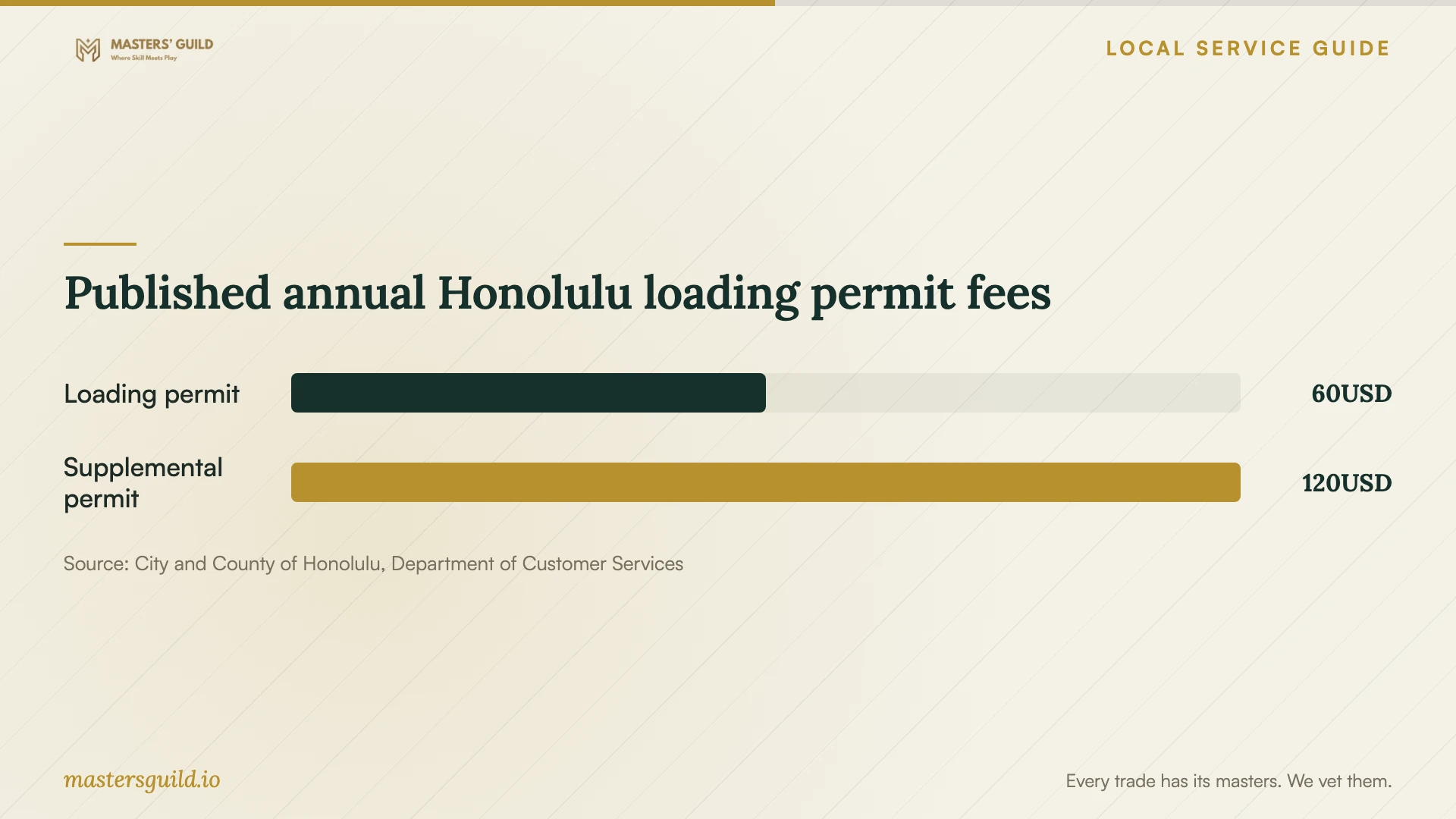
For trucks using freight curb loading zones or bus stops in the Waikiki Transportation Management Special Improvement District, the city requires a valid loading-zone permit plus a supplemental permit. Ask the mover to confirm that its vehicle has the permits for the proposed location. Do not treat a discussion of permits as confirmation that a particular curb space will be available. [3]
The city provides applications at Satellite City Halls or by request at 808-768-9700. Applicants submit them to a Satellite City Hall or by mail and provide registered-owner verification and current vehicle information. These are vehicle-related applications, so ask the company operating the truck to resolve the paperwork before moving day. [3]
Separate furniture disposal from the move
Decide which items you will keep, donate or discard before finalizing the moving inventory. Honolulu asks residents to consider donating usable items before scheduling bulky pickup. If the next appointment falls after your move-out deadline, review the city’s drop-off options or request a separate hauling quote. [2]
The city collects only items listed in the appointment. A single-family household or an individual unit in a multi-unit building can schedule up to five bulky waste items and two metal appliances through a separate appliance appointment. Confirm that your disposal plan fits those limits before removing unwanted pieces from the mover’s scope. [2]
Put scheduled items out no earlier than 6:00 p.m. the evening before collection and have them curbside by 6:00 a.m. on the appointment day. City crews do not enter private property to retrieve them. For a multi-family property, ask the manager to identify the common pickup location and describe unusual pickup arrangements in the appointment comments. [2]
Published annual Honolulu loading permit fees
Local details that affect your job
Waikiki truck permits need a vehicle check
The city requires both loading-zone and supplemental permits for trucks using freight curb loading zones or bus stops within the Waikiki transportation district. Both permits expire on December 31 of the issue year. If your move crosses into a new calendar year, ask the mover to confirm the permits for the actual moving date. [3]
Bulky pickup frequency can change your move-out plan
Honolulu permits one bulky appointment per address per month, with weekly appointments available to Waikiki residents. Check the next available appointment before promising an empty home by a particular date. In multi-unit properties, coordinate the common pickup location with your manager; the city warns that unexplained unusual pickup arrangements can lead to non-collection. [2]
Choose the scope before comparing quotes
| Your situation | Service to discuss | Confirm before booking |
|---|---|---|
| You will pack and prepare the furniture | Transport and loading | Who supplies protection, disassembles furniture and places items at the destination |
| You want help preparing fragile belongings | Packing plus transport | Materials, packing responsibilities and damage terms |
| The truck will use a Waikiki district freight curb zone | A mover with the required vehicle permits | Valid loading-zone and supplemental permits for the planned date and location |
| You have unwanted furniture | City bulky pickup or a separate hauling service | Appointment availability, accepted scheduled items and removal from your moving inventory |
Your hiring checklist
- Record the transporting company’s legal name and check its household-goods authority through the PUC.
- Send the same room inventory and access photographs to each estimator.
- Get the charging method, exclusions and approval process for added work in writing.
- Confirm elevator access, truck clearance and loading arrangements with both properties.
- Ask the truck operator to confirm permits for the intended loading location.
- Separate belongings to move from items to donate or discard.
- Photograph valuable items and existing damage before packing.
- Keep the agreement, inventory and damage-reporting instructions accessible during the move.
Frequently Asked Questions
How do I check a household-goods mover’s Hawaii authority?
Ask for the company’s legal name and PUC certificate or permit details. The Hawaii PUC regulates household-goods property carriers and provides active motor-carrier information. Match the business handling your belongings to that information and ask about any discrepancy before signing. [1]
Does every Waikiki move need a supplemental loading permit?
The city’s stated requirement applies to trucks and tour vehicles using freight curb loading zones or bus stops within the transportation district. Ask the mover to identify its intended loading location and confirm the permits that apply to that plan. [3]
Can I leave unwanted furniture outside when I move?
Arrange a bulky appointment and list the items first. The city collects only scheduled items. Place them out within the published window, from 6:00 p.m. the evening before collection to 6:00 a.m. on collection day, and follow the placement instructions. [2]
What should I request when a moving quote lacks detail?
Ask for an itemized scope covering packing, loading, transport, unloading and furniture assembly. Have the mover explain access charges, waiting time, exclusions and how you approve changes. Supply the same inventory to each company so you can compare the work included.
Sources and scope
This guide combines the sources below with practical planning guidance. Figures apply to the stated geography and period; request a written quote for your property.