
Local service guide
Mold Removal in Honolulu: Hiring and Cleanup Planning
Arrange Mold Removal in Honolulu by asking for a written scope that covers the moisture source, affected materials, cleanup, drying and any rebuilding. For construction work, Hawaii requires a contractor’s license when labor and materials exceed $1,500 or the project requires a building, electrical or plumbing permit. Ask bidders to identify who will perform those repairs and provide the relevant license information before you sign. [2]
Describe the damage before comparing estimates
Give each bidder the same starting information: rooms affected, visible damage, when you discovered it, any known leak and any cleanup you have attempted. Take photos from a safe location. Ask the assessor to distinguish what they can see from areas they propose opening for inspection.
Request separate descriptions for cleanup and moisture-source repair. Ask who will investigate a plumbing leak, roof entry point or ventilation concern, and who will authorize additional work if the crew finds damage behind finishes. Put the approval process and pricing basis for changes in writing.
For a condominium, ask your building manager about access, work hours, disposal routes and approval for work involving shared components. Identify the person who can authorize investigation outside your unit before the contractor schedules demolition.
Choose the scope before choosing the price
Ask each bidder to list what they will clean, remove and replace. Have them describe how they will protect adjoining rooms, move debris through the home and handle belongings. Request an explanation of any proposed containment or air-cleaning equipment and the conditions for removing it.
Hawaii DOH advises cleaning and drying moldy flood-damaged building materials or removing and replacing them. Its guidance says flood-soaked carpet and padding cannot typically be cleaned well enough for reuse. Ask the contractor to identify salvage and disposal decisions before you compare totals. [1]
Request an itemized estimate with assessment, cleanup, disposal, drying, repairs and finish work listed separately. Ask whether equipment charges continue until a measured drying target is met, who records those measurements and how you approve an extension. Use the same requested scope when comparing bids.
Plan flood cleanup around safe access and drying
Hawaii DOH advises residents to stay out of flooded buildings until electricity is shut off, gas lines are secured and the structure is deemed safe. Arrange a safe-access assessment before entering to photograph damage or retrieve belongings. [1]
For people entering affected areas or cleaning, DOH recommends protective equipment that includes waterproof boots, gloves, a NIOSH-approved N95 mask and sealed safety goggles. It also warns against mixing cleaning products because the mixture can create toxic vapors. [1]
Ask the crew to explain the drying sequence before anyone closes walls or installs replacement finishes. DOH says flood-damaged walls must remain open until they dry completely. Request a record of the contractor’s drying checks and ask who will authorize reconstruction. [1]
Agree on completion before work starts
Define the handover documents in your agreement: photos of opened areas, a list of removed materials, drying records and a list of unfinished repairs. Ask what the contractor means by complete and whether that includes restoring paint, flooring and trim.
If a bidder recommends sampling, ask what question the test will answer, who will interpret the result and how it could change the work. Request a separate price and a written explanation of the proposed completion criteria.
Before the final walkthrough, review who repaired the moisture source and what maintenance they recommend. Keep the estimate, change approvals, receipts and completion records together. Ask for written warranty terms and the process for reporting a recurrence.
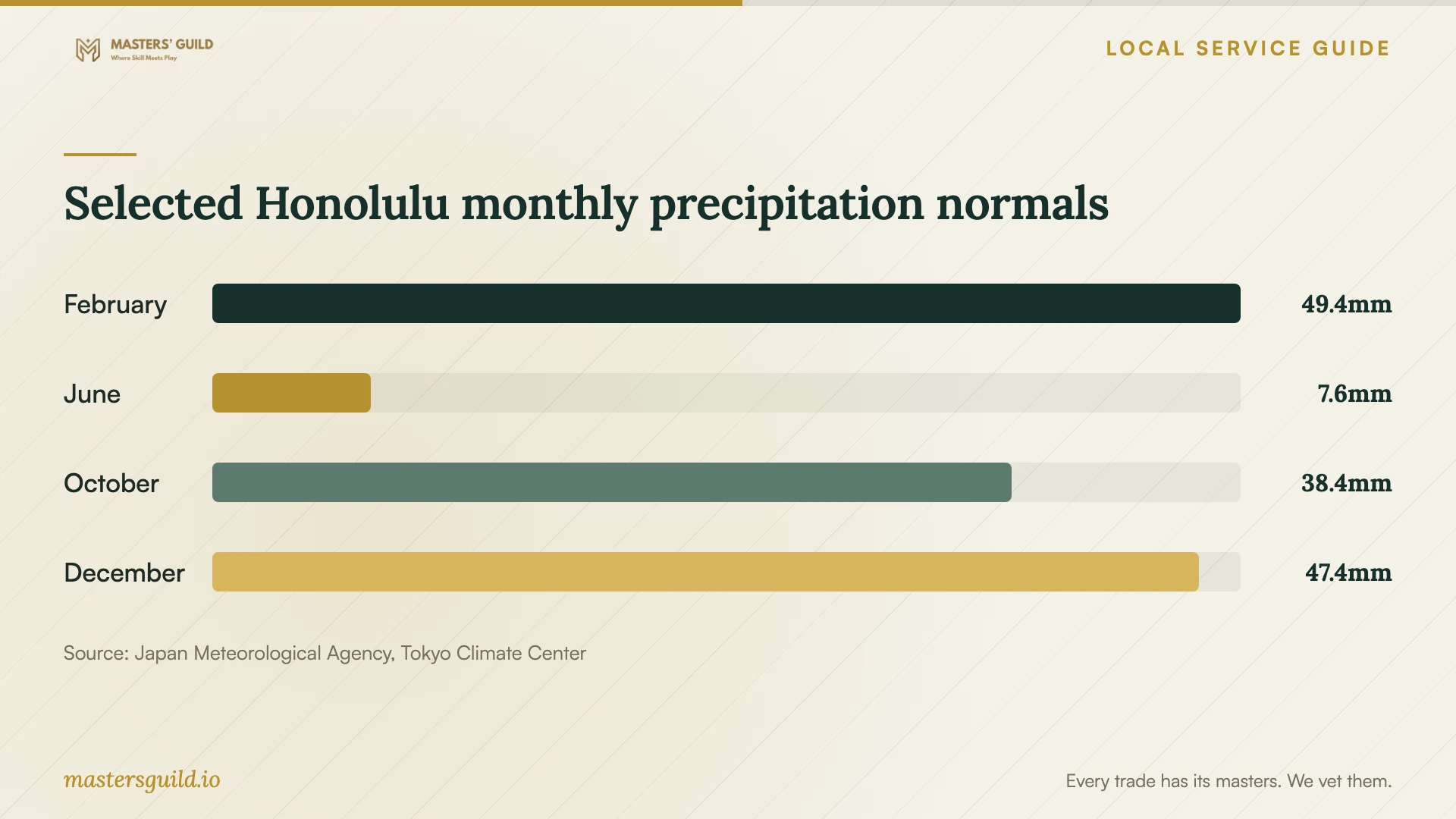
Selected Honolulu monthly precipitation normals
Local details that affect your job
Hawaii licensing applies to the construction scope
DCCA says a contractor’s license is required for projects exceeding $1,500 in labor and materials or requiring a building, electrical or plumbing permit. Apply that guidance when cleanup expands into contracted repair or reconstruction; the page does not establish a separate mold-cleaning credential. DCCA directs homeowners to obtain the contractor’s name and license number for verification and says electrical and plumbing contractors must employ licensed workers for that work. Ask your bidder to identify the responsible contractor for each repair. [2]
A local route for persistent indoor-air complaints
Hawaii DOH’s Indoor Air Quality Unit in Aiea lists investigations of biological contaminants, inadequate ventilation, inadequate cooling and ventilation-system emissions among its responsibilities. Honolulu homeowners can contact the unit at (808) 586-5800 to ask about an unresolved concern. Prepare a record of the affected rooms, dates, moisture observations and prior repair attempts, then ask what assistance fits your situation. [3]
Match the next step to the condition
| Condition | Next step | Question to settle |
|---|---|---|
| Flooded building with unresolved utility or structural safety | Follow DOH guidance to delay entry until utilities and structure are safe. | Who will confirm safe access? |
| Flood-soaked carpet and padding | Plan removal in line with DOH guidance. | Does the estimate include removal and disposal? |
| Repair construction exceeding $1,500 or requiring a permit | Verify the responsible contractor’s license under DCCA guidance. | Who holds responsibility for the repair contract? |
| Unresolved ventilation or indoor-air concern | Ask the Hawaii DOH IAQ Unit about complaint assistance. | What observations and records should you provide? |
Your hiring checklist
- Photograph damage from a safe location and write down when you discovered it.
- Give bidders the same room list, leak history and requested repair scope.
- Ask who will approve access and work involving shared building components.
- Request names and license information for contractors handling repairs.
- Separate cleanup, disposal, drying and rebuilding in the written estimate.
- Agree on drying records, change approvals and completion documents.
- Review unfinished repairs and warranty terms during the final walkthrough.
Frequently Asked Questions
How much should I budget?
Ask for an assessment and an itemized estimate. The cited official guidance provides no Honolulu remediation price schedule. Have each bidder separate cleanup from leak repairs and reconstruction, and explain how they will price concealed damage before you authorize it. [1] [2] [3]
Can I keep furniture after a flood?
DOH advises discarding porous items that cannot be laundered or disinfected, including mattresses and upholstery wet for more than 24–48 hours. Ask the assessor to document which belongings they recommend discarding and why before you arrange disposal. [1]
Does mold cleanup require a permit?
The supplied DCCA guidance does not establish a permit rule for mold cleaning alone. It says a contractor’s license is required for any project requiring a building, electrical or plumbing permit. Ask the bidder to identify the proposed repair work and resolve permit responsibility before construction begins. [2]
Sources and scope
This guide combines the sources below with practical planning guidance. Figures apply to the stated geography and period; request a written quote for your property.