
Local service guide
Lighting Installation in Honolulu: Hiring and Planning
For Lighting Installation in Honolulu, define whether you want replacement fixtures or new lighting locations, then request a written scope and verify the contractor and electrician credentials. Hawaii DCCA says a contractor license is required for projects exceeding $1,500 in labor and materials or requiring a building, electrical, or plumbing permit. Electrical contractors must employ licensed electricians for the electrical work. Ask the contractor to explain the permit requirements for your specific scope before you agree to a start date. [1]
Describe the work before requesting a quote
Start with a room-by-room list. Mark each light as a replacement at an existing location or a proposed new location. Include pendants, sconces, recessed lights, and any switch changes you want. Tell the installer whether you plan to supply the fixtures or want equipment included in the offer.
Send photographs of the room, existing fixtures, switches, and ceiling. Include the fixture model, dimensions, and weight if you have selected it. Ask the installer to assess mounting support and wiring before confirming the scope. For a pendant over a table or counter, agree on its position and hanging height before installation.
For a condominium, ask your building manager about renovation approval, contractor access, working hours, and any arrangements needed for a power interruption. Give the installer those instructions when requesting the quote. Treat building approval and the contractor's permit assessment as separate planning questions.
Check Hawaii credentials and settle permit responsibility
Hawaii DCCA advises homeowners to obtain the contractor's name and license number and verify the license. Its guidance requires a contractor license when a project exceeds $1,500 in labor and materials or requires a building, electrical, or plumbing permit. A price below that threshold does not settle the permit question. [1]
Ask who will perform the electrical work, then verify that person's electrician credential as well as the contracting business's license. DCCA states that electrical contractors must employ licensed electricians to perform the actual electrical work. Do not substitute a business name or identity check for these license checks. [1]
Have the installer state whether your proposed work requires a permit, who will obtain it, and what inspection arrangements the quote includes. The supplied state hiring guidance does not establish Honolulu's fixture-replacement exemptions or application steps. Request a scope-specific explanation rather than assuming that a replacement and a new wired location follow the same process. [1]
Choose the light and controls before buying
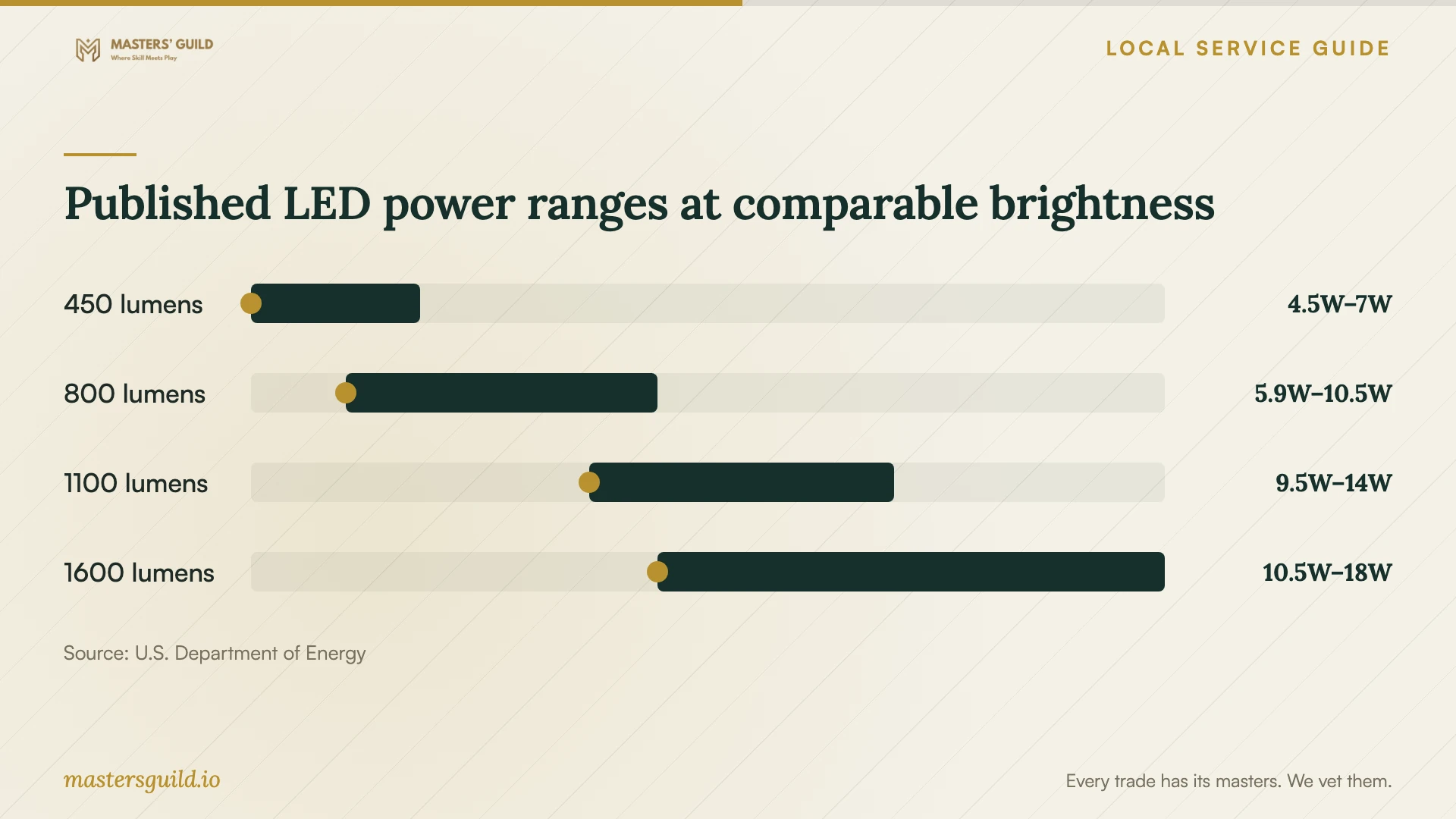
Use lumens to compare brightness. Hawaiian Electric gives about 800 lumens as a replacement reference for a 60-watt incandescent bulb. That reference helps you describe the output you want; ask the installer to assess placement and quantity for your room rather than treating one bulb's output as a room lighting plan. [2]
Select light appearance as a separate decision. Hawaiian Electric describes 2700–3000 K as warm, 3500–4100 K as neutral white, and 5000–6500 K as cooler, bluer light. Try a sample in the room before ordering matching fixtures, especially if you want to keep the appearance of nearby lamps. [2]
Check the exact bulb and control specifications. DOE advises buyers to confirm that LEDs support dimming and work with the chosen dimming system. It also warns that heat buildup in enclosed fixtures can affect some LEDs' performance and life, so check the packaging or technical specifications for that application. [3]
Compare the full scope and agree on completion
Request separate descriptions for fixtures, installation labor, switches or dimmers, wiring changes, mounting work, and any permit-related tasks. Ask whether removal, disposal, ceiling patching, and painting are included. Use the same equipment list when comparing offers, and ask each installer to identify allowances or unresolved conditions.
Set a written approval process for additional work. Ask the installer to explain any proposed change and its price before proceeding. If you supply fixtures, agree on who handles missing parts, damage, incompatible controls, and returns before the appointment.
Agree on a completion check that includes fixture placement, operation from each intended switch, and dimming where specified. Ask for product instructions, warranty information, and any applicable permit or inspection records. Keep the final scope and invoice together so you can identify the installed equipment later.
Published LED power ranges at comparable brightness
Local details that affect your job
Hawaii's license trigger includes permit work
For a Honolulu project, apply Hawaii DCCA's statewide hiring rule: a contractor license is required above $1,500 in labor and materials or when the project requires a building, electrical, or plumbing permit. Before accepting a small-job offer, ask the installer to address the permit question as well as the price. [1]
Verify the electrician as well as the contractor
Hawaii DCCA distinguishes the electrical contractor from the licensed electrician performing the work. Ask for both names and license details before booking. DCCA's hiring page provides license-check resources and lists 844-808-3222 for licensing and business registration information. [1]
Use the local utility's bulb guidance to specify output
Hawaiian Electric recommends comparing brightness in lumens and light appearance in Kelvin. Use its approximately 800-lumen reference for replacing a 60-watt incandescent bulb to describe your existing light to the installer, then discuss whether you want the same brightness or a different result. [2]
Questions to resolve before choosing equipment or an installer
| Your situation | Next step | Resolve before booking |
|---|---|---|
| Replacement at an existing location | Send fixture details and photographs | Mounting, wiring assessment, and scope-specific permit requirements |
| New location or switch arrangement | Request an assessment of the proposed layout | Wiring scope, access, surface repairs, and permit responsibility |
| LEDs with a dimmer | Check the exact bulb and dimmer specifications | DOE advises confirming dimming capability and system compatibility |
| Bulb inside an enclosed fixture | Check packaging or technical specifications | DOE advises verifying suitability because trapped heat can affect LED performance and life |
Your hiring checklist
- List each fixture location and mark replacements versus new locations.
- Photograph the room, existing fixtures, and switches without opening electrical equipment.
- Provide fixture models, dimensions, weights, and preferred hanging positions.
- Request contractor and electrician names and license numbers for verification.
- Ask for a written permit assessment and responsibility for any required inspections.
- Confirm equipment supply, disposal, patching, and additional-work approval terms.
- Arrange building access and agree on the completion checks before the appointment.
Frequently Asked Questions
Does a lighting job below $1,500 avoid contractor licensing requirements?
The price alone does not answer that question. Hawaii DCCA requires a contractor license for projects exceeding $1,500 in labor and materials and for projects requiring a building, electrical, or plumbing permit. Ask the installer to explain how the requirements apply to your scope. [1]
Should I buy the fixtures before choosing an installer?
Choose candidate models first, then ask the installer to review mounting, dimensions, controls, and the proposed locations before you order. Agree on who handles returns or missing parts if you supply the equipment.
Can I keep my existing dimmer when switching to LED?
Check the specific products before deciding. DOE advises confirming that the LED supports dimming and is compatible with the dimming system. Ask the installer to include any needed control change in the quote. [3]
How much should I budget for installation?
Request a quote for your actual fixture list and wiring scope. The available evidence does not establish Honolulu installation prices. Ask installers to identify equipment, labor, controls, permit-related work, and repair exclusions so you can compare totals on the same basis.
Sources and scope
This guide combines the sources below with practical planning guidance. Figures apply to the stated geography and period; request a written quote for your property.