
Local service guide
Lawn mowing in Honolulu: plan visits and cleanup
For lawn mowing in Honolulu, ask for a written quote that separates the first cleanup from recurring visits and names who handles clippings. Agree on trimming, edging, access and rain rescheduling before choosing a schedule. If you plan to use your green cart, check your address’s collection calendar: the city collects green waste every two weeks and requires the cart lid to close. [1]
Make the mowing quote specific
Send photos of the whole lawn, the tallest grass, slopes, steps and the route from parking to the yard. Include the gate opening and identify any areas that require carrying equipment. Ask the provider to confirm its equipment can reach the work area before you accept an offer.
Request separate amounts for the initial visit and ongoing maintenance. Define whether the provider will trim around fences and trees, edge along paving, clear cuttings from paths and remove loose debris before mowing. Ask for the total payable amount, including any hauling charges and taxes, rather than comparing an incomplete starting price.
Choose the recurring interval after discussing your grass, irrigation and preferred appearance with the provider. Ask how you can change the interval and whether a delayed visit triggers an overgrowth charge. For an overgrown yard, agree on the first visit’s finish and cleanup before committing to a maintenance plan.
Choose where the clippings will go
Specify whether the provider will leave cuttings on the lawn, collect them into your green cart or haul them away. Ask the provider to assess whether leaving cuttings suits the lawn’s current condition. Include an overflow plan if you choose cart collection.
For automated collection, Honolulu requires material to fit inside the cart with the lid closed. The city collects green carts every two weeks, alternating with blue-cart collection. Check the calendar for your residence and ask the mower to account for any garden waste already occupying the cart. [1]
If you intend to take your own clippings to a city drop-off site, the resident rules accept grass clippings as green waste and require loose loading without plastic bags. Those rules also restrict delivery vehicles and eligibility. Ask a hauling provider to confirm its own disposal route rather than assuming it can use your resident drop-off option. [2]
Coordinate mowing and irrigation
Tell the provider when your sprinklers run and ask how to coordinate them with arrival. Agree on a way to report wet ground and decide who will approve a postponement. Mark sprinkler heads and explain which irrigation controls the crew may use.
The Board of Water Supply advises watering lawns one to two times a week and avoiding watering between 9 a.m. and 5 p.m. Use that conservation guidance when discussing irrigation timing; ask the provider to assess your lawn before recommending any change in watering. [3]
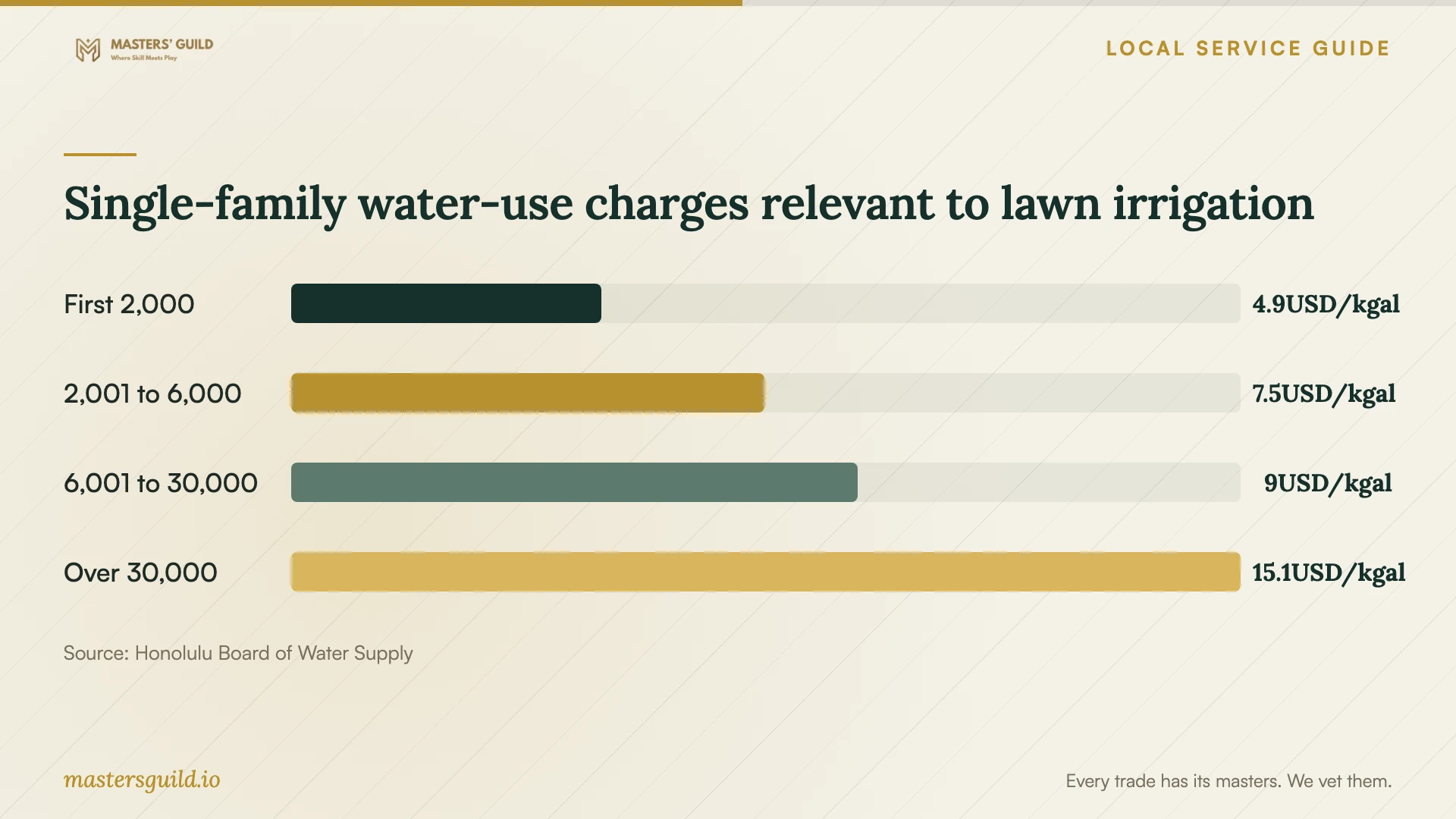
Keep irrigation costs separate from the mowing quote. BWS bills potable irrigation water according to the property’s primary use. Its single-family residential schedule uses monthly consumption tiers, so review your household usage before agreeing to added watering as part of a lawn-care plan. [4]
Set access and completion expectations
Before the first visit, remove toys and pet waste, secure animals and identify plants or lawn areas the crew should avoid. Point out exposed roots, loose stones and damaged irrigation parts. Agree on gate access and where the provider may park or unload.
Ask for proof of liability insurance and clarify how the provider handles accidental damage. Set a communication method for missed visits, weather delays and work that needs your approval. If you will be away, request completion photos showing the lawn, edges and clipping destination.
Review the first visit before settling into recurring service. Check that the crew completed the agreed areas, cleared paths and followed the disposal plan. Put any scope changes in writing, including whether extra garden cleanup requires a separate quote.
Single-family water-use charges relevant to lawn irrigation
Local details that affect your job
Do not rely on an extra green cart this fall
As of October 15, 2026, Honolulu has suspended additional green- and blue-cart requests through January 31, 2027. The city says requests resume February 1, 2027. If your existing cart cannot hold the mowing waste, agree on another clipping arrangement before the visit. [1]
Resident drop-off access does not establish a hauling option
Honolulu’s resident drop-off rules require eligible deliveries to contain residential waste generated by the vehicle owner and prohibit commercial waste. Commercial plates alone do not establish eligibility. Ask a paid mower to identify its disposal arrangements and include hauling in the written scope. [2]
Keep curb placement separate from mowing cleanup
The city requires residents to place carts at the curb by 6 a.m. on collection day, no earlier than 6 p.m. the previous evening, and keep containers on their property on non-collection days. Decide who will move the cart if mowing and collection occur on different days. [1]
Choose the clipping arrangement before booking
| Your situation | Arrangement to discuss | Detail to confirm |
|---|---|---|
| You want cuttings left on the lawn | Ask the provider to assess this approach | Agree on the finish and how the crew will handle clumps |
| You plan to use your green cart | Have the provider collect cuttings into the cart | Allow for collection every two weeks and a closed lid |
| Your cart has insufficient space | Request a hauling option | Include the disposal route and charge in the quote |
| You plan to transport your own clippings | Check the resident drop-off rules | Load green waste loose without plastic bags and verify vehicle eligibility |
Your hiring checklist
- Send lawn photos, access details and the gate opening.
- Separate the initial cleanup price from recurring maintenance.
- List mowing, trimming, edging and path cleanup in the scope.
- Choose a clipping destination and agree on overflow handling.
- Share sprinkler timing and mark heads or damaged components.
- Agree on weather delays, missed visits and overgrowth charges.
- Confirm insurance, damage reporting and completion photos.
Frequently Asked Questions
How much should I budget for mowing?
Request a property-specific quote. The sources supporting this page do not establish a Honolulu mowing price range. Give each provider the same lawn photos, access information and cleanup requirements, then compare the initial visit, recurring charge and disposal costs.
Should I choose weekly or every-other-week visits?
Ask the provider to assess the grass and propose a starting interval. Agree on how to adjust it after reviewing the results. Keep mowing frequency separate from waste collection: the city collects green carts every two weeks. [1]
Can the crew leave bags of clippings beside the green cart?
For automated cart collection, the city picks up only material inside the cart and requires the lid to close. Arrange overflow handling with the crew before work starts. [1]
Should mowing service include sprinkler adjustments?
Include adjustments only if you want them and have agreed on the scope. Ask the provider to record changes and get your approval before adding watering. BWS advises avoiding lawn watering between 9 a.m. and 5 p.m. [3]
Sources and scope
This guide combines the sources below with practical planning guidance. Figures apply to the stated geography and period; request a written quote for your property.