
Local service guide
Kitchen Remodeling in Honolulu: Hiring and Permits
For Kitchen Remodeling in Honolulu, define whether you want a cabinet-and-finish refresh or changes to walls, wiring and plumbing before requesting quotes. Hire a Hawaii-licensed contractor for projects exceeding $1,500 in labor and materials or requiring a building, electrical or plumbing permit. Have each bidder identify permit responsibilities and the licensed tradespeople who will perform the work. [2]
Define the scope before comparing contractors
Prepare a short scope with photographs, rough dimensions and a list of what you want to keep. Separate cabinet refinishing or replacement, countertops, flooring and paint from changes to the sink, range, outlets, lighting or walls. Have bidders price the same work and identify exclusions.
DPP’s general guide exempts painting, cabinet work and floor covering, but requires permits for building alterations and electrical or plumbing work that does not qualify for an exemption. Its repair exemptions have separate conditions. Have the contractor explain how each part of your proposed scope qualifies, and confirm uncertain cases with DPP before work begins. [3]
Choose appliance models before approving cabinet drawings. Give the contractor their dimensions and installation requirements, then establish who will check clearances, electrical capacity and the proposed ventilation route. Mark the sink, dishwasher and refrigerator positions on the same drawing so each bidder works from one layout.
Verify contractor and trade licenses
Hawaii DCCA requires a contractor’s license for projects exceeding $1,500 in labor and materials or requiring building, electrical or plumbing permits. Electrical and plumbing contractors must employ licensed electricians and plumbers to perform the respective work. Request the contractor’s name and license number, then check active license status through the verification resources on DCCA’s hiring page. [2]
DPP says a general contractor is typically required when a project needs more than two specialty contractors. Establish who will coordinate the trades and take responsibility for inspections, corrections and permit closure. Request current insurance documentation and references for projects with a comparable scope. [1]
Before signing, put material specifications, allowances, exclusions, payment stages and the change-order process in writing. Clarify who pays for a replacement if a delivered cabinet arrives damaged and who approves substitutions. Require a written price and schedule effect before authorizing extra work.
Build a budget and schedule around the actual project
Request separate amounts for demolition and disposal, cabinets, counters, appliances, installation, regulated trade work and permit administration. Check whether the quote includes delivery, taxes, building protection and cleanup. Keep a separate reserve for concealed conditions, and agree on how the contractor will document discoveries before you authorize repairs.
DPP calculates permit fees using project value, including fair-market labor and materials, and charges plan review fees when plans or other data require review. Have the bidder distinguish city fees from their own design and application charges. Compare permit allowances with confirmed fees before deciding which quote fits your budget. [1]
DPP describes permit timing as highly variable, depending on plan completeness, complexity, compliance, records, backlog and outside approvals. Request separate milestones for design, application, material delivery, demolition, inspections and usable-kitchen completion. Arrange a temporary food-preparation area and agree on how much notice you need before water or power interruptions. [1]
Check appliance operating costs and rebate status
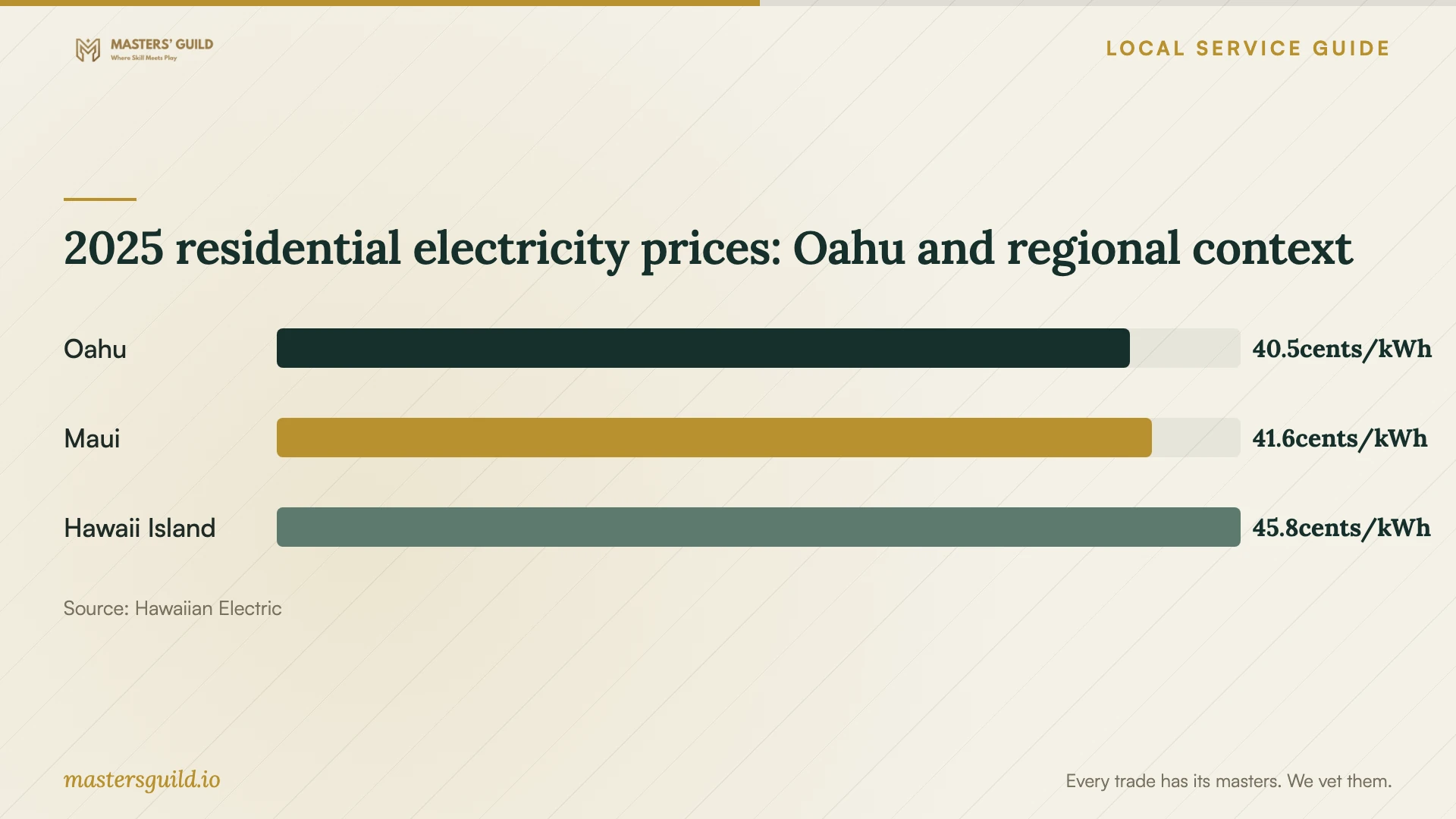
Hawaiian Electric reports an Oahu residential average electricity price of 40.54 cents per kWh for 2025. Use appliance energy labels and your own bill when comparing running costs. The regional chart provides historical electricity-price context; it does not estimate the cost or savings of your kitchen remodel. [5]
The eHale page lists induction cooking equipment and electrical panel or wiring upgrades among potential eligible projects, but gives conflicting launch guidance. It mentions early 2027 and funding expected in 2026, while its FAQ says the office cannot estimate launch timing. None establishes a confirmed launch date. The page also excludes measures completed before launch. Confirm current rules, purchase timing and contractor participation before relying on assistance. [4]
2025 residential electricity prices: Oahu and regional context
Local details that affect your job
Apartment renovations need an early management discussion
DPP’s FAQ says an apartment-unit owner cannot perform work under its owner-builder exemption. Before seeking bids, ask your building manager for the renovation approval process, work hours, elevator reservations, water-shutdown arrangements and contractor documentation. Give those requirements to each bidder so you can compare access and coordination charges. [1]
Resolve the permit route before demolition
DPP states that projects which do not qualify for an Instant Online Permit require plans. Its requirements page directs applicants to complete the online application and submit plans through ePlans. Establish who will submit and respond to corrections. For scope questions, the page lists Permit Center numbers 808-768-8220 and 808-768-3126, plus the ePlans support email. [3]
A second cooking area needs a zoning check
For single-family dwellings, DPP’s FAQ states that one kitchen is allowed per dwelling unit. It describes a wet bar as a counter with a small sink that may contain a refrigerator, without a 220-volt outlet or heating element. If your project adds a separate cooking area, confirm the permitted dwelling arrangement with DPP before ordering appliances. [1]
Match the proposed work to the next planning step
| Proposed work | Relevant distinction | Next step |
|---|---|---|
| Paint, cabinets and floor covering | DPP lists these among permit exemptions. | Confirm whether the full scope includes other work requiring permits. |
| Move sink piping or change wiring | DPP requires permits for nonexempt plumbing and electrical work. | Have the licensed contractor identify permits and inspection stages. |
| Coordinate several specialty trades | DPP says a general contractor is typically required for more than two specialty contractors. | Name the person responsible for trade coordination in the contract. |
| Add a separate cooking area | DPP’s single-family guidance allows one kitchen per dwelling unit. | Confirm zoning and the legal dwelling arrangement before finalizing design. |
Your hiring checklist
- Photograph the kitchen and prepare one scope for all bidders.
- List the fixtures, walls and appliance locations you intend to change.
- Verify the contractor’s active Hawaii contractor license.
- Request the names and license details of the electrical and plumbing team.
- Obtain building-management requirements if you own an apartment or condo.
- Record who handles plans, permit applications, corrections and inspections.
- Confirm appliance specifications and material delivery dates before setting demolition.
- Agree on payment stages, written change orders and completion documents.
Frequently Asked Questions
Does cabinet replacement require a building permit?
DPP lists cabinet work among permit exemptions. A project that also changes walls, wiring or plumbing needs a separate scope review. Have your contractor confirm the permit requirements for the complete job. [3]
Can I do the kitchen plumbing and electrical work myself?
DPP states that contractors licensed by Hawaii must perform electrical and plumbing work. DCCA also requires electrical and plumbing contractors to employ licensed individuals for the respective work. [1] [2]
How long should I allow for permits?
DPP gives no fixed approval period in its FAQ. It identifies plan quality, project complexity, compliance, records, backlog and external approvals as factors. Request a schedule that separates review time from construction. [1]
Can I count on an eHale rebate for a new induction range?
Keep your budget independent of that assumption. As of October 15, 2026, HSEO’s page described launch approval as pending, gave conflicting timing guidance and excluded installations completed before launch. Confirm availability and eligibility before purchasing. [4]
Sources and scope
This guide combines the sources below with practical planning guidance. Figures apply to the stated geography and period; request a written quote for your property.