
Local service guide
Interior Design in Honolulu: Hiring and Planning
Arrange Interior Design in Honolulu by deciding whether you need furnishing advice, a room plan or renovation coordination, then request proposals for the same deliverables and purchasing responsibilities. Before approving construction, identify who will check permits and hire the construction team. Hawaii DCCA says contracting projects exceeding $1,500 in labor and materials, or requiring a building, electrical or plumbing permit, require a contractor’s license. [1]
Choose the scope before comparing designers
Start with the decisions you want help making. For a furnishing project, request a measured layout, furniture dimensions, finish selections and a shopping list. For a renovation, request a written division of responsibility covering design drawings, permit coordination, contractor communication and site visits. Have the designer identify work that requires another professional.
Compare portfolios by asking about a project with a similar room size, household routine and level of construction. Have the designer explain a layout decision and how they handled a change after the client approved the plan. Request references for the services you intend to buy, especially purchasing and construction coordination.
Bring photographs, approximate measurements and a list of furniture you want to keep. Describe storage problems, glare, accessibility needs and how you use the room during the day. Establish who will verify dimensions before anyone orders custom pieces or commits to construction.
Set permit and construction responsibilities
Have the designer and contractor identify permit questions before you approve a renovation layout. DPP requires a building permit to convert part of a dwelling into a bathroom, wet bar or laundry room. It also requires a permit to convert part of a carport, garage or uncovered lanai into living space. [2]
Confirm whether your drawings require an architect’s or engineer’s stamp. DPP ties that requirement to HRS Chapter 464 and ROH Section 18-4.2, and requires the professional providing a required stamp to hold a Hawaii license. Include that professional’s scope and fee in your planning discussion. [2]
Get the construction contractor’s name and license number, then use the verification resources on DCCA’s hiring page. Identify who will perform electrical and plumbing work. DCCA distinguishes the contractor’s license from the licenses of the electricians and plumbers doing that work. [1]
For a condominium project, obtain the building’s alteration requirements before finalizing drawings or ordering materials. Ask management about approval documents, work hours, deliveries, elevator reservations and protection of shared areas. Give those requirements to both the designer and contractor so they can include coordination in their proposals.
Compare the complete budget
Request separate amounts for design services, furnishings, construction and purchasing support. Have the designer explain whether they charge a fixed fee, hourly fees, procurement charges or a combination. Each proposal should identify revision limits, additional visits, payment milestones and how you approve extra work.
For purchases, request an itemized total covering the product, freight, receiving, storage, delivery and installation where applicable. Confirm who places orders, handles damaged goods and approves substitutions. Put cancellation terms and responsibility for measurement errors in writing before paying deposits.
Check whether the quoted total includes any GET the business passes on. The Department of Taxation lists Honolulu’s county surcharge as 0.5% on activities taxed at the 4.0% rate, with a maximum combined pass-on rate of 4.7120%. Businesses can choose whether to pass the tax on to customers. [3]
Keep permit fees separate from design fees. DPP bases permit fees on project value using fair-market labor and materials, and applies a plan review fee when the project requires plans. Have the proposal writer identify which fees they included and which remain allowances. [2]
Approve purchases and scheduling in stages
Approve the measured layout before selecting final furniture sizes. Then review finish samples, product specifications and the purchasing total together. Request written approval points so you can see which decisions remain open before the designer orders.
Request separate dates for design approval, permit submission, purchasing, construction and installation. DPP says permit timing varies with drawing clarity, completeness, project complexity, regulatory compliance, records, backlog and outside approvals. Have your team distinguish target dates from confirmed dates. [2]
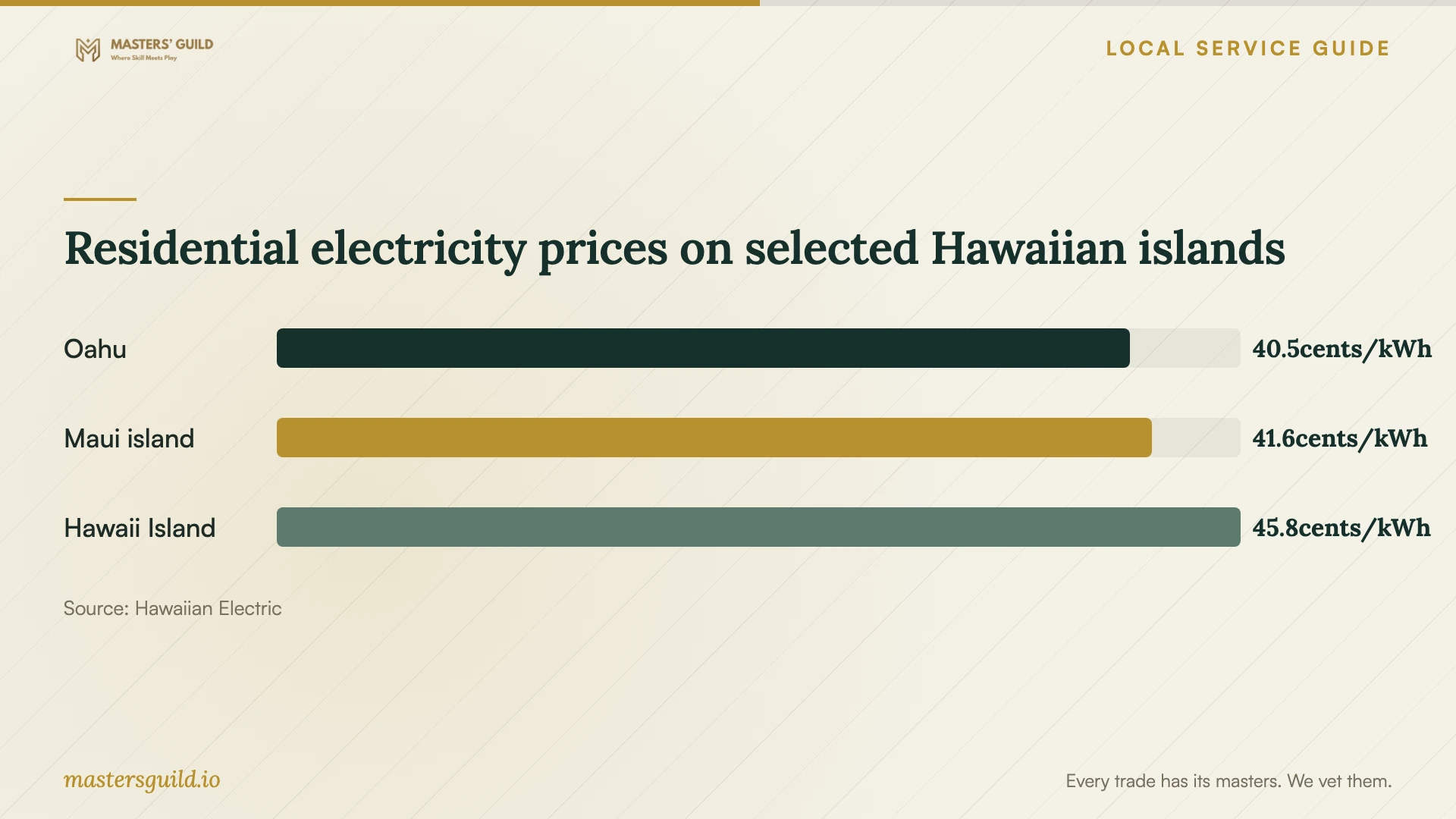
Include operating costs when discussing lighting and appliances. Hawaiian Electric reports an Oahu residential average electricity price of 40.54 cents per kilowatt-hour for 2025. Compare product wattage and your expected use alongside appearance and purchase price; the historical average does not establish your future bill. [4]
Residential electricity prices on selected Hawaiian islands
Local details that affect your job
Confirm the application route for your home
DPP says projects that do not qualify for an instant online permit must use ePlans for electronic plan review. Its FAQ describes instant permits as mostly for single-family dwellings, and labels part of its residential guidance as excluding townhomes, condos and apartments. Give the team your property type and exact scope before they choose an application route. [2]
Name the person responsible for review responses
DPP says additional ePlans viewers cannot complete tasks or respond to comments; the listed applicant must handle changes and responses. Name that applicant in the agreement and include review-response work in their scope. Request a plan for keeping you informed of outstanding reviews. [2]
Check the construction team before authorizing work
Hawaii DCCA requires a contractor’s license for contracting projects exceeding $1,500 in labor and materials or requiring a building, electrical or plumbing permit. Get the construction provider’s name and license number and check DCCA’s verification resources, including when your designer arranges the construction team. [1]
Match the proposed work to the hiring discussion
| Your proposed work | Scope to request | Question before committing |
|---|---|---|
| Furniture and finish selections | Measured layout, selections and purchasing list | Who verifies fit and manages orders? |
| Convert space into a bathroom or laundry room | Design and construction coordination with a permit check | DPP requires a building permit for this conversion. Who handles it? |
| Electrical or plumbing changes | Coordination with the appropriate construction team | Who verifies the contractor and the licensed individuals doing the work? |
| Drawings requiring a professional stamp | Coordination with a Hawaii-licensed architect or engineer | Who confirms the requirement and includes that professional’s fee? |
Your hiring checklist
- Write a room-by-room brief with a total spending limit and furniture to retain.
- Request named deliverables, revision limits and responsibility for final measurements.
- Obtain building alteration requirements before approving a condominium renovation.
- Assign permit research, application tasks and review responses in writing.
- Verify construction credentials through DCCA’s resources before hiring.
- Confirm purchasing charges, passed-on tax, damage handling and cancellation terms.
- Approve dimensions, samples and the complete order total before paying purchase deposits.
Frequently Asked Questions
Can I use the designer as my renovation contractor?
Identify who will contract for and perform construction. DCCA requires a contractor’s license for contracting projects exceeding $1,500 in labor and materials or requiring a building, electrical or plumbing permit. Verify the construction provider’s credentials even when the designer coordinates the project. [1]
How much should I budget for design?
Request a project-specific proposal with design fees separated from furnishings, purchasing charges and construction. Compare proposals using the same rooms, deliverables and revision allowance. Have each designer identify exclusions and explain how additional work requires your approval.
Can the designer promise a permit completion date?
Treat a proposed date as a planning target. DPP says processing time varies with project complexity, complete drawings, compliance, available records, backlog and external approvals. Establish who tracks reviews and responds to corrections. [2]
What should I settle before ordering furniture?
Approve final dimensions, delivery access, finishes and the complete purchase total. Confirm who handles receiving, damage claims, storage and installation. Request written cancellation and substitution terms before authorizing an order.
Sources and scope
This guide combines the sources below with practical planning guidance. Figures apply to the stated geography and period; request a written quote for your property.