
Local service guide
House Cleaning in Honolulu: Plan and Compare
Arrange House Cleaning in Honolulu by giving each cleaner the same room list, condition photos, requested tasks, and access instructions. Ask for a written total that identifies add-ons and any GET pass-on. Separate leftover chemical disposal and flood damage from your routine cleaning request so you can confirm the right provider and scope before booking.
Choose the work before choosing the cleaner
Describe the result you want in room-by-room terms. For an upkeep visit, request specific tasks such as cleaning bathroom fixtures, wiping kitchen surfaces, dusting reachable furniture, and cleaning floors. For a more detailed visit, name the buildup and surfaces you want addressed. Ask the cleaner to confirm the list rather than relying on a package name.
Identify appliance interiors, cabinet interiors, window tracks, interior glass, and areas behind furniture as separate requests. Send photos of grease, shower deposits, pet hair, or crowded rooms. Tell the cleaner which belongings they may move and which surfaces need special products. Ask them to explain any task they cannot accept before you agree to the visit.
For a move-out, share your landlord's or buyer's cleaning requirements and arrange the visit around furniture removal. Agree on who will empty cupboards, remove food, and handle remaining belongings. Leave time to inspect the finished work before handing over the keys.
Get a final quote you can compare
Request quotes using the same photos and task list. Ask whether the cleaner charges a fixed amount or by the hour, whether an hourly rate covers one worker or the crew, and what spending limit they will honor. Require approval before they add tasks or exceed the agreed amount.
Confirm the cost of supplies, appliance interiors, parking, and access delays. Ask how the cleaner handles cancellations, missed entry, damage reports, and requests to correct incomplete work. Request proof of liability coverage and ask whom you should contact if something goes wrong.
The Hawaii Department of Taxation lists a 0.5% Honolulu county surcharge for activities taxed at the 4.0% GET rate. Businesses may choose to pass the tax on; the department lists 4.7120% as Honolulu's maximum pass-on rate. Ask the cleaner to state any pass-on and the final total in writing. [2]
Arrange entry and a useful handoff
If your home has managed entry, check with building staff about visitor registration, service hours, elevator use, and parking. Give the cleaner a working entry method and a contact who can answer during the visit. Ask who pays for parking and whether waiting time affects the bill.
Clear the surfaces you want cleaned, secure valuables, and arrange a separate space for pets. Point out fragile finishes and products you do not want used. Agree on whether you will attend the final walkthrough or review completion photos, and specify how soon you must report a missed task.
Keep chemical disposal in the plan
Honolulu gives residents different disposal instructions for different household hazardous products. Its table lists floor-care products and furniture polish under absorb-and-trash instructions, while oven cleaner, disinfectants, and window cleaners appear on the appointment drop-off list. Check the product-specific guidance before asking a cleaner to discard leftovers. [1]
Keep labels on containers and separate products. The city advises against mixing household hazardous waste and directs households with large quantities to call its Refuse Division for instructions. Ask your cleaner whether their quote includes waste handling, then agree on which products will remain for your separate disposal arrangements. [1]
Disclose water damage before booking
Tell prospective cleaners about floodwater, soaked furnishings, or mold before requesting a visit. In its March 26, 2026 guidance, the Hawaii Department of Health says residents should remove water-soaked materials they cannot clean thoroughly and keep walls open until they dry completely. Ask whether the provider can assess and perform the required recovery work. [3]
The department warns residents against entering flooded buildings until electricity is off, gas lines are secure, and the structure is safe. It also warns that mixing cleaning products can create toxic vapors. Resolve those safety and drying needs before arranging a finishing clean. [3]
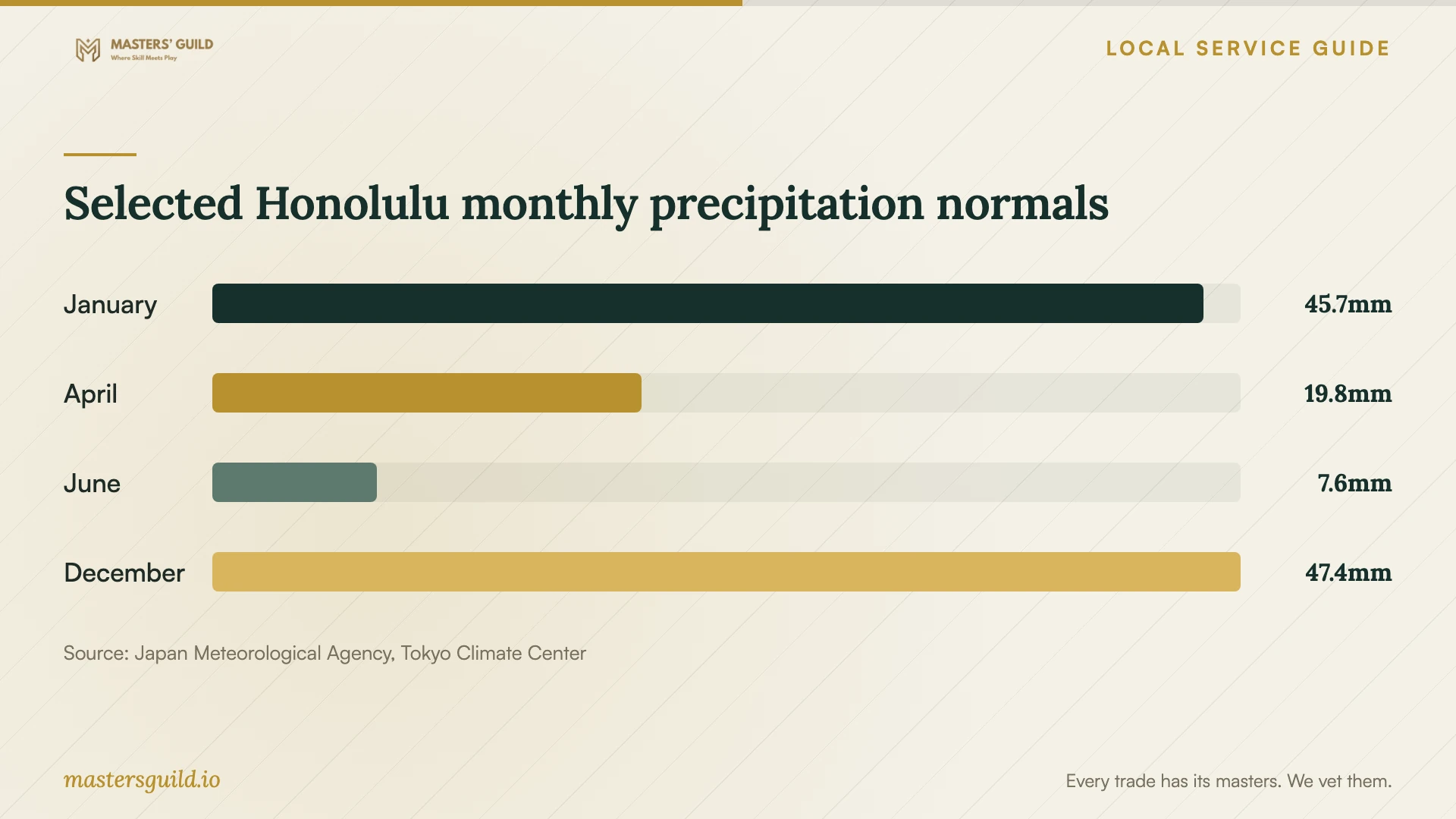
Selected Honolulu monthly precipitation normals
Local details that affect your job
Check disposal availability before your move-out deadline
As of October 15, 2026, Honolulu's household hazardous waste page lists the November 7 event as full with registration closed, and 2027 dates as undetermined. Do not schedule a move-out around an assumed drop-off slot. Contact the city's HHW program for instructions; its appointment process asks for contact details, container sizes, and an item list, with up to 12 registered items accepted. [1]
Ask whether the Honolulu quote includes GET
The state's published Honolulu maximum GET pass-on is 4.7120%, effective through December 31, 2030. Businesses can choose whether to pass it on. Ask each cleaner whether their proposed amount includes the pass-on so you compare the amount you would pay. [2]
Match your request to the work
| Your situation | Request | Confirm before booking |
|---|---|---|
| Upkeep of occupied rooms | A room-by-room maintenance task list | Surfaces, floors, supplies, and belongings the cleaner may move |
| Buildup or neglected areas | A detailed scope supported by photos | Specific surfaces, exclusions, and approval for extra time |
| Empty-home handover | A move-out scope using your handover requirements | Appliance interiors, cupboards, inspection timing, and leftover items |
| Leftover oven cleaner or window cleaner | Separate chemical disposal planning | Honolulu lists these products for appointment drop-off |
| Flood-soaked rooms or furnishings | An assessment of recovery and cleaning needs | Health guidance calls for complete drying and removal of materials that cannot be cleaned thoroughly |
Your hiring checklist
- Send the same room list, condition photos, and priorities to each cleaner.
- List appliance interiors, glass, tracks, and cabinet interiors as explicit requests.
- Confirm the final total, any GET pass-on, and approval rules for extra work.
- Check entry arrangements, parking, building requirements, and a contact for the visit.
- Agree on supplies, surface restrictions, pet arrangements, and liability coverage.
- Separate leftover chemicals and confirm disposal responsibilities.
- Disclose flood exposure and agree on a completion review.
Frequently Asked Questions
How much should I budget for a visit?
Request a quote based on your home's condition and task list. Ask for the final payable total, whether the cleaner charges by time or by job, and how they price additions. Set a spending limit and require your approval before extra work begins.
Can I leave old cleaning products for the cleaner to throw away?
Agree on that responsibility beforehand. Honolulu assigns different disposal methods to different products and lists oven cleaner, disinfectants, and window cleaners for appointment drop-off. Keep containers labeled and check the city's instructions for each product. [1]
Should I book an ordinary deep clean after flooding?
Disclose the flood damage first and ask about recovery capabilities. Hawaii health officials say some soaked materials need removal and affected areas need complete drying. Have the provider assess those needs before agreeing to a cleaning-only scope. [3]
What should I ask about a recurring arrangement?
Agree on the tasks for each visit, tasks that rotate, access arrangements, and how either party can change or cancel a date. Ask whether the first visit has a separate scope and price, and how you will report missed work.
Sources and scope
This guide combines the sources below with practical planning guidance. Figures apply to the stated geography and period; request a written quote for your property.