
Local service guide
Gardening in Honolulu: Planning and Hiring
Arrange Gardening in Honolulu by asking for a written scope that separates cleanup, ongoing care, planting and debris removal. Before accepting a quote, agree on which plants to keep, who supplies materials and where cuttings will go. Honolulu collects automated green carts every two weeks and requires the lid to close, so arrange hauling for a cleanup that exceeds your available cart space. [1]
Choose the work before choosing a visit schedule
Start with the result you want: usable paths, weeded beds, shaped shrubs or a replacement planting area. Photograph each work area and mark plants you want the gardener to retain. Ask the gardener to distinguish the initial cleanup from the work they propose for later visits.
For recurring care, specify the tasks you expect at each visit and those that need separate approval. Include weeding, pruning, watering checks and removal of cuttings where appropriate. Agree on a process for weather delays, missed visits and additional work before committing to a schedule.
Get a quote you can compare
Request a written price for the agreed scope. If the gardener charges by time, ask whether the rate covers one person or a crew, whether a minimum applies and what spending limit requires your approval. For a fixed quote, ask the gardener to identify exclusions and explain how they will price changes.
List plants, mulch, delivery and hauling as separate items. Agree on plant quantities and container sizes before purchase. Ask who pays for replacements if a plant arrives damaged, and request watering instructions for anything newly planted. Confirm liability insurance and describe stairs, narrow gates or parking arrangements before the gardener prices the work.
Settle debris removal before cleanup day
Check your address’s collection schedule before choosing a cleanup date. For automated collection, Honolulu crews collect only material inside the cart; the city requires a closed lid and at least five feet of clearance from obstructions. The city collects green carts every two weeks, alternating weekly with blue carts. [1]
Ask the gardener to state whether they will use your available green-cart space or haul cuttings away. Treat removed soil and rocks as a separate disposal item because the city excludes them from curbside refuse collection. Agree on the destination and charge for material the gardener removes, and specify whether sweeping paths forms part of the finish. [1]
Include watering in the garden plan
Ask the gardener to review irrigation alongside plant selection. The Board of Water Supply recommends grouping plants by water and sun needs, irrigating turf separately from other plantings and improving soil before installing irrigation. Use those points to discuss the order of work before approving a new bed. [3]
For lawns, the utility recommends watering one or two times a week and avoiding the hours from 9 a.m. to 5 p.m. Treat this as conservation guidance, rather than a watering restriction or a schedule for every plant. Ask the gardener to explain any separate establishment watering for new plants and leave a written controller schedule. [2]
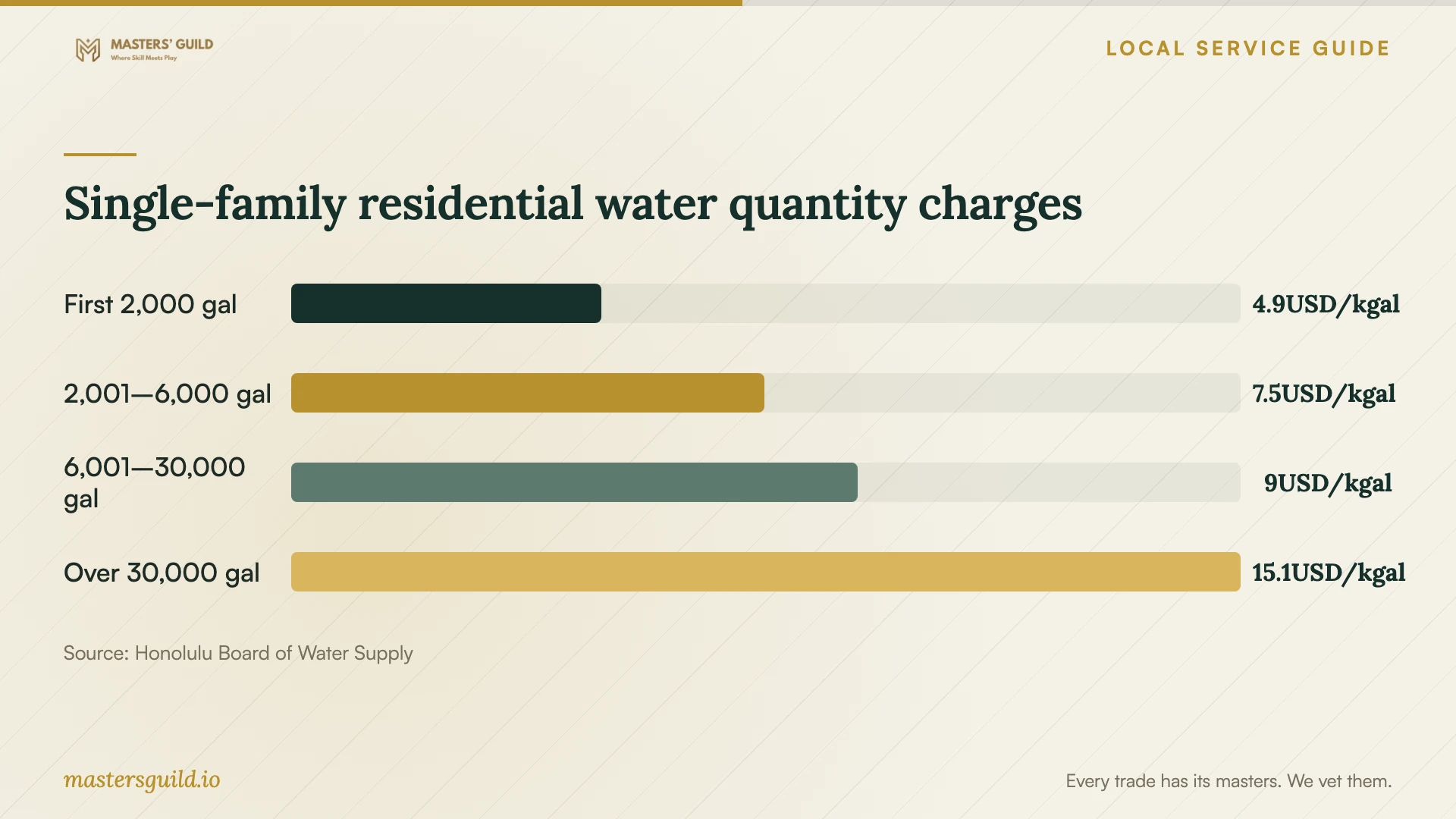
Review irrigation costs alongside the gardening quote. The Board of Water Supply bills potable irrigation water according to the property’s primary use. Its single-family residential schedule uses monthly consumption tiers, so check your household’s usage band when considering a watering plan. The chart shows water quantity charges, not gardening labor prices. [4]
Single-family residential water quantity charges
Local details that affect your job
Extra green carts are unavailable during the current pause
Honolulu’s posted notice pauses requests for additional green and blue carts from October 1, 2026, through January 31, 2027. Requests resume February 1, 2027. If you are arranging a cleanup during that period, plan around existing cart space or include hauling in the quote. [1]
Curb placement has a defined window
The city requires residents to place refuse at the curb by 6 a.m. on collection day, but no earlier than 6 p.m. the previous evening. It also requires containers to stay on the property on non-collection days. Agree whether you or the gardener will move the cart if the visit falls outside that window. [1]
Garden irrigation uses your property’s water rate class
The Board of Water Supply applies the property’s primary usage classification to potable irrigation water. For a single-family home, review the residential tiers rather than assuming an agricultural rate applies to garden watering. Agricultural rates require an application and proof of commercial agriculture. [4]
Match the quote to your garden’s needs
| Your priority | Ask for | Confirm before booking |
|---|---|---|
| Overgrown beds | A defined cleanup with marked plants to retain | Removal boundaries, finish standard and hauling allowance |
| Ongoing upkeep | A visit task list and proposed frequency | Separate approval for work outside the agreed scope |
| A new planting bed | Plant groups matched to water and sun needs | Soil preparation before irrigation installation |
| Cuttings beyond cart capacity | A hauling option | Automated carts must close; only material inside the cart qualifies for pickup |
Your hiring checklist
- Send photos and identify plants to retain or remove.
- Separate the first cleanup from recurring maintenance.
- Confirm access, parking, gates and water availability.
- Specify plant quantities, sizes and material allowances.
- Agree on cart use, hauling and disposal of removed soil.
- Set an approval limit for extra work.
- Request written watering instructions and a completion walkthrough.
Frequently Asked Questions
How should I compare gardening prices?
Give each gardener the same photos and task list. Ask for a total that identifies labor, materials and debris removal. For time-based work, confirm crew size, minimum charges and an approval limit. Compare the first cleanup and ongoing visits as separate scopes.
Can the gardener leave all the debris for city collection?
Agree on that before work begins. Honolulu’s automated collection requires material to fit inside the cart with the lid closed, and green-cart collection runs every two weeks. The city excludes soil and rocks from curbside refuse collection, so specify another disposal arrangement for those materials. [1]
Should my gardener set the lawn sprinklers to run daily?
Ask for a schedule with an explanation. The Board of Water Supply recommends lawn watering one or two times a week and avoiding 9 a.m. to 5 p.m. Discuss new plantings separately and ask the gardener to leave instructions you can follow between visits. [2]
What should a water-conscious planting quote include?
Ask for plant choices suited to the site, groups with similar water and sun needs, soil preparation, mulch and an irrigation plan. These follow the Board of Water Supply’s xeriscape principles. Request a phased proposal if you want to spread the work across separate projects. [3]
Sources and scope
This guide combines the sources below with practical planning guidance. Figures apply to the stated geography and period; request a written quote for your property.