
Local service guide
Furniture delivery in Honolulu: access and hiring
Arrange furniture delivery in Honolulu by confirming where the crew will leave each piece, checking the carrying route, and agreeing on truck access before booking. Request a written quote covering stairs, assembly, packaging removal, waiting, and damage handling. For Waikiki freight curb loading, ask the carrier to confirm its loading zone and supplemental permits; the city requires both for trucks using those zones within the transportation management district. [3]
Define the job before comparing quotes
Give each provider the same item list, pickup address, destination, and photographs. Include dimensions, any available weight information, packaging condition, and whether the seller will help release the furniture. For a secondhand purchase, agree with the seller on who will dismantle the piece and keep its hardware.
Ask the provider to name the delivery endpoint and list assembly, unpacking, packaging disposal, and old-furniture removal as separate tasks. If you want a bed assembled or a sofa carried into a bedroom, put that request in the quote. Avoid relying on a label such as white glove without a written description.
Request the total charge and the conditions that could change it. Ask how the provider charges for waiting, a failed delivery, extra carrying distance, stairs, or a return trip. The official sources cited here do not establish a local furniture-delivery price range, so compare quotes for your actual item and route.
Check the carrier and damage arrangements
The Hawaii Public Utilities Commission regulates passenger and property motor carriers through certification, licensing, ratemaking, and business regulation. Its property-carrier classifications include household goods and general commodities. The Commission also lists exemptions, so ask the provider which authority or exemption applies to your delivery rather than assuming every operator has the same status. [1]
Use the Commission's active-carrier resources to check the business name the provider gives you. Ask who will perform the delivery if the seller or booking company hires another carrier. The Commission's motor-carrier page also provides a route for reporting violations or submitting complaints. [1]
Before paying, request written damage terms and ask who handles a claim involving furniture, flooring, walls, or an elevator. Photograph the item's condition at pickup when possible. At arrival, inspect the piece, note concerns on the delivery record, and keep photographs and messages together.
Resolve building access and Waikiki loading
Ask your building manager about delivery hours, elevator reservations, protective padding, insurance paperwork, and the approved unloading point. Measure the narrowest doorway and turns along the route. Send the carrier photographs of steps, corridors, and elevator entrances, then ask it to confirm whether the item can reach the selected room.
For trucks using freight curb loading zones or bus stops within Waikiki's Transportation Management Special Improvement District, the city requires a valid loading zone permit and a supplemental permit. Ask the carrier to confirm the proposed unloading location and its applicable permits. Keep your building's unloading approval and the carrier's street-loading arrangements as separate checks. [3]
The city makes permit applications available through Satellite City Halls or by calling 808-768-9700. Applicants submit owner verification, current registration and vehicle information, and the relevant completed application. They can submit applications at a Satellite City Hall or mail them to the Department of Customer Services, Division of Motor Vehicles. [3]
Coordinate replacement furniture with removal
Decide where the old piece will go before agreeing to the new delivery date. Ask the delivery provider whether its removal quote includes carrying the old furniture out of the home and taking it away. If you plan to use city collection, arrange the appointment and the move to the collection point as separate steps.
Honolulu allows one bulky-item appointment per address per month, except in Waikiki, where residents can make weekly appointments. You must describe the items and quantities when scheduling, and city crews collect only scheduled items. Check appointment availability before promising the delivery crew a clear room. [2]
Put scheduled items out no earlier than 6:00 p.m. the evening before collection and have them curbside by 6:00 a.m. on the appointment day. City crews do not enter private property. For a multi-unit building, ask the resident or property manager to identify the common collection location and describe unusual placement circumstances in the appointment comments. [2]
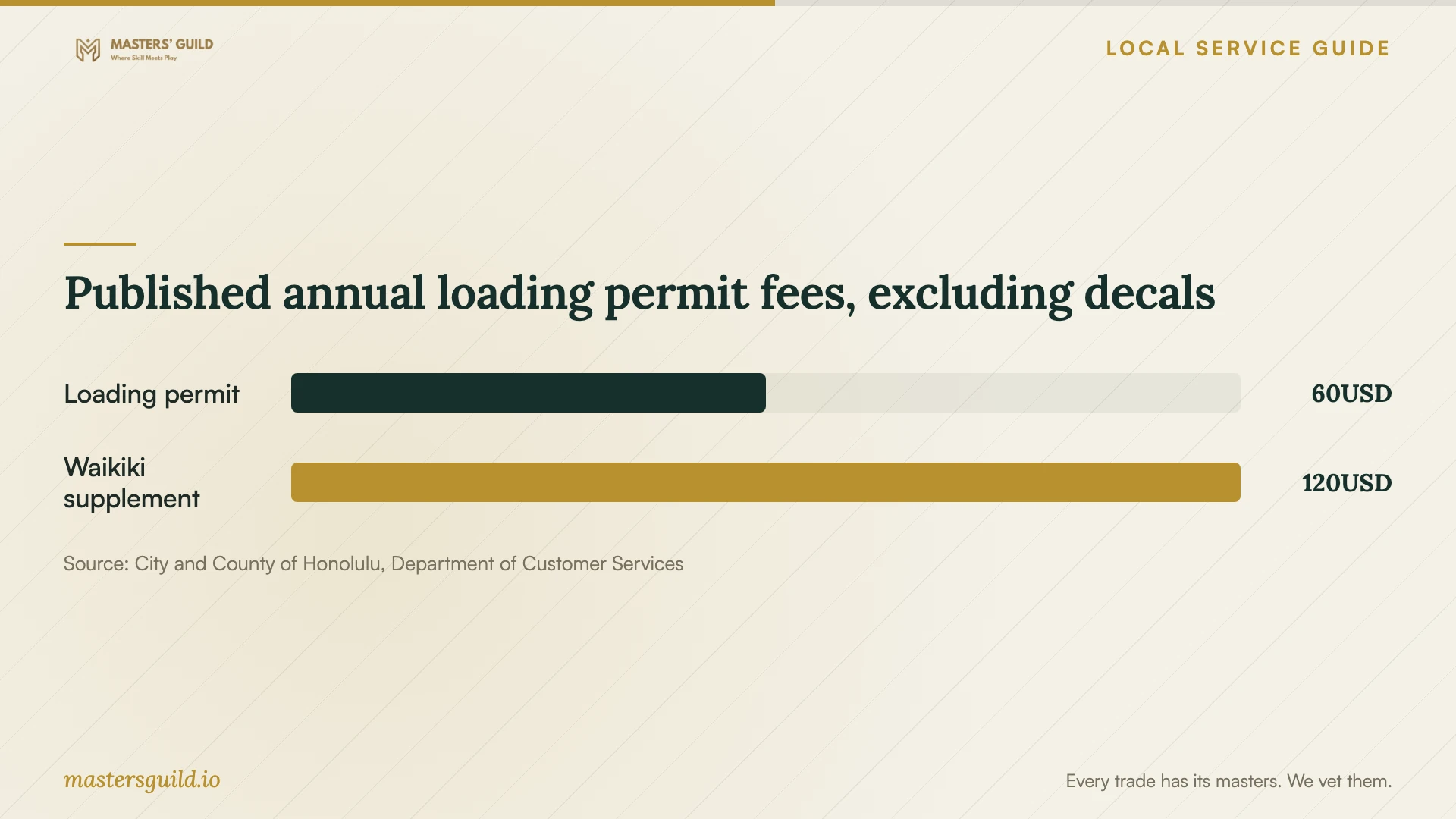
Published annual loading permit fees, excluding decals
Local details that affect your job
Waikiki loading permits belong in the access discussion
The city's Waikiki district requirement applies to trucks using freight curb loading zones or bus stops there. Ask the carrier to check its loading zone permit and supplemental permit before you coordinate the building reservation. Both permits expire on December 31 of the issue year; the city accepts renewal applications from December 1. [3]
Condo residents must identify the collection point
For multi-family bulky-item collection, the city directs residents to use common pickup locations and consult their property manager. Include unusual pickup arrangements in the appointment comments because unexplained circumstances can lead to non-collection. Arrange someone to carry the old furniture to that location within the permitted set-out window. [2]
Match the delivery scope to your plan
| Your situation | Scope to request | Confirm before booking |
|---|---|---|
| You can handle the furniture after arrival | Delivery to a precisely named entrance or handoff point | Who unloads, the exact endpoint, and your plan for carrying it inside |
| You need the item placed inside | Carrying to the selected room | Doorway fit, stairs, elevator access, and any carrying charges |
| The item needs assembly | Room placement plus the named assembly tasks | Hardware, instructions, packaging disposal, and the finished position |
| The truck will use a Waikiki district freight curb loading zone | Delivery with confirmed loading arrangements | The carrier's valid loading zone permit and supplemental permit |
| You will use city bulky-item collection | Separate carrying service to the approved collection point if needed | Appointment, scheduled item list, and set-out timing; city crews do not enter private property |
Your hiring checklist
- Send item dimensions, pickup details, and photographs to each provider.
- Get the delivery endpoint, assembly, packaging disposal, and removal scope in writing.
- Check the carrier's business identity and ask which operating authority or exemption applies.
- Confirm building approval, elevator arrangements, and the unloading location.
- Ask the carrier to confirm any permits needed for its planned loading location.
- Agree on waiting charges, failed-delivery terms, and damage reporting before payment.
- Measure the carrying route and clear it before the crew arrives.
- Arrange old-furniture removal and confirm who carries it out.
Frequently Asked Questions
How much should I budget for delivery?
Request a quote for your actual furniture, pickup, destination, and carrying route. Ask the provider to itemize assembly, waiting, stairs, packaging disposal, and removal. The published permit fees below are carrier permit charges, not customer delivery prices. [3]
How do I check a furniture carrier?
Start with the Hawaii Public Utilities Commission's motor-carrier page and active-carrier resources. The Commission regulates property carriers, including household-goods carriers, and recognizes exemptions. Ask the provider to identify the authority or exemption that applies to its work. [1]
Can I leave my old sofa outside when the new one arrives?
For city bulky-item collection, first schedule the sofa. Put it out no earlier than 6:00 p.m. the evening before your appointment and by 6:00 a.m. on collection day. In a multi-unit building, confirm the common pickup location with management. [2]
Does a Waikiki delivery require a supplemental permit?
The city requires trucks using freight curb loading zones or bus stops in Waikiki's transportation management district to have both a valid loading zone permit and a supplemental permit. Ask the carrier to confirm whether its planned unloading location falls under that requirement. [3]
Sources and scope
This guide combines the sources below with practical planning guidance. Figures apply to the stated geography and period; request a written quote for your property.