
Local service guide
Flooring Installation and Repair in Honolulu
For Flooring Installation and Repair in Honolulu, ask for an inspection and a written scope covering the damaged area, preparation, installation and debris removal before choosing a contractor. Hawaii requires a contractor’s license for projects exceeding $1,500 in labor and materials, or for any project requiring a building, electrical or plumbing permit. Get the contractor’s name and license number, then check their credentials through Hawaii DCCA’s license-check resources. [1]
Define the repair before ordering a new floor
Show the installer the areas you want repaired and explain when you first noticed the problem. Include photographs, any known leak history and details of previous repairs. Ask the installer to describe what they can assess during the visit and what they would need to inspect after lifting the existing flooring.
If you want to preserve most of the floor, request a repair option with a marked boundary. Ask whether the contractor proposes reusing existing pieces, using your spare material or supplying a replacement product. Review a sample beside the floor you plan to keep, and agree on the appearance you will accept before authorizing work.
For replacement, ask the installer to identify the proposed flooring product, installation method and preparation steps. Have them include transitions, door clearances, baseboards and adjoining rooms in the scope. Request a written explanation of how they will handle any concealed damage they find during removal.
Check the contractor and clarify permit responsibility
Hawaii DCCA states that a contractor’s license is required for any project exceeding $1,500 in labor and materials and for any project requiring a building, electrical or plumbing permit. Use that combined project amount when checking your flooring proposal. Do not assume that the absence of permit work removes the licensing requirement. [1]
DCCA advises homeowners to obtain the contractor’s name and license number and use its verification resources. Compare the identity on the proposal with the license information you check. Ask the contractor to explain how their license covers the proposed work and request current insurance documentation. [1]
Ask who will determine whether the final scope needs a permit and who will obtain it if required. Request that answer in writing before demolition. Keep any permit responsibility, inspection arrangements and related charges in the agreement rather than leaving them for the crew to resolve on arrival.
Compare complete quotes and a usable schedule
Give bidders the same room list and desired repair or replacement boundary. Ask them to separate flooring materials, preparation, removal, installation, trim, furniture moving and disposal. Identify allowances and exclusions, and ask how they will price additional work before you approve it.
Agree on the sequence as well as the start date. Ask when materials will arrive, when each room must be empty, when you can walk on the floor and when you can return furniture. If you will remain at home, arrange access to essential rooms and agree on daily cleanup and tool storage.
For a condo or managed property, ask your building manager about approval documents, flooring or underlayment requirements, work hours, elevator reservations and debris routes. Give those instructions to bidders before they finalize their proposals. Confirm who will protect shared access areas and coordinate deliveries.
Arrange removal, disposal and specialist assessment
Honolulu’s resident disposal rules list carpeting, vinyl flooring and wood flooring among regular refuse examples. The city directs noncombustible waste, including flooring tile, to Kapaʻa Transfer Station or Waimanalo Gulch Sanitary Landfill. Ask your installer to identify the debris type and include the intended disposal arrangement in the quote. [2]
If you plan to self-haul, check the vehicle and quantity restrictions before loading. The city limits resident deliveries to specified vehicle types, requires preapproval for trailers or larger rental vehicles at transfer stations, and requires the householder to attend when using a rental vehicle under their name. These resident rules do not establish disposal eligibility for a contractor’s load. [2]
If you suspect asbestos in material that the crew proposes disturbing, pause removal and seek an assessment. Hawaii Department of Health provides resources for registered asbestos consultants, laboratories and abatement entities, along with renovation and demolition notification information. Those resources do not establish whether your particular flooring contains asbestos; ask a qualified specialist to determine the next step. [3]
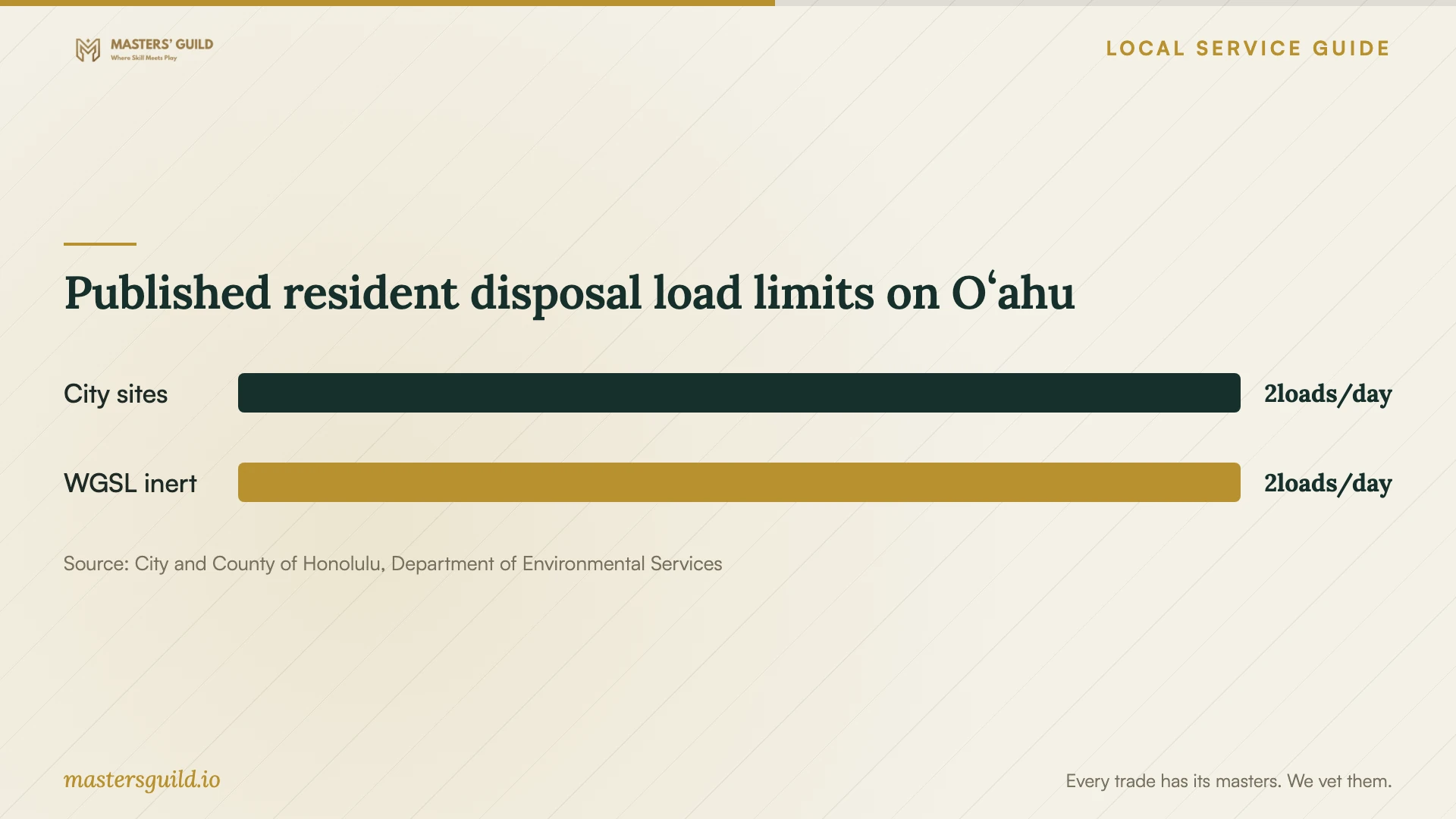
Published resident disposal load limits on Oʻahu
Local details that affect your job
Tile removal can change the hauling plan
For resident self-hauling of tile and other listed inert materials, Kapaʻa Transfer Station accepts up to five five-gallon buckets per day. Waimanalo Gulch Sanitary Landfill accepts up to two standard pickup truck loads per day. Check the amount you expect to remove before deciding whether to haul it yourself or include disposal in the contractor’s scope. [2]
Hawaii’s license rule applies beyond permit work
A project exceeding $1,500 in labor and materials requires a contractor’s license under DCCA’s published guidance. Any project requiring a building, electrical or plumbing permit also requires one. Before accepting a flooring proposal, check the combined project amount and verify the contractor rather than treating flooring replacement as an automatic exemption. [1]
Use the state’s asbestos resources for specialist selection
Hawaii Department of Health lists resources for registered asbestos consultants, labs and abatement entities. If removal raises an asbestos question, use those separate resources to discuss assessment, testing and removal responsibilities before scheduling demolition. [3]
Choose the next step before booking
| Your situation | Recommended next step |
|---|---|
| You want to keep most of the existing floor | Request a repair scope, a replacement-material sample and an agreed repair boundary. |
| The project exceeds $1,500 in labor and materials | Verify the contractor’s license using Hawaii DCCA resources. |
| You plan to haul removed tile yourself | Check Kapaʻa or Waimanalo Gulch limits, vehicle eligibility and expected debris quantity. |
| You suspect asbestos in material slated for removal | Pause removal and consult the state’s registered asbestos specialist resources. |
| You need access to rooms during installation | Agree on the work sequence, walking access and furniture return before signing. |
Your hiring checklist
- Photograph the damage and mark the rooms or areas you want included.
- Request a repair option if you want to preserve part of the existing floor.
- Record the contractor’s business name and license number for verification.
- Ask for the product, preparation steps, transitions and trim in writing.
- Confirm building access arrangements and any management approval documents.
- Assign responsibility for debris hauling and disposal.
- Agree on written approval of extra work and a room-by-room access schedule.
Frequently Asked Questions
Does a flooring installer need a Hawaii contractor’s license?
DCCA requires a contractor’s license for projects exceeding $1,500 in labor and materials, and for any project requiring a building, electrical or plumbing permit. Obtain the contractor’s name and license number and verify their credentials before accepting the proposal. [1]
Can I take removed flooring to a city disposal site?
Honolulu lists carpeting, vinyl flooring and wood flooring as regular refuse examples. Noncombustible flooring tile has designated destinations: Kapaʻa Transfer Station or Waimanalo Gulch Sanitary Landfill. Check resident vehicle eligibility and quantity limits before arranging a trip. [2]
How should I compare repair and replacement quotes?
Ask each bidder to inspect the same area and state what they will retain, remove and replace. Compare preparation, materials, trim, disposal and exclusions. For a repair, agree on the material match and repair boundary before authorizing work.
Where can I find help with suspected asbestos?
Hawaii Department of Health provides resources for registered asbestos consultants, laboratories and abatement entities. Ask a qualified specialist to assess the material and explain applicable next steps. The state’s resource page does not identify the contents of your floor. [3]
Sources and scope
This guide combines the sources below with practical planning guidance. Figures apply to the stated geography and period; request a written quote for your property.