
Local service guide
Carpet cleaning in Honolulu: quotes and planning
For carpet cleaning in Honolulu, ask for a written scope, a final total including any tax pass-on, and a drying plan before booking. Describe stains, odors, furniture and building access so each cleaner quotes the same work. If floodwater soaked the carpet, seek a flood-restoration assessment first: Hawaii health officials advise discarding flood-soaked carpet and padding because cleaners cannot typically clean them well enough. [3]
Get quotes for the same work
Send each cleaner the same room list, approximate carpeted area and photographs of trouble spots. Identify stairs, closets and any rugs you want included. Ask whether the cleaner charges by room, area or a fixed job price, and have them define what counts as a room. Request a written total before comparing offers.
Separate ordinary cleaning from stain treatment, odor work and furniture moving in the quote. Ask which pieces the crew will move, which you must clear, and whether they will inspect the carpet before confirming the price. Require approval before extra work begins. For a stain or persistent odor, ask what outcome the cleaner expects and what they will do if it remains.
Describe the carpet fiber if you know it, share any care instructions, and ask the cleaner to explain the proposed method. Request evidence of liability insurance and details of relevant training. Ask who will perform the work and how the company handles damage or a complaint.
Compare totals after the Honolulu tax pass-on
The Hawaii Department of Taxation lists Honolulu’s county surcharge as 0.5% for activities taxed at the 4.0% GET rate. It lists a maximum combined customer pass-on rate of 4.7120%, effective through December 31, 2030. Businesses can choose whether to pass the tax on to customers. [1]
Ask whether the written total includes any GET pass-on, stain treatment, furniture handling and access charges. If one cleaner quotes a base amount and another quotes a complete total, request matching totals before choosing. Have the cleaner identify any amount they cannot confirm until inspection.
Plan access and drying before the visit
Give the cleaner your floor number, parking arrangements and the route from the vehicle to the carpet. If your building controls contractor access, check its service hours, elevator reservations and insurance-document requirements with management. Ask the cleaner whether the proposed equipment fits those arrangements before reserving the appointment.
Request separate estimates for cleaning time and drying time. Explain whether you can keep windows open or use air conditioning, and ask whether the crew will supply air movers. Arrange a route through the home, a place for pets, and a time to return furniture according to the cleaner’s instructions. Leave a buffer before guests arrive or you hand over keys.
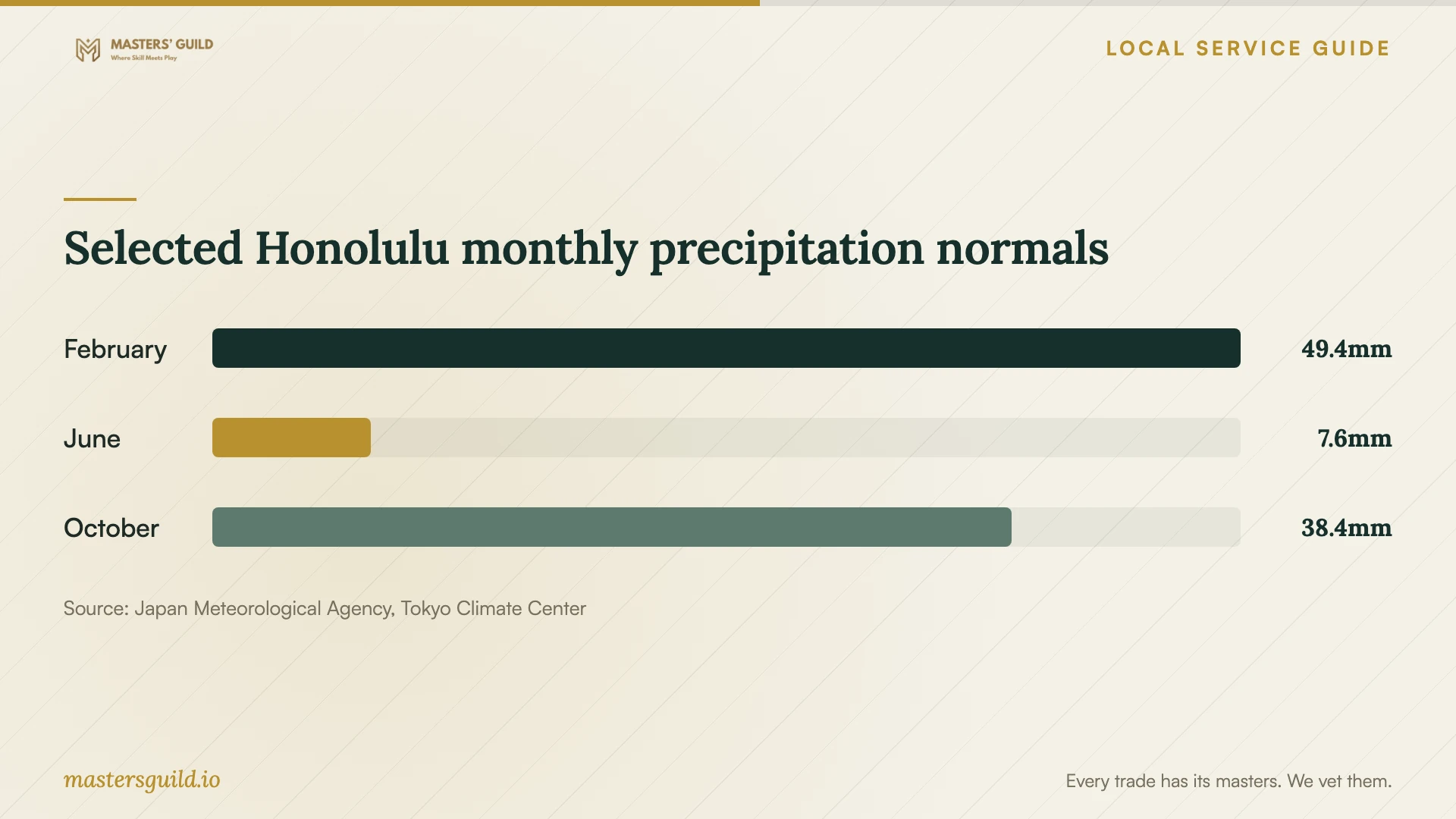
The Japan Meteorological Agency’s Honolulu station table lists normal precipitation of 7.6 mm in June and 49.4 mm in February. Use the seasonal comparison as a prompt to discuss an indoor drying plan. Ask the cleaner to base their estimate on your rooms and equipment. [4]
Document a rental handover
Read your lease and compare the carpet with the move-in inventory before commissioning move-out work. Hawaii’s Office of Consumer Protection recommends retaining a signed condition inventory. Its guidance says landlords can deduct cleaning costs when tenants leave a unit less clean than at the start, except for normal wear and tear. [2]
Ask the property manager to identify the areas they want addressed and any requested receipt details. Photograph the carpet before and after cleaning, keep the invoice, and record any remaining marks. Agree on enough time for drying and inspection before the handover.
If a landlord retains part of a security deposit, state guidance requires written reasons, itemized deductions and supporting written evidence. The guidance also describes a fourteen-day deadline after termination for the deposit balance and notice. Keep cleaning records with your move-in photographs and handover correspondence. [2]
Treat flood exposure as a separate job
Disclose flood exposure before requesting a routine cleaning quote. In its March 26, 2026 guidance, the Hawaii Department of Health says flood-soaked carpet and padding cannot typically be cleaned well enough and advises throwing them away. It also advises discarding porous items wet for more than 24–48 hours when they cannot be safely cleaned. [3]
Ask a restoration provider to assess removal and drying needs after floodwater enters the home. Tell them when the water arrived, when it receded, and which rooms it reached. For a plumbing leak, describe the source and duration instead of assuming the same cleanup decision applies.
Selected Honolulu monthly precipitation normals
Local details that affect your job
Ask for the tax-inclusive total
Honolulu’s maximum combined GET pass-on rate is 4.7120%. The state allows businesses to absorb the tax instead. Ask each cleaner whether their total includes a pass-on so you can compare the amount you would pay. [1]
Keep rental condition evidence
Hawaii consumer guidance permits cleaning deductions tied to leaving a rental less clean than at move-in, while excluding normal wear and tear. Before paying for move-out carpet work, compare the condition inventory and ask the manager to specify the cleaning scope. [2]
Use Hawaii flood guidance to choose the service
The state health department advises disposal of flood-soaked carpet and padding. If that describes your home, ask for a flood-restoration assessment and removal scope before considering ordinary carpet cleaning. [3]
Choose the scope before requesting a quote
| Your situation | Next step | Confirm before booking |
|---|---|---|
| Routine soil or isolated spots | Request a cleaning quote with photographs | Method, included treatments and complete total |
| Persistent pet odor | Request an inspection and a separate treatment scope | Expected outcome and follow-up terms |
| Rental handover | Compare move-in records and discuss the scope with the manager | Receipt details, drying time and condition photographs |
| Flood-soaked carpet | Request a restoration assessment; state guidance advises disposal | Removal, padding and drying scope |
Your hiring checklist
- Send matching room lists, dimensions and photographs to each cleaner.
- Describe carpet care instructions, stains, odors and any water exposure.
- Request an itemized total including any tax pass-on and optional treatments.
- Confirm parking, equipment access and building-management arrangements.
- Agree on furniture moving and clear the items assigned to you.
- Confirm drying instructions and a buffer before the room must be used.
- Photograph completed work and retain the itemized invoice.
Frequently Asked Questions
How much should I budget?
Request a written quote for your measured scope, including minimum charges, treatments, access costs and any tax pass-on.
How long will the carpet take to dry?
Ask the cleaner for an estimate based on the method, carpet and drying arrangements in your home. Confirm walking and furniture instructions, and leave time before a rental inspection or planned use of the room.
Does professional cleaning guarantee my rental deposit back?
Treat the cleaning receipt as one part of your condition record. Hawaii guidance allows certain cleaning deductions and excludes normal wear and tear. Compare move-in and move-out evidence and seek agreement on the requested scope before booking. [2]
Can a cleaner save carpet after flooding?
Hawaii’s health department advises throwing away flood-soaked carpet and padding because they cannot typically be cleaned well enough. Request a restoration assessment before arranging any cleaning. [3]
Sources and scope
This guide combines the sources below with practical planning guidance. Figures apply to the stated geography and period; request a written quote for your property.