
Local service guide
Car Washing in Honolulu: Plan Your Service
For Car Washing in Honolulu, agree on the cleaning tasks and total price, then confirm that the provider can work at your chosen location. For a home visit, settle parking permission, water access, and wash-water handling before booking. Ask how the washer controls hose flow: Honolulu’s Board of Water Supply recommends a shutoff or pressure nozzle for car washing. [1]
Define the cleaning work
Ask for a task list that describes the result you want. For exterior work, specify whether you want the wheels, glass, door jambs, and drying included. For cabin cleaning, identify the seats, mats, interior glass, and other surfaces you want addressed. Have the provider list exclusions alongside the included work.
Send photographs of the whole vehicle and close-ups of stains, pet hair, sand, or marks that concern you. Ask the provider which areas they can assess from photographs and which need an inspection. Agree on how they will confirm any change in scope before starting.
Request separate descriptions and prices for polishing, wax, or protective treatments. Tell the provider about existing coatings, wraps, and any care instructions you have. Ask them to explain the method they propose and the result they expect before you authorize that work.
Confirm the home washing setup
Describe the parking space before arranging a mobile visit. Ask how much room the provider needs for equipment and access around the car. If a property manager controls the area, obtain permission for the proposed work and confirm access arrangements with them.
Agree on who supplies water and electricity. BWS advises using a shutoff or pressure nozzle when washing a car. Ask the provider what equipment they will use to control flow if they plan to connect to your garden hose. [1]
Ask where the wash water will go and how the provider proposes to collect or dispose of it at your site. Request a clear explanation before work starts. If you cannot agree on a suitable arrangement, consider service at the provider’s location and confirm the same cleaning scope there.
Check applicable water-use notices
BWS rules authorize limits on washing cars and other vehicles during a critical low groundwater condition. Under Section 3-320, the Board may vary restrictions by consumer class, permitted time, and quantity of water. The standing rule does not establish whether a vehicle-washing restriction applies to your appointment. [2]
Section 3-322 requires public notice of imposed restrictions. Before a visit that uses your water supply, check current BWS notices and discuss any applicable limits with the provider. Ask them to explain the basis for a claimed exception before relying on it. [2]
Set the price and appointment terms
Request an itemized total for your vehicle in its present condition. Ask the provider to identify travel charges and optional treatments, and to explain what could change the price. Require your approval before they add work. Use the same requested tasks when comparing offers.
Confirm the arrival window, expected completion time, and when you can use the car afterward. For interior cleaning, ask about drying and where you should park afterward. Decide who will hold the keys and how the provider should contact you during the appointment.
Use a forecast for the appointment location when discussing rain plans. The Japan Meteorological Agency publishes monthly climate normals for its Honolulu station; those summaries do not establish the weather at your home on service day. Agree on who decides whether to proceed, when they will decide, and any cancellation charge. [3]
Prepare and inspect the vehicle
Remove valuables and personal belongings before the appointment. Ask whether the provider wants loose accessories or child seats removed, and decide who will reinstall them. Photograph existing damage and point it out during the initial walkaround.
At completion, review the agreed areas with the provider. Check the glass, wheels, mats, and any stain or mark you discussed. If an area needs attention, ask whether another attempt falls within the original scope. Record any follow-up agreement before closing the job.
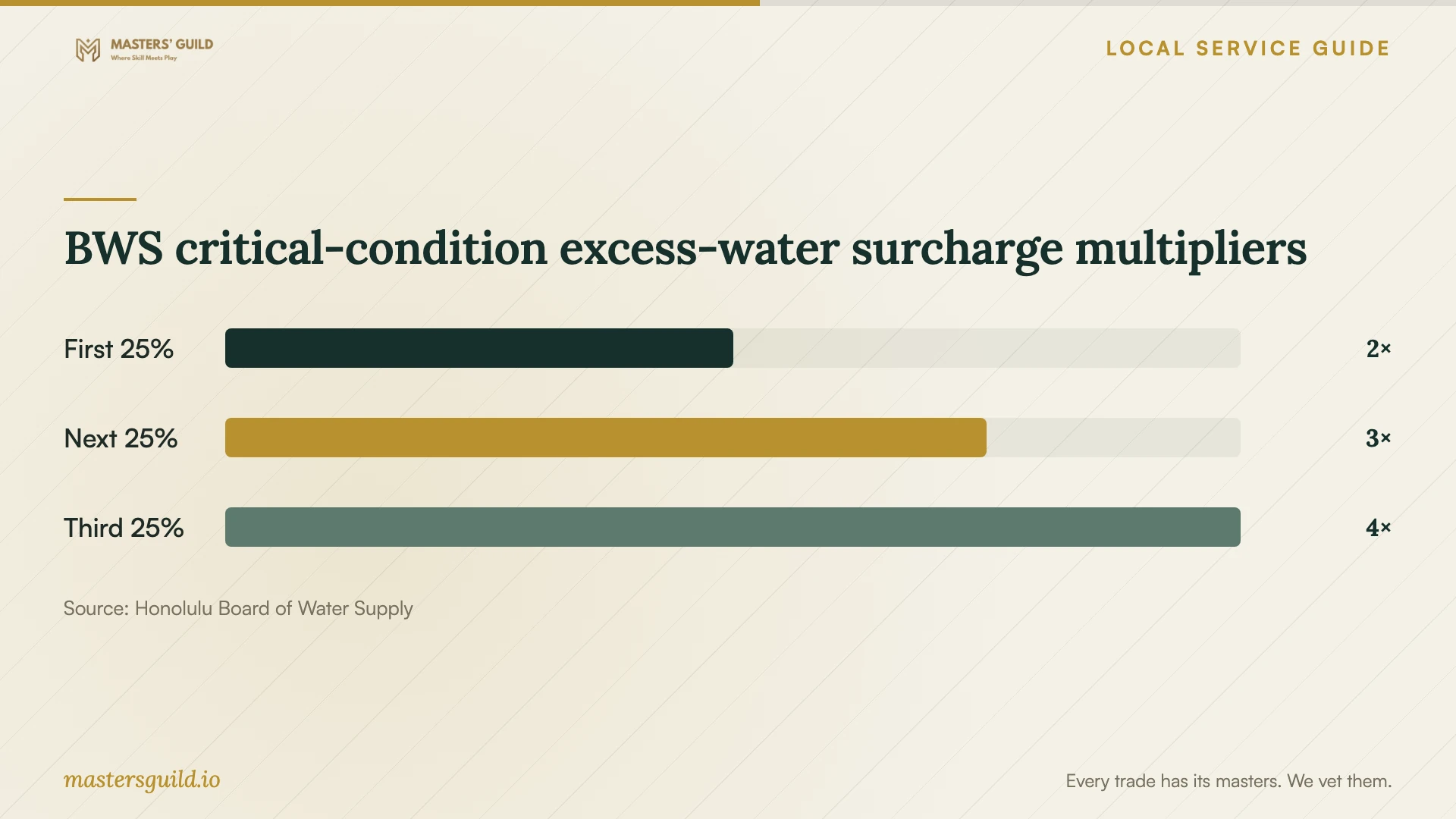
BWS critical-condition excess-water surcharge multipliers
Local details that affect your job
Ask about hose control before offering your tap
Honolulu BWS recommends a shutoff or pressure nozzle for car washing. Before making your outdoor tap available, ask whether the provider brings water or uses your hose, and confirm how they will stop flow between washing steps. Treat the nozzle guidance as a conservation recommendation. [1]
Check the restriction notice that applies to your visit
BWS may limit vehicle washing during a declared critical low groundwater condition, with restrictions that can vary by consumer class, time, and water quantity. Its rules also establish public notification procedures. Check the applicable notice before booking a home wash and ask the provider how they will comply. [2]
Choose an arrangement for your vehicle
| Your situation | Arrangement to consider | Ask before accepting |
|---|---|---|
| You want exterior cleaning | Request an exterior-only scope | Will you include wheels, glass, door jambs, and drying? |
| You want cabin cleaning | Request an itemized interior scope | Which surfaces and stains will you address, and what drying arrangements should I make? |
| You want service at home | Confirm the mobile setup | What space, water, electricity, and wash-water arrangements do you need? |
| You cannot confirm a suitable home setup | Consider service at the provider’s location | What are the drop-off, collection, and vehicle access arrangements? |
Your hiring checklist
- Send vehicle photographs and identify the areas you want cleaned.
- Get an itemized scope, exclusions, total price, and extra-work approval terms.
- Confirm permission to use the washing area and arrange access.
- Agree on water, electricity, equipment space, hose control, and wash-water handling.
- Check applicable utility notices before a water-dependent appointment.
- Confirm arrival, completion, drying, and rain rescheduling arrangements.
- Remove belongings and document existing damage.
- Inspect the agreed work with the provider and record any follow-up.
Frequently Asked Questions
How much should I budget?
Obtain itemized quotes for your vehicle and a defined task list. Ask each provider for the total charge, including travel and selected treatments, and the conditions that could change it. Require your approval for extra work before it begins.
Can a mobile washer use my garden hose?
Agree on access with the provider and confirm any property permission first. Ask how they control flow and handle wash water. BWS recommends a shutoff or pressure nozzle for car washing. Resolve the washing setup before making your hose available. [1]
Can BWS restrict car washing?
Yes. BWS rules authorize vehicle-washing limits during a critical low groundwater condition. Check current notices to establish what applies to your appointment, including any limits on timing or water quantity. The standing rule alone does not confirm an active restriction. [2]
Should I reschedule if rain is forecast?
Ask the provider whether they can perform the agreed work under the forecast conditions. Confirm the decision time, who will contact whom, and whether a cancellation charge applies. Agree on those terms when booking.
Sources and scope
This guide combines the sources below with practical planning guidance. Figures apply to the stated geography and period; request a written quote for your property.