
Local service guide
Business Plan Consulting in Honolulu, HI
Arrange Business Plan Consulting in Honolulu by defining who will read the plan, which decisions you need help making, and your submission deadline before comparing proposals. Consider Hawaiʻi SBDC’s no-cost advisory services first, then scope any paid drafting, research, financial modeling, or revisions around your remaining needs. The SBDC lists business planning, financial analysis, and funding preparation among its services. [2]
Define the decision before commissioning a plan
Write a short brief naming the business, its current stage, the intended reader, and the decision you want to make. For internal planning, ask for help testing pricing, staffing, startup spending, and cash needs. For financing, obtain the recipient’s requested format and supporting-document list before agreeing to a scope.
Hawaiʻi DBEDT advises owners to update their business plans as their businesses mature. Its guidance covers market research, management, products or services, marketing, and funding requests. For a loan or investment request, it asks owners to specify the amount, proposed terms or ownership exchange, use of funds, and financial outlook. [3]
Use those topics to identify your gaps. You might need a review of an existing draft, a financial model, or a complete writing assignment. Ask each consultant to quote the same assignment so you can compare what you will receive.
Choose between advisory help and a paid assignment
Hawaiʻi SBDC offers no-cost advisory services and lists support for business planning, capital needs, financial performance, acquisitions, and growth strategies. Its Oʻahu office provides a local starting point for discussing what help you need. [1] [2]
Ask the advisor what assistance is available for your project, what work you must complete, and how the schedule fits your deadline. Define any paid assignment around the remaining work. Confirm whether advisory support includes document review, projection development, or another form of assistance before committing to a submission date.
For a paid consultant, request a redacted sample relevant to your business stage. Ask who will conduct interviews, research competitors, build projections, and answer follow-up questions. Have the person responsible for the financial model explain a sample assumption and show how a change affects cash.
Specify research and financial deliverables
Ask the consultant to identify your customers by where they buy, what they need, and how you will reach them. If you serve residents, visitors, mainland buyers, or export customers, request separate assumptions where those groups affect prices, sales channels, or delivery costs. Require sources and dates for market claims.
Request an editable forecast with an assumptions sheet, projected income, cash flow, and an explanation of the funding gap. Ask the consultant to distinguish sales from cash collections and equipment purchases from recurring operating expenses. Agree on the forecast period with the intended recipient rather than accepting a package label.
Bring actual lease proposals, supplier quotes, payroll plans, and available financial records. Ask for a downside case that tests slower sales or a delayed opening. Have the consultant walk you through the cash consequences and explain which assumptions you should revisit before committing money.
Compare fees, deadlines, and revision terms
Compare written fees against named deliverables. Ask whether the price includes research purchases, interviews, spreadsheet files, meetings, and revisions after recipient feedback. For hourly work, request an estimate and a spending limit that requires your agreement before the consultant exceeds it.
Agree on separate dates for your document handover, the first financial review, the draft, and final delivery. Include time to check assumptions and respond to questions. Ask how missing records, a changed business concept, or a new financing requirement would affect the fee and schedule.
Define acceptance in practical terms: you receive the agreed files, understand the calculations, and can trace material claims to sources. Ask the consultant to identify unresolved questions before handover. Keep responsibility for approving the business assumptions with you.
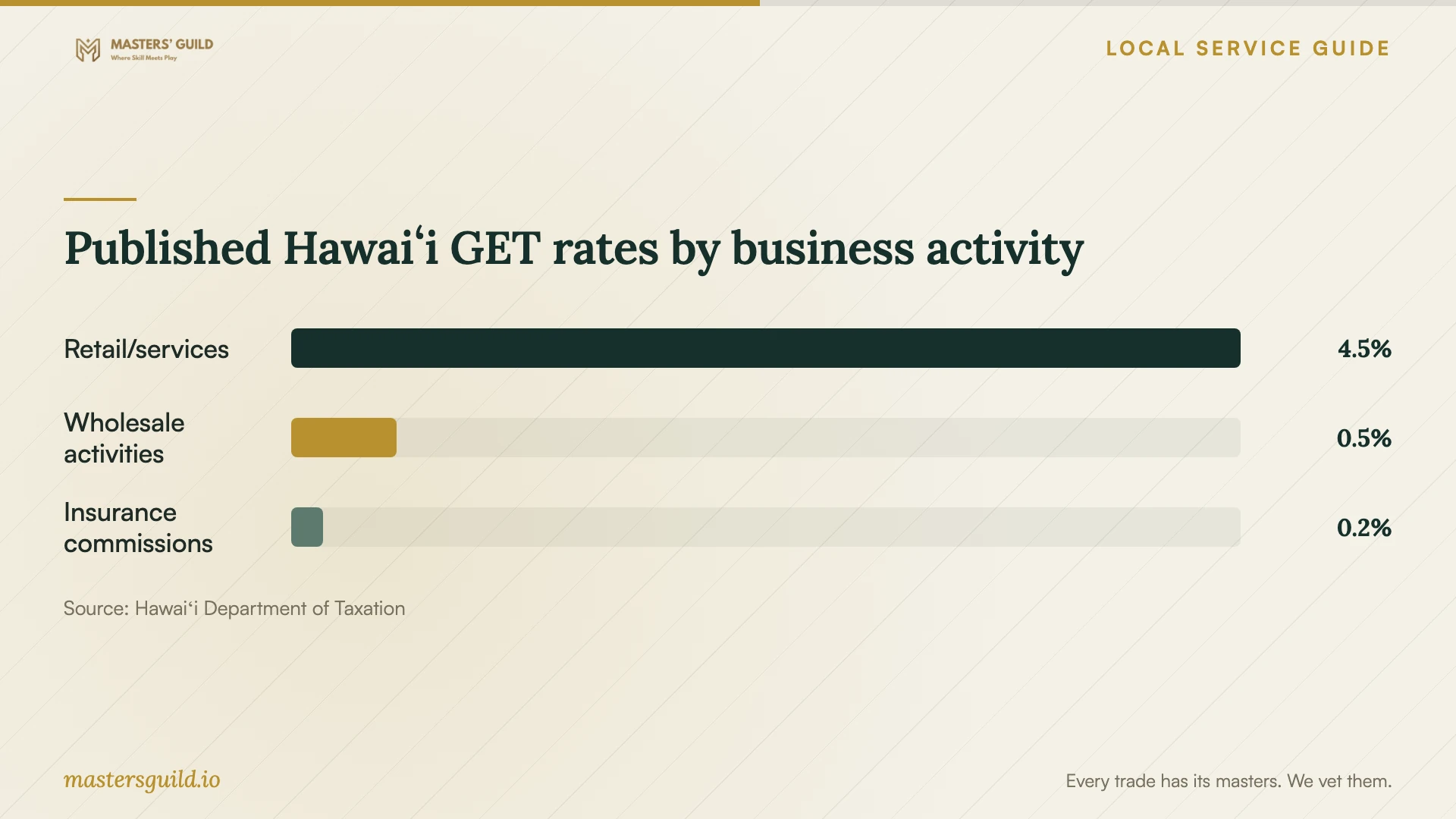
Published Hawaiʻi GET rates by business activity
Local details that affect your job
Oʻahu advisory support before paying for drafting
The Hawaiʻi SBDC lists its Oʻahu office at 677 Ala Moana Blvd, Suite 612, Honolulu, with telephone number (808) 945-1430 and signup for no-cost, one-on-one advisory services. Ask about available planning and projection support before defining a paid assignment, and confirm appointment arrangements before visiting. [1] [2]
Hawaiʻi GET assumptions belong in the model
The Hawaiʻi Department of Taxation states that GET applies to gross receipts before business-expense deductions. It publishes a retail and service rate of 4.5%, including the county surcharge. Businesses may pass GET on to customers; when they do, they must include that amount in gross receipts. Ask the consultant to show customer charges and GET payments in the model, then confirm the applicable classification with your tax advisor. [4]
Separate registration help from plan writing
Hawaiʻi DBEDT identifies the state Business Action Center as a resource for registration, taxes, and filing requirements. If those questions remain unresolved, seek that guidance alongside the planning work. Ask the consultant to distinguish document preparation from any registration or compliance tasks in the proposal. [3]
Choose the scope that fits your next decision
| Your situation | Suggested scope | Question before agreeing |
|---|---|---|
| Testing an early business idea | Owner-led draft with advisory review | Can the advisor help identify the assumptions I need to test? |
| Preparing a loan request | Recipient requirements review, funding narrative, and projections | Have we confirmed the lender’s requested documents and forecast period? |
| Buying an existing business | Historical financial review and acquisition planning | Who will review the seller’s records and identify unresolved questions? |
| Expanding an operating business | Updated forecast and comparison of growth options | Can I see the cash needs for each option before committing? |
Your hiring checklist
- Name the intended reader and obtain its submission requirements.
- List the decisions you need help making and the deadline.
- Gather financial records, lease terms, supplier quotes, and staffing assumptions.
- Ask the Oʻahu SBDC what advisory support fits your project.
- Request matching written scopes from paid consultants.
- Specify editable files, research sources, revision limits, and payment milestones.
- Review the financial assumptions and downside case before accepting delivery.
Frequently Asked Questions
How much should I budget for a consultant?
Set the budget after defining the assignment. Request an itemized proposal that separates review, writing, research, modeling, and revisions. Ask about additional charges for changes to the brief or follow-up work. Hawaiʻi SBDC offers no-cost advisory services, so assess that option before paying for overlapping help. [2]
What should I clarify before commissioning a loan business plan?
Confirm the requested amount, how you will use the money, proposed loan terms, and the financial outlook the lender wants to review. DBEDT advises owners to understand their funding needs and repayment ability before applying. Ask the consultant to explain the assumptions behind the repayment forecast. [3]
Should I ask for an editable spreadsheet?
Yes. Specify editable financial files and a walkthrough in the scope. Ask the consultant to show you how to update prices, sales volumes, staffing, and opening dates, and how those changes affect cash needs.
Does plan writing include choosing a legal structure?
Define that responsibility before hiring. DBEDT recommends considering advice from an attorney who specializes in business setup when choosing a structure. Ask the consultant to identify questions for that attorney and your tax advisor. [3]
Sources and scope
This guide combines the sources below with practical planning guidance. Figures apply to the stated geography and period; request a written quote for your property.