
Local service guide
Bathroom Remodeling in Honolulu: Plan and Hire
For Bathroom Remodeling in Honolulu, define the fixture and layout changes before requesting bids, then verify the contractor’s Hawaii license and assign responsibility for permits. DCCA requires a contractor’s license for projects exceeding $1,500 in labor and materials or requiring a building, electrical, or plumbing permit. Ask each bidder to price the same scope, identify the plumbing and electrical team, and explain how you will use your home during construction. [2]
Define the bathroom you want before comparing bids
Prepare a room sketch and a short scope that separates items you will keep from items you want replaced. Identify whether you want to retain the toilet, shower, and vanity locations. Include photographs of the existing room and any visible damage. Ask bidders to explain proposed changes before you approve demolition.
For a shower replacement, request the proposed waterproofing system, drain details, and the checks the contractor will complete before covering the work. Specify tile, fixtures, storage, lighting, ventilation, and any accessibility goals. Ask who will supply each product and who will handle returns or a damaged delivery.
Request an itemized proposal rather than relying on a room-size estimate. Separate demolition, plumbing, electrical work, shower preparation, finishes, fixtures, permit-related costs, and disposal. For an allowance, ask which product and quantity the contractor assumed. Agree on a written approval process for concealed damage and other extra work.
Confirm permits and trade responsibilities
Honolulu DPP states that converting part of an existing dwelling into a bathroom requires a building permit. For changes within an existing bathroom, give DPP the proposed scope and ask which permits and plans you need. Its FAQ ties building permit requirements to ROH Chapter 18; it does not establish one permit answer for every bathroom refresh. [1]
DPP says all electrical and plumbing work must involve contractors licensed by Hawaii. It also says a general contractor is typically required when a project needs more than two specialty contractors. Ask the bidder to name the responsible businesses and explain who will submit the application, arrange inspections, and handle permit closure. [1]
Avoid setting a demolition date around an assumed approval time. DPP describes permit timing as highly variable, depending on drawings, project complexity, compliance, records, backlog, and outside approvals. Ask for a schedule that separates permit review, product delivery, construction, and inspections. [1]
Verify the team before signing
Get the contractor’s legal name and license number, then use the verification resources on DCCA’s hiring page. DCCA requires licensing when labor and materials exceed $1,500 or when a project requires a building, electrical, or plumbing permit. A small price does not remove the licensing requirement for permitted work. [2]
DCCA states that electrical and plumbing contractors must employ licensed electricians and plumbers to perform the actual work. Ask who will work in your home and check the relevant credentials. Request current insurance documentation and make sure the business named in the contract matches the business you checked. [2]
Ask for references from projects with a similar shower scope or building arrangement. Discuss daily access, protection of adjacent rooms, debris removal, payment milestones, and responsibility for correcting defects. If you have one bathroom, agree on a usable toilet and bathing plan before work starts.
Choose fixtures with the rebate and water bill in mind
The BWS residential program lists a $200 rebate for WaterSense-labeled toilets using 1.28 gallons per flush or less, with a limit of four per household. The rebate cannot exceed the product’s purchase price. Check the application terms for your purchase and keep the sales receipt; BWS requests the receipt with the completed application. [3]
Ask your plumber to confirm the toilet’s fit and installation requirements before ordering. Record the model number and WaterSense labeling in your fixture schedule. Treat the rebate as a separate application rather than deducting it from the contractor’s price without an agreement.
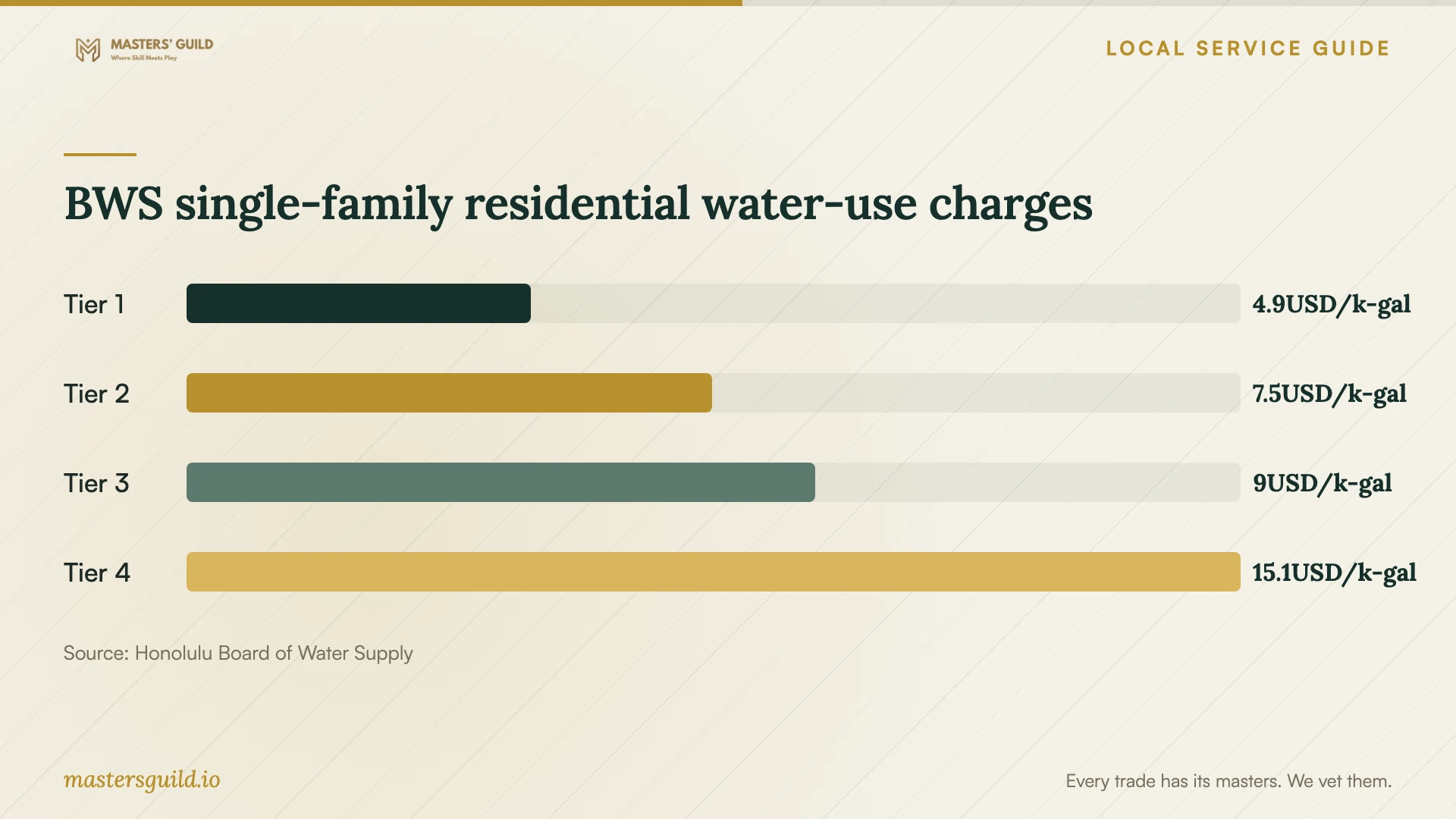
BWS publishes different water-use tiers for single-family and multi-unit residential accounts. Its definitions place single-family and duplex residences in the single-family class, and apartments, condominiums, and townhouses in the multi-unit class. Check your account class before using the chart to consider fixture choices. [4]
BWS single-family residential water-use charges
Local details that affect your job
Resolve the application route for your property
DPP says instant online building permits are mostly for single-family dwellings and have property restrictions, including flood-zone and advisory issues. Projects that do not qualify must use electronic plan review. For a condo bathroom, ask DPP to confirm the route rather than assuming you can use the single-family instant option. Separately, ask your building manager about renovation approval, water shutoffs, work hours, and delivery access. [1]
Use the toilet rebate before finalizing the purchase
BWS lists a $200 residential rebate for a qualifying WaterSense-labeled toilet, capped at the purchase price, with a four-toilet household limit. Confirm the model against the application terms before buying and keep the receipt. You can submit the completed application and receipt through the program’s portal, by email, or by mail. For eligibility questions, the program lists 808-237-6877. [3]
Check bathroom limits when adding a room
If you plan to add a bathroom, ask DPP to check the applicable zoning rules before paying for a final design. DPP’s residential guidance ties bathroom limits to zoning lot size and the number of dwelling units. It counts a room containing two of these fixtures as a bathroom: bath or shower, sink, or toilet. Do not assume that calling a room a half bath avoids the count. [1]
Match your scope to the next step
| Your planned work | Hiring or planning decision | Before committing |
|---|---|---|
| Refresh finishes in an existing bathroom | Describe the exact work to DPP and ask which permit requirements apply. | List any plumbing or electrical work separately in the bid. |
| Convert another room into a bathroom | DPP requires a building permit for this conversion. | Confirm applicable bathroom limits and the application route before final design. |
| Include electrical or plumbing work | Use licensed contracting businesses and licensed individuals for the actual electrical and plumbing work. | Check credentials and name the responsible trades in the contract. |
| Replace a residential toilet | Consider the BWS $200 WaterSense toilet rebate, subject to eligibility and the purchase-price cap. | Confirm the model, the 1.28-gallons-per-flush maximum, and application terms before buying. |
| Renovate a condo bathroom | Confirm the permit route; DPP says instant permits are mostly for single-family dwellings. | Ask the building manager about approval, shutoffs, and access arrangements. |
Your hiring checklist
- Write a shared bid scope with photographs, fixture locations, and the items you will keep.
- Ask DPP to confirm the permit route using your address and proposed work.
- Record the contractor’s legal name, license number, and responsible plumbing and electrical businesses.
- Request insurance documentation and references for comparable work.
- Compare allowances, exclusions, waterproofing details, and written change-order terms.
- Confirm toilet fit and rebate eligibility before purchasing; retain the receipt.
- Agree on access, shutoffs, bathroom downtime, inspection responsibilities, and completion documents.
Frequently Asked Questions
How much should I budget for a bathroom remodel?
Use itemized bids for your actual scope. The cited local sources do not provide a verified bathroom-remodel price range. Ask contractors to separate trade work, fixtures, finishes, permit-related costs, and allowances, then agree on how you will approve extra work.
Can I do my own plumbing or electrical work?
Honolulu DPP says all electrical and plumbing work must involve contractors licensed by Hawaii. DCCA also requires electrical and plumbing contractors to employ licensed electricians and plumbers for the actual work. Verify both the business and the people assigned to those tasks. [1] [2]
How long will permit approval take?
DPP gives no fixed approval time in its FAQ. It describes timing as highly variable and identifies drawings, complexity, compliance, backlog, records, and outside approvals as factors. Ask your contractor to separate permit review from the construction schedule. [1]
Does the toilet rebate cover installation?
The program page caps the rebate at the product’s purchase price. Do not assume it reimburses installation labor. Check the application terms, confirm the toilet’s eligibility, and keep the sales receipt for submission. [3]
Sources and scope
This guide combines the sources below with practical planning guidance. Figures apply to the stated geography and period; request a written quote for your property.