
Local service guide
Basement remodeling in Honolulu: Plan and Hire
For basement remodeling in Honolulu, arrange a site assessment and confirm the intended room use, permit history, and current flood designation before comparing construction bids. Hire a licensed contractor for work that exceeds $1,500 in labor and materials or requires a building, electrical, or plumbing permit. If you want a separate dwelling, start with the city’s ADU feasibility process: converting a basement into an accessory dwelling unit requires a building permit and current building-code compliance. [1] [2] [3]
Define the room before choosing finishes
Write down how you intend to use the space: recreation, storage, a bedroom, or a separate household. Give the designer a sketch, photographs, and previous approved plans. Ask them to assess ceiling height, stairs, exits, ventilation, structure, and suitability for your proposed use before you select flooring or cabinets. Have them identify which conditions they can assess during the visit and which need further investigation.
Honolulu’s Department of Planning and Permitting identifies basements as spaces homeowners may convert into accessory dwelling units, subject to ADU requirements and current building standards. The department defines an ADU as a second dwelling with its own kitchen, bedroom, and bathroom facilities. Its FAQ also states that a dwelling unit may have only one kitchen. If you want another cooking area, ask DPP to confirm the approval route before paying for a kitchen layout. [3]
Check flood status before committing to a remodel
Review the effective flood map for your address rather than relying on a previous owner’s description. DPP says Oʻahu’s updated maps took effect on June 10, 2026, and include streams that earlier studies had not covered. Properties newly placed in Special Flood Hazard Areas may face additional permitting requirements. Depending on the construction scope, DPP may require a reviewed building-permit application instead of a Quick Permit. [2]
Ask DPP how floodplain rules affect your proposed work before authorizing demolition or an extensive finish package. The department describes substantial improvement as work costing at least 50 percent of the structure’s market value before construction, or a smaller percentage if the community establishes one. Use the structure’s value for this discussion rather than the entire property’s sale price. For a structure in a Special Flood Hazard Area, a substantial-improvement determination requires compliance with the current flood ordinance. [2]
Keep moisture investigation separate from finish selection. Show the contractor water marks, damp surfaces, previous repairs, and photographs taken during rain. Request a written explanation of the suspected entry point and proposed repair. Ask how the team will check its work before enclosing walls or installing flooring.
Assign permit and inspection responsibilities
Ask the contractor or designer to confirm permits for your exact scope. DPP requires a building permit when you convert part of a dwelling into a bathroom, wet bar, or laundry room. It also requires one for conversion of an interior room into an ADU. The department’s FAQ includes multiple portal references, including ePlans and HNL Build. Ask DPP to confirm the submission process for your proposed building work before the applicant starts an application. [3]
Include the applicant’s name, responsibility for review comments, permit fees, and inspection scheduling in your agreement. DPP bases permit fees on fair-market labor and material value and charges a plan-review fee when plans require review. The department describes permit timing as highly variable, depending on completeness, complexity, compliance, existing records, illegal work, backlog, and outside approvals. Ask for a schedule that distinguishes design, review, procurement, construction, and inspections. [3]
Request a permit number and approved plans for your records. At completion, ask for inspection documentation and confirm permit closure with the assigned inspector. DPP directs owners to that inspector to close a building permit and lists inspector contact information on the permit. [3]
Compare contractors and the full project cost
Get the business name and contractor license number before signing. Hawaii DCCA provides license-check resources and says electrical and plumbing contractors must employ licensed electricians and plumbers for the actual work. Honolulu DPP says a general contractor is typically required when a project needs more than two specialty contractors. Ask each bidder to identify the supervising contractor and proposed trade subcontractors, then verify their credentials. [1] [3]
Obtain site-specific quotes after the assessment. Give bidders a shared scope and request separate amounts for demolition, disposal, moisture work, framing, electrical, plumbing, ventilation, finishes, design, and permits. Identify allowances for fixtures and materials, exclusions, payment milestones, and the process for approving changes. Ask who pays for exploratory work if the team discovers hidden damage, and require written approval before expanding the work.
Before choosing a start date, agree on material storage, access through the home, dust protection, daily cleanup, and service interruptions. Ask whether the team can complete an investigation phase before you commit to the full construction contract. For a proposed separate dwelling, make the construction commitment depend on confirmation of the approval path.
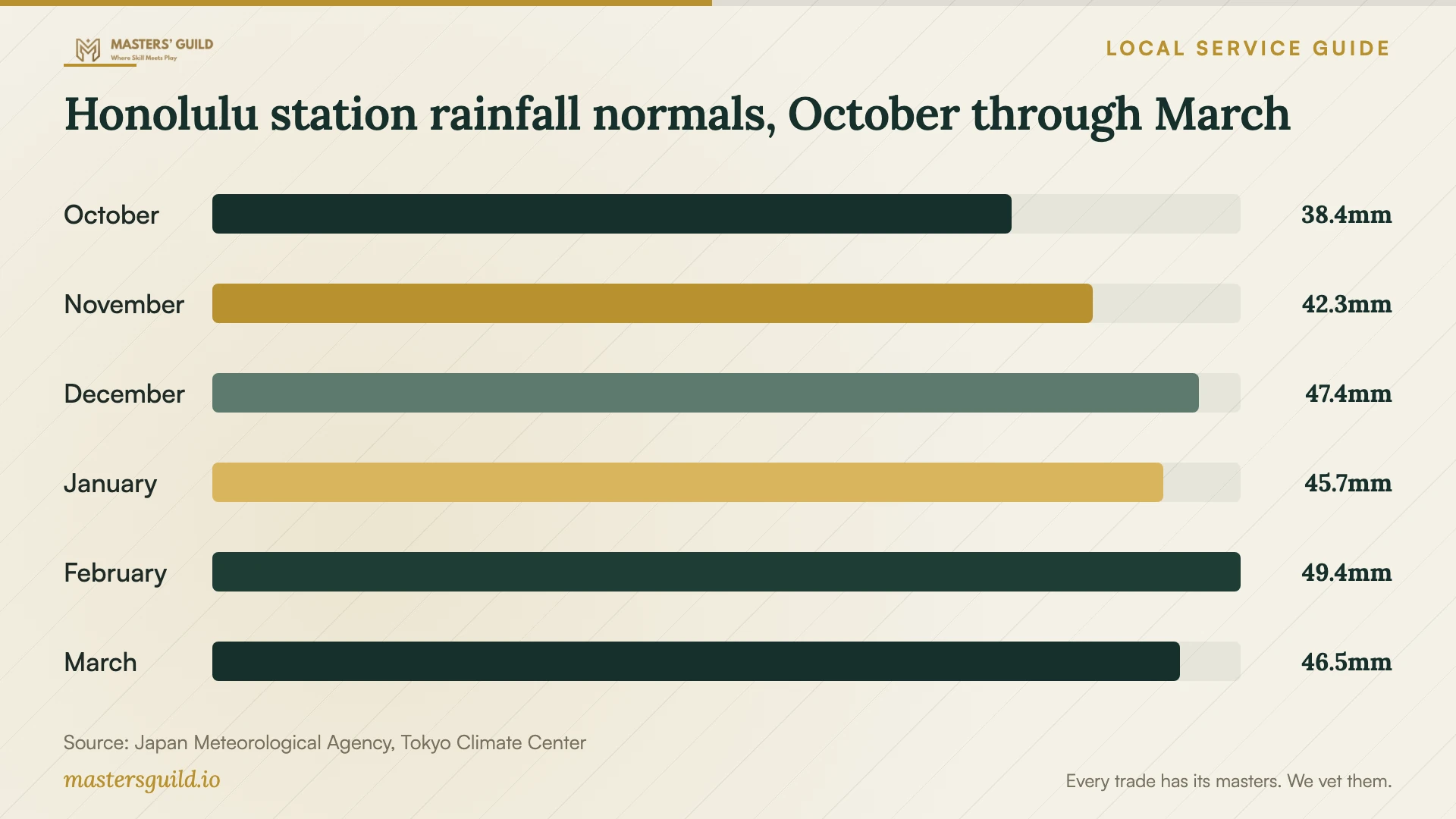
Honolulu station rainfall normals, October through March
Local details that affect your job
New flood maps can change the permit route
Oʻahu’s maps effective June 10, 2026 can change a property’s flood designation and eligibility for Quick Permits. Give DPP your address or Tax Map Key and proposed basement scope, and ask whether floodplain review affects the conversion. Call the department at 808-768-8000. Resolve this before accepting a bid that assumes expedited approval. [2] [3]
A basement apartment needs an ADU feasibility check
DPP’s stated ADU process begins with an ADU pre-check form, followed by a building-permit application and an address request if needed. The department checks infrastructure adequacy before issuing an ADU permit. It also states that homeowners must address private covenants prohibiting ADUs with the relevant parties. Request this feasibility review before buying kitchen equipment or commissioning a complete apartment design. [3]
Retrieve approved plans before designing around existing work
DPP says owners may obtain previous permitted plans through its Data Access and Imaging Branch, with a records request if required. Contact the branch at 808-768-8277. Give those records to your designer and ask them to flag differences between the approved layout and the room as it stands. [3]
Choose the next step for your proposed space
| Your plan or finding | Next step | Reason |
|---|---|---|
| Recreation room within the existing home | Ask DPP and the designer to confirm permits for the full scope. | DPP determines permit requirements under Honolulu’s building-permit rules. |
| Add a bathroom, wet bar, or laundry room | Include a building permit and appropriate licensed trades in the scope. | DPP requires a building permit for these conversions. |
| Create a separate basement dwelling | Start with the ADU pre-check and confirm eligibility. | Basement-to-ADU conversion requires a building permit and current code compliance. |
| Parcel falls in a Special Flood Hazard Area | Confirm floodplain requirements before finalizing designs. | Flood designation and construction scope can affect permitting and improvement requirements. |
| Existing layout differs from approved plans | Ask the designer and DPP how to address the discrepancy. | DPP identifies existing illegal work and records availability as factors in permit review. |
Your hiring checklist
- Write the intended room use and list the features you need.
- Gather photographs, previous plans, permits, and records of water entry.
- Ask DPP to confirm flood-related requirements and the submission route for your scope.
- Arrange an assessment of moisture, structure, access, and room suitability.
- Ask each bidder for credentials and the names of proposed trade subcontractors.
- Compare bids using the same scope, allowances, exclusions, and change process.
- Assign application handling, review responses, inspection scheduling, and closeout in writing.
Frequently Asked Questions
Do I need a licensed contractor for a small basement project?
Hawaii requires a contractor’s license when a project exceeds $1,500 in labor and materials or requires a building, electrical, or plumbing permit. Check the business’s license before hiring. DCCA also requires electrical and plumbing contractors to employ licensed electricians and plumbers for the actual trade work. [1]
Can I convert my basement into a rental apartment?
DPP identifies basements as spaces that may qualify for ADU conversion, with a building permit and current building standards. Start with its ADU pre-check. Confirm zoning, infrastructure, private restrictions, and occupancy requirements for your parcel before committing to a rental layout. [3]
How long should I allow for permits?
DPP describes approval timing as highly variable and names plan completeness, complexity, compliance, records, backlog, and outside approvals as factors. Ask your applicant for review milestones and separate them from the contractor’s construction schedule. [3]
Does the rainfall chart show whether my basement will flood?
No. The chart uses monthly precipitation normals for one Honolulu station. Use those averages as context when planning observations during rain, rather than as a forecast or parcel assessment. Check the effective flood map and arrange a property assessment before deciding how to address water entry. [2] [4]
Sources and scope
This guide combines the sources below with practical planning guidance. Figures apply to the stated geography and period; request a written quote for your property.