
Local service guide
Special Item Transport in Hialeah, FL
For Special Item Transport in Hialeah, choose a mover who will inspect your item and both access routes, then document preparation, transport, and final placement in a written estimate. This guide covers household-item moves within Florida: check FDACS registration for an intrastate mover, and ask Miami-Dade Consumer Protection which county credentials and protections apply to your route. Compare handling plans and damage protection before booking. [1] [2] [3]
Define the item and the handling you need
Describe the item’s make, model, dimensions, and documented weight if available. Send photographs of its condition and the pickup and delivery routes. Specify the destination room and final position. Ask the estimator to inspect uncertain measurements before confirming the work.
For a piano, ask who handles preparation and reassembly. For a slate pool table, request separate descriptions of disassembly, transport, reassembly, and leveling. For a safe, ask the mover to explain its handling plan and identify any anchoring work you must arrange with another provider.
Request examples of comparable jobs and the names of any subcontractors. Confirm who accepts responsibility for damage during each stage. Include final positioning and removal of packing materials in your requested scope so you can compare complete offers.
Check registration for your actual route
FDACS requires intrastate moving companies to register with the department. For a household-item move within Florida, use its Business License Lookup or call 1-800-435-7352. Match the business name and registration number to the company on your estimate and contract. [3]
Miami-Dade describes its regional coverage as moves from Miami-Dade to Miami-Dade, Broward, or Palm Beach, and moves from Broward or Palm Beach to Miami-Dade. Its two pages give different county-registration instructions. Ask Consumer Protection Licensing at 786-469-2300 which credential applies to the mover’s business location and your exact route before accepting the booking. [1] [2]
Do not apply this intrastate guidance to a state-to-state move. Miami-Dade directs interstate customers to the Federal Motor Carrier Safety Administration at 1-888-368-7238. Contact that agency for the federal requirements relevant to your shipment. [1]
Compare complete estimates and clarify charges
FDACS recommends an in-person evaluation; it treats phone and internet estimates as rough planning tools. Its guidance lists hourly rates, stairs or elevators, packing, appliance servicing, and long carries among possible pricing bases. Ask each bidder which charges apply to your item and route. [3]
Measure openings, hallway turns, and landings. Tell the estimator about elevator reservations, building move hours, and the distance between the truck and the item. Miami-Dade warns that missing information about stairs, elevators, or time restrictions can increase the cost. [1]
Ask for a total that identifies preparation, transport, setup, waiting, and any storage. FDACS says the written estimate and contract must include itemized costs and services, pickup and delivery information, the mover’s address and registration number, and acceptable payment methods. [3]
Miami-Dade’s consumer page links increases to added items or information omitted during estimating; its licensing page describes a 10 percent estimate-overrun ceiling. These pages do not settle which wording controls your situation. Ask Consumer Protection to clarify a proposed increase for a covered route, and request a written explanation before agreeing to extra work. [1] [2]
Choose protection and document condition
Miami-Dade describes free minimum valuation of 60 cents per pound, per article. Its example gives a 50-pound television only $30 in compensation regardless of actual value. Ask the mover to show the weight-based amount for your item and explain the available added valuation. [1]
Read the offered limits, exclusions, deductibles, and claim instructions. Ask whether the selected protection covers preparation, loading, transit, unloading, and reassembly. FDACS advises checking your homeowners policy for professional-move coverage and discussing a rider with your insurer if needed. [3]
Photograph existing scratches, chips, and missing parts. For covered regional moves, Miami-Dade requires the mover to prepare an inventory before loading unless you decline one in writing. The mover must disclose any inventory-preparation charge beforehand. Review the condition descriptions and retain your copy. [1]
Arrange loading and inspect final placement
Ask how the crew will protect the item between the building and truck. Agree on conditions for postponing exposed loading, a contact person for schedule changes, and any waiting charges. Identify a covered staging area if available and clear the agreed access route.
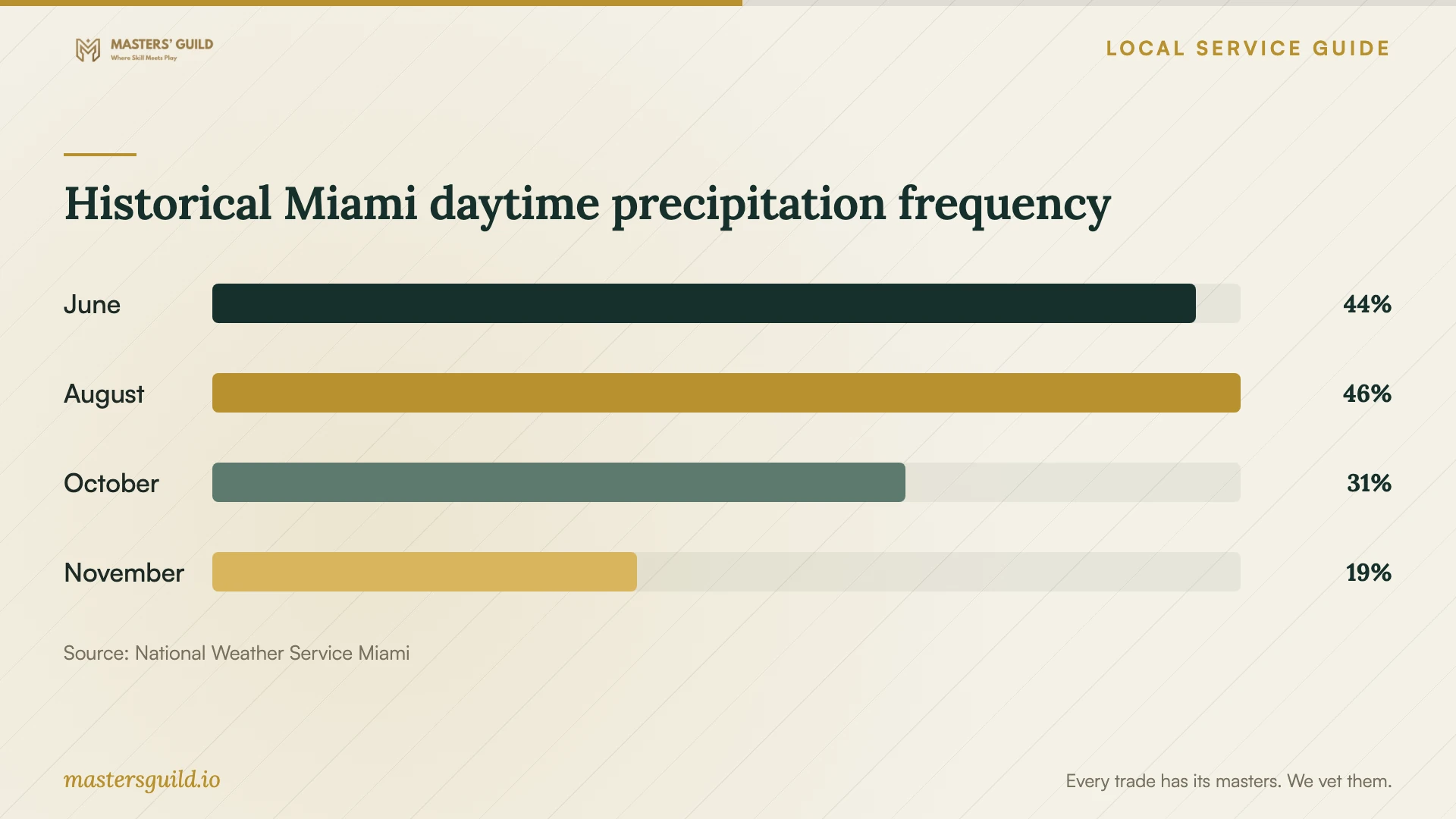
The chart uses historical Miami observations from 1985–1997. The NWS study recorded measurable precipitation during 31 percent of available October daytime periods and 19 percent of November periods. Use the history to discuss weather protection; check the forecast for your move date rather than treating these percentages as a Hialeah forecast. [4]
Inspect the item after placement and photograph concerns. For covered regional moves, Miami-Dade allows up to 60 days after final delivery to notify the mover in writing of loss, damage, or delay. It says a mover cannot deny a damage claim solely because you did not note the damage at delivery. [1]
Historical Miami daytime precipitation frequency
Local details that affect your job
Ask the county to confirm the credential
For a covered tri-county household move involving Hialeah, give Miami-Dade Consumer Protection Licensing your pickup address, destination, and mover’s principal business location. Call 786-469-2300 to ask which county registration or permit applies and how to verify it. The consumer page calls for Miami-Dade registration, while the licensing page refers to the principal-business county. Obtain agency clarification rather than choosing between those instructions yourself. [1] [2]
Distinguish county packing rules from statewide guidance
For routes covered by its regional consumer guidance, Miami-Dade says movers cannot charge separately for pads, blankets, strapping, dollies, or packing materials when the mover does the packing. FDACS’s statewide guidance describes charges for packing labor, containers, and materials. If your quote lists separate equipment or material charges, ask Miami-Dade Consumer Protection whether its regional restriction applies to your shipment before accepting the total. [1] [3]
Keep the regional complaint contact with your paperwork
For a dispute on a covered regional move, Miami-Dade lists its Consumer Mediation Center at 786-469-2333. Keep your estimate, contract, inventory, photographs, and written claim together before contacting it. For an intrastate complaint, FDACS also accepts complaints at 1-800-435-7352. Describe the route and unresolved issue so the agency can direct your next step. [1] [3]
Choose the scope before comparing offers
| Your item or access | Request in the estimate | Confirm before booking |
|---|---|---|
| Piano | Preparation, handling, transport, and reassembly | Who performs each stage and handles any damage claim. |
| Slate pool table | Disassembly, transport, reassembly, and leveling | Final placement and any separate setup appointment. |
| Heavy safe | An inspection of the item and complete access route | The handling plan and any separately arranged anchoring work. |
| Restricted building access | Arrival window, elevator arrangements, and waiting terms | Disclose stairs, elevators, and move-hour restrictions during estimating. |
| Valuable household item | Written added valuation options | Compare the terms with minimum valuation of 60 cents per pound, per article. |
Your hiring checklist
- Record the item’s model, dimensions, documented weight, and existing condition.
- Photograph both access routes and measure openings, turns, and landings.
- Arrange building access, elevator reservations, and a loading location.
- Give bidders the same scope and request an inspection before confirming uncertain handling.
- Check FDACS registration for an intrastate mover and ask the county agency about credentials for your route.
- Confirm preparation, transport, reassembly, final placement, and any separate specialist work.
- Read valuation terms and clarify equipment charges, weather delays, and proposed price changes.
- Retain the paperwork and inspect the item after placement.
Frequently Asked Questions
Does a single-item move need a registered mover?
For a household-item move within Florida, check the intrastate mover’s FDACS registration. For a covered tri-county route, ask Miami-Dade Consumer Protection to confirm the applicable county credential. For an interstate shipment, contact FMCSA for federal guidance. [1] [2] [3]
Can photos replace an inspection?
Use photos to describe the item and access, then request an inspection before confirming uncertain measurements or handling. FDACS recommends having the estimator see the items in person and treats phone or internet estimates as rough estimates. [3]
Can the mover charge for blankets and packing materials?
Miami-Dade’s covered-route guidance prohibits separate equipment charges and packing-material charges when the mover packs. FDACS’s statewide guidance describes packing-material charges. Ask the county agency which treatment applies to your route and quote. [1] [3]
What if I find damage after delivery?
Photograph it and notify the mover in writing. For covered regional moves, Miami-Dade allows up to 60 days after final delivery for claim notification and prohibits denial solely because you did not record the damage at delivery. Keep copies of your submission. [1]
Sources and scope
This guide combines the sources below with practical planning guidance. Figures apply to the stated geography and period; request a written quote for your property.