
Local service guide
Mold removal in Hialeah: hiring and repair planning
Arrange mold removal around the moisture repair and the cleanup scope. For a Hialeah home, ask who will locate and fix the water source, remove affected materials, and handle any permitted repairs. Florida licenses mold assessors and remediators through DBPR, while Hialeah lists interior renovations, roofing repairs, and plumbing or mechanical repairs among projects requiring permits. Check those responsibilities before accepting an offer. [1] [2]
Choose the right level of help
Start with the affected area, the water source, and the materials involved. Florida’s Department of Health says homeowners can handle many areas smaller than about 10 square feet, roughly a 3-foot-by-3-foot patch. Its guidance directs readers toward more extensive remediation guidance when growth exceeds that area or substantial water damage exists. The size threshold does not settle questions about contaminated water or personal health. [2]
Hire someone with contaminated-water cleanup experience if sewage or other contaminated water caused the damage. For suspected mold inside the air-conditioning system, seek HVAC-specific guidance before arranging general surface cleaning. Florida health guidance recommends shutting the system down during cleaning or mold removal when mold is found in it. [2]
Describe what you can see without opening walls: the room, approximate affected area, staining, odor, and any known leak. Send photographs and explain whether previous cleaning solved the problem or the growth returned. Ask the contractor to distinguish confirmed damage from areas that need investigation.
Question testing charges and check credentials
Do not assume you need an air test before arranging cleanup. Florida’s Department of Health does not recommend sampling to establish whether a mold problem exists or identify its type. It says sampling is unnecessary in most cases with visible growth and that no health or exposure-based standards exist for evaluating a mold sampling result. [2]
If someone proposes testing, ask what question it will answer, who will interpret the results, and how the findings would change the work. Ask for a separate price and written explanation. Keep investigation of hidden moisture in the discussion rather than treating a laboratory result as the whole assessment.
Florida assigns licensing of mold assessors and mold remediators to the Department of Business and Professional Regulation. Ask for the credential appropriate to the proposed work and confirm its status with DBPR. The health department also advises checking mold-cleanup experience and references, and asking which government or industry cleanup guidance the contractor follows. [2]
Compare the complete scope and price
Request separate amounts for investigation, moisture-source repair, cleanup, material removal, and rebuilding. Ask each bidder to identify the rooms and surfaces included, any exclusions, and the approval process for hidden damage. Compare offers against the same scope before choosing on price.
Ask which materials the contractor expects to clean and which they expect to replace. Florida health guidance says moldy drywall, carpet padding, and insulation may need removal and replacement when they cannot be cleaned. It also explains that killing mold alone does not remove the health risks from exposure to dead mold. [2]
Agree on how the contractor will protect belongings, manage access to the work area, document drying, and decide when rebuilding can begin. Request written completion criteria and a record of any moisture repairs. Ask whether the quoted price includes disposal, final cleaning, and replacement finishes.
Coordinate repairs with city permits
Hialeah lists interior renovations, roofing repairs and reroofs, plumbing and mechanical repairs or alterations, and AC change-outs among projects requiring permits. A mold job involving those repairs needs a permit discussion before work begins. The city page does not establish a blanket permit exemption or requirement for every mold-cleanup task. [1]
Give the Building Department the proposed work description, including any wall removal, roof repair, plumbing changes, or AC work. Its published number for questions about permit types is 305-883-5825. Ask the contractor to identify who will obtain required permits and coordinate inspections, then include that responsibility in the agreement. [1]
Plan drying and prevent a repeat
Check the moisture source alongside the visible damage. Florida health guidance identifies roof and wall leaks, plumbing leaks, overflowing AC drain pans, condensation, and poor bathroom or kitchen ventilation as possible sources. It recommends inspecting AC coils, liner surfaces, drain pans, and drain lines for moisture problems. [2]
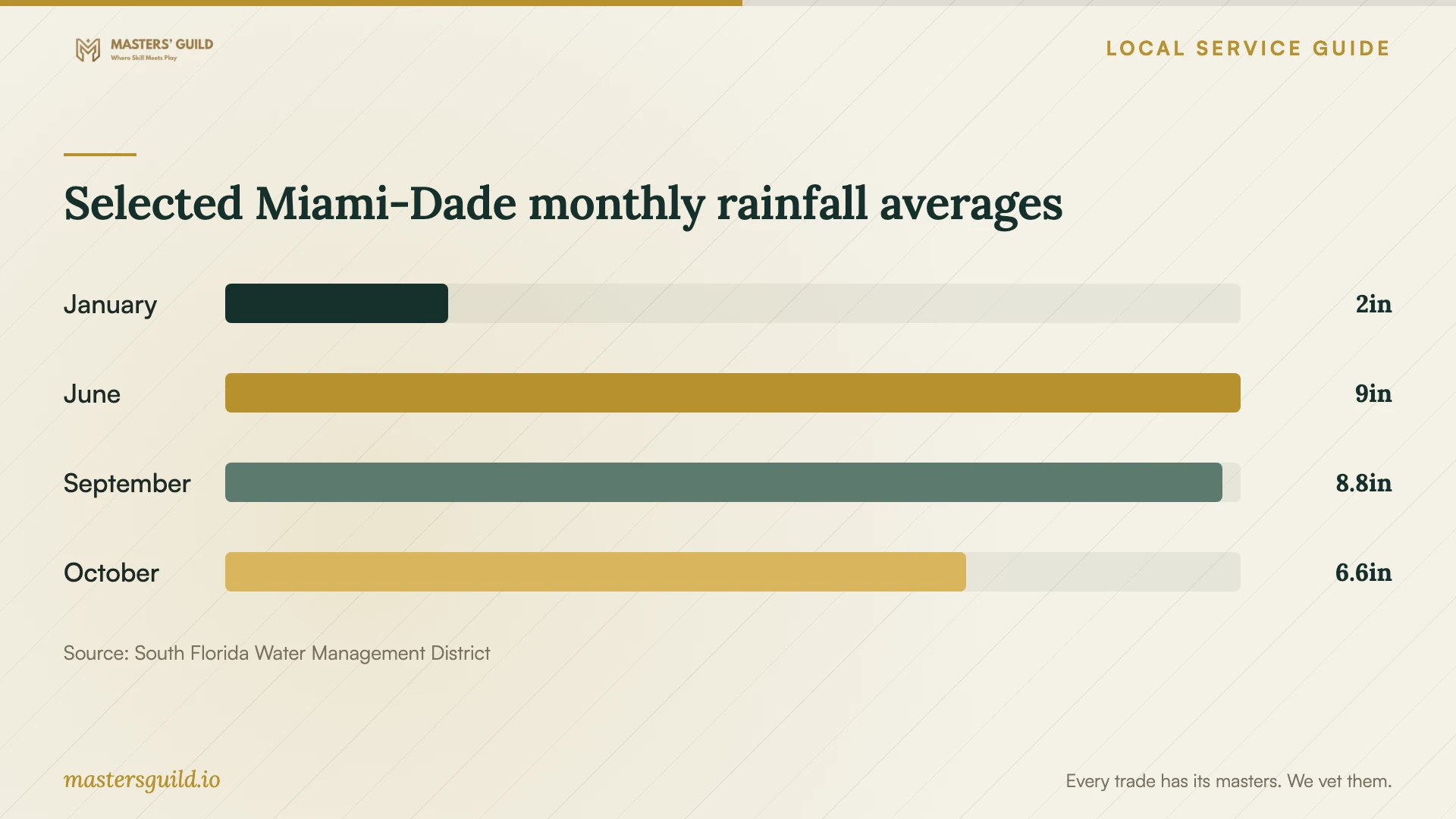
The regional rainfall chart gives context for discussing rain-related leaks. Miami-Dade’s 1991–2020 monthly averages include 8.98 inches in June and 6.55 inches in October. For damage that appears after rain, ask how the contractor will investigate entry points and protect the repair area during the work. These county figures do not establish the cause of damage in your home. [3]
Florida health guidance recommends drying wet building materials and carpets within 24 hours and keeping indoor humidity below 60 percent. If central air conditioning needs help from a dehumidifier to reach that humidity level, the department recommends examining the AC system for problems. Include these moisture questions in the repair discussion. [2]
Selected Miami-Dade monthly rainfall averages
Local details that affect your job
Hialeah repair permits affect the cleanup schedule
The city names interior renovations, roof repairs, and plumbing or mechanical repairs as permit-requiring projects. Before accepting a combined cleanup-and-rebuild quote, describe the repair scope to the Building Department at 305-883-5825 and confirm which permits apply. [1]
Florida has a mold-specific licensing authority
Florida’s Department of Health identifies DBPR as the licensing authority for mold assessors and remediators. Request the relevant license details when comparing providers and confirm them with DBPR; ask separately about experience with the water source and materials in your home. [2]
Match the situation to the next step
| Situation | Next step |
|---|---|
| Small patch under about 10 square feet | Consider homeowner cleanup under Florida health guidance, taking water damage and health concerns into account. |
| Visible mold with a proposed testing charge | Ask why sampling is needed; Florida health guidance says it is unnecessary in most visible-growth cases. |
| Sewage or other contaminated water | Use a professional with contaminated-water cleanup experience. |
| Suspected AC-system contamination | Seek HVAC-specific guidance before proceeding with cleanup. |
| Roof, plumbing, mechanical, or interior renovation work | Confirm the repair permit requirements with Hialeah’s Building Department. |
Your hiring checklist
- Photograph visible damage and record when you first noticed moisture or odor.
- Describe known leaks and previous cleanup attempts.
- Request license details, references, and the proposed cleanup guidance.
- Ask what any proposed sampling would change about the work.
- Separate moisture repair, cleanup, disposal, and rebuilding in the quote.
- Confirm permit responsibilities for the proposed repairs.
- Agree on access, belongings protection, completion criteria, and documentation.
Frequently Asked Questions
Should I pay to identify the mold species?
Florida health guidance says you do not need to identify the type of mold to address a home mold problem. It recommends removing indoor growth regardless of type. Ask how a proposed identification test would change the cleanup plan. [2]
Does mold cleanup require a Hialeah permit?
The city’s page does not give a mold-specific answer. It lists interior renovations, roofing repairs, and plumbing or mechanical repairs among permit-requiring work. Describe the complete cleanup and repair scope to the Building Department before work begins. [1]
Can the contractor just spray the affected wall?
Ask how the contractor will remove growth and correct moisture. Florida health guidance says bleach or other chemicals are unnecessary in most cases, and that materials such as drywall may require replacement when they cannot be cleaned. [2]
What if the mold returns after cleaning?
Florida health guidance says returning or spreading mold may indicate an underlying problem such as a water leak. Arrange investigation of the moisture source and document what repair the contractor proposes before repeating the same cleanup. [2]
Sources and scope
This guide combines the sources below with practical planning guidance. Figures apply to the stated geography and period; request a written quote for your property.