
Local service guide
Carpet Cleaning in Hialeah, FL: Hiring and Prep
Arrange Carpet Cleaning in Hialeah by asking for a written scope, a drying plan, and an explanation of where the cleaner will dispose of extraction wastewater. The city prohibits non-stormwater discharges into drainage systems. Tell the cleaner before booking if your carpet has suffered a leak, flooding, or suspected mold so you can discuss whether you need water-damage assessment. [1] [4]
Request a quote you can compare
Give each cleaner the same description: rooms and approximate dimensions, stairs, visible stains, pet accidents, carpet labels if available, and furniture you want moved. Send photographs of the areas that concern you. Ask the cleaner to identify anything they must inspect before confirming the price.
Request an itemized total that states the cleaning method, included areas, furniture handling, stain treatment, and any separate odor treatment. Ask about the minimum visit charge, access charges, taxes, and optional treatments rather than assuming an advertised room price covers your job. Require your approval before the cleaner adds work.
Ask what result the cleaner expects for each problem area and what they will do if a mark or odor remains. Request a drying estimate for your carpet and home, plus instructions for walking on it and replacing furniture. Avoid planning your move-in or furniture delivery around an unconfirmed drying promise.
Check wastewater handling and business credentials
Ask the cleaner to describe wastewater recovery and disposal before you book. Hialeah states that city and Miami-Dade County regulations prohibit non-stormwater discharges to drainage systems. Ask the provider to identify an approved disposal arrangement rather than accepting a plan to empty the machine into a street drain. [1]
The city’s Business Tax Division issues business tax receipts to businesses operating within Hialeah. To clarify which receipt requirements apply to a provider, contact the division at 305-883-5890. Use that check alongside questions about insurance, carpet-care training, and the person who will perform the work. [2]
Request a written invoice with the business name and contact information. Ask for evidence of liability insurance and an explanation of how the provider handles accidental damage. Keep photographs of existing stains, loose seams, and damaged trim so you and the cleaner can agree on the starting condition.
Plan access around rain and your household
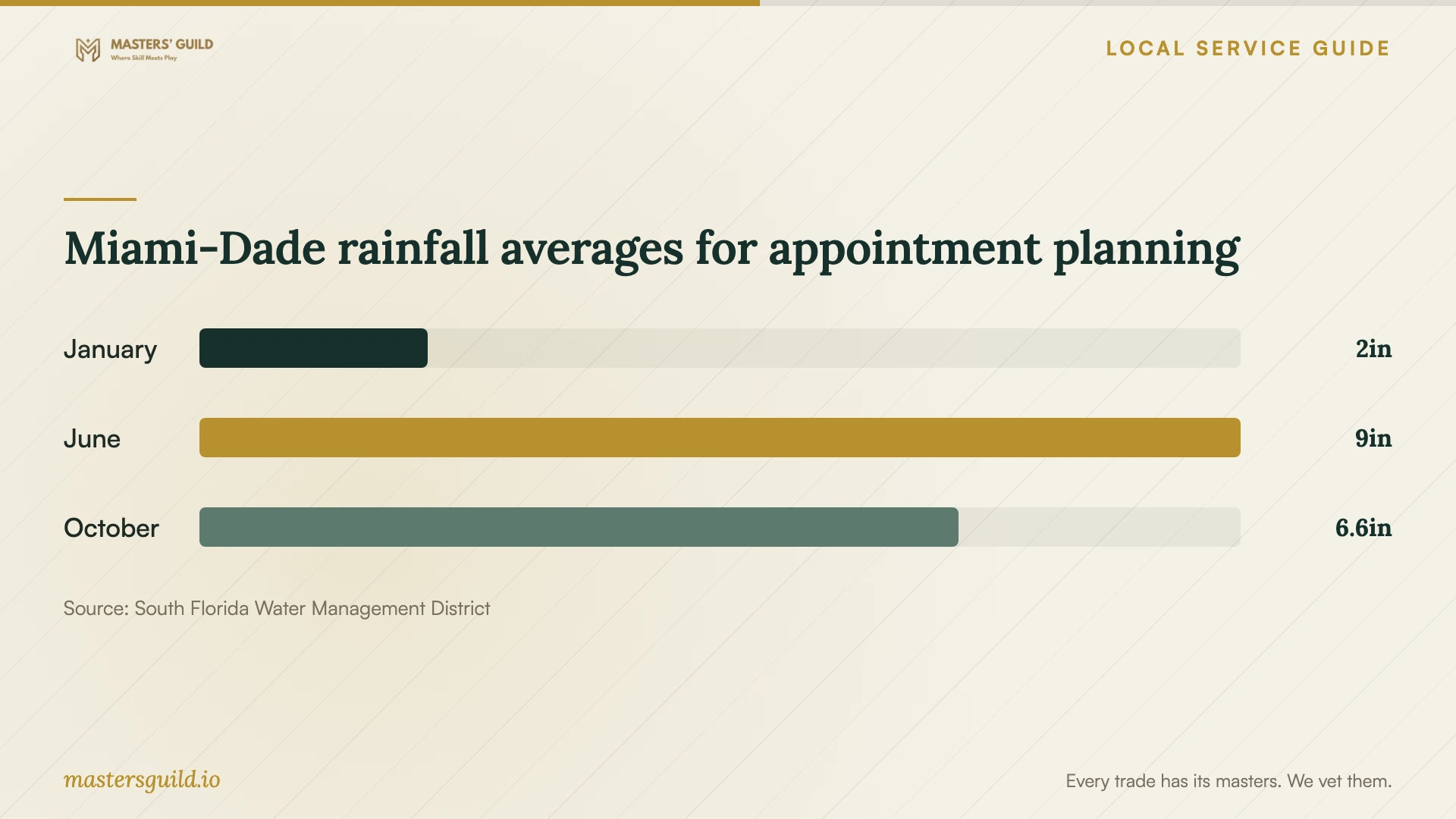
Use county rainfall averages to frame your access questions. The South Florida Water Management District reports Miami-Dade averages of 8.98 inches in June and 6.55 inches in October, compared with 1.97 inches in January, for 1991–2020. Ask how the cleaner will protect the route between the vehicle and your carpet during rain. [3]
Describe parking, stairs, gates, and the distance from the vehicle to your door. If you live in a building with shared access, check its contractor hours and elevator arrangements before choosing an appointment. Ask whether the provider needs water or electricity and where hoses or cords will run.
Choose an appointment when you can keep children and pets away from the work area and follow the cleaner’s drying instructions. Agree on what happens if rain disrupts equipment access. Ask who will move furniture, protect adjacent floors, and confirm when you can use the rooms again.
Separate routine cleaning from water-damage work
Report leaks, floodwater, persistent dampness, and musty odors when you request an estimate. EPA advises drying wet or damp materials within 24–48 hours to help prevent mold growth. That guidance concerns moisture damage; it does not establish a normal drying time for a carpet-cleaning appointment. [4]
For clean-water damage, EPA describes extracting water and lifting carpet and padding for drying, with airflow and dehumidification. EPA also states that wet vacuums alone will not dry carpets. Ask a water-damage professional how they will assess the backing, pad, and floor beneath before agreeing to a surface-cleaning service. [4]
If you suspect sewage or other contamination, seek a professional with experience in contaminated-water work. EPA advises against using fans until someone has determined that the water is clean or sanitary. Describe the water source and when the damage occurred so the provider can assess the job. [4]
Miami-Dade rainfall averages for appointment planning
Local details that affect your job
Confirm a disposal route before arrival
Hialeah prohibits non-stormwater discharges into drainage systems. Ask the cleaner where recovered wastewater will go and how they will transport it there. Resolve an unclear answer before scheduling. [1]
Use the city’s business-tax contact
Hialeah’s Business Tax Division handles business tax receipts for businesses operating within the city. Call 305-883-5890 to clarify applicable requirements when checking a provider; ask the cleaner separate questions about training and insurance. [2]
Keep an October rain contingency
Miami-Dade’s October rainfall average is 6.55 inches for 1991–2020. For an October appointment here, agree on protected equipment access and rescheduling terms. This county average does not predict rain at your address. [3]
Match the appointment to the problem
| Your situation | What to arrange | Question before booking |
|---|---|---|
| Dry carpet with ordinary soil or isolated stains | Request a routine cleaning assessment and written scope. | Which areas and treatments does the total include? |
| Carpet wet after a clean-water leak | Request water-damage assessment covering carpet, backing, padding, and drying. | How will you assess and dry the layers beneath the surface? |
| Suspected sewage or contaminated water | Consult a professional experienced in contaminated-water work. | How will you assess contamination before using fans? |
| Cleaner proposes emptying wastewater into a storm drain | Require a disposal arrangement consistent with the local discharge prohibition. | Where will you take the recovered wastewater? |
Your hiring checklist
- Send room dimensions, photographs, and a description of stains or odors.
- Disclose leaks, flooding, dampness, or suspected contamination before booking.
- Request an itemized total and approve extras before work begins.
- Ask where the cleaner will dispose of recovered wastewater.
- Confirm parking, building access, and any water or electricity needs.
- Agree on furniture moving, floor protection, and a rain contingency.
- Get drying instructions and follow-up terms in writing.
Frequently Asked Questions
How much should I budget for carpet cleaning?
Get a written quote for your rooms, stairs, stains, furniture handling, and access conditions. The sources supporting this page do not establish a Hialeah market price. Compare totals for the same scope and ask which charges could change after inspection.
Can a cleaner empty dirty water into a street drain?
Hialeah states that city and county regulations prohibit non-stormwater discharges into drainage systems. Ask your cleaner to explain the wastewater collection and disposal arrangement before the appointment. [1]
Does EPA’s 24–48-hour guidance mean cleaning takes that long to dry?
EPA gives that window for drying wet or damp materials to help prevent mold growth after moisture damage. It is not a carpet-cleaning drying estimate. Ask the cleaner for an estimate specific to your carpet, method, and indoor conditions. [4]
What should I do if the carpet smells musty after a leak?
Tell the provider about the leak and odor before arranging cleaning. EPA includes musty odors and continuing moisture problems among the issues to assess when planning mold remediation. Ask for an assessment of moisture and the underlying materials. [4]
Sources and scope
This guide combines the sources below with practical planning guidance. Figures apply to the stated geography and period; request a written quote for your property.