
Local service guide
Yard Cleanup in Henderson, NV: Scope and Hiring
Arrange Yard Cleanup in Henderson by defining what the crew should remove, what must stay and who will haul the debris. Request a written total for that scope, with pruning, irrigation repairs and lawn removal priced as separate tasks. If you want an SNWA lawn-conversion rebate, wait for its pre-conversion inspection and authorization before anyone removes the lawn. [2]
Define the cleanup before comparing quotes
Walk the yard and divide the work into removal and preservation. Identify loose litter, fallen branches, weeds and accumulated leaves you want removed. Mark shrubs, volunteer plants and groundcover you want to keep. For gravel beds, specify whether you want debris picked out, weeds pulled or surface material removed. Ask the bidder to describe the proposed method.
Include access details: gate width, steps, the route from the backyard to the vehicle and where the crew may stage debris. Photograph the areas behind sheds and beside fences, not just the view from the patio. Ask whether the quote includes loading, hauling, disposal and a final sweep of paths.
Request a price for the defined job rather than relying on an hourly rate alone. If a bidder proposes hourly work, ask for the crew size, expected hours and a spending limit that requires your approval to exceed. Have the bidder identify exclusions before you accept.
Protect irrigation while clearing vegetation
Ask the crew to uncover and flag irrigation components before pulling dense growth or moving surface material. SNWA recommends checking drip lines for breaks and emitters for clogs or broken heads each month. It also advises checking valve boxes for debris buildup or muddy conditions that indicate poor drainage. [1]
Agree on a stop-and-report rule for exposed tubing, leaks or damaged heads. Decide whether the cleanup crew will only flag problems or whether a separate repair scope will follow. Before the crew leaves, inspect the cleared areas together and record any irrigation damage that needs attention.
Protect mature trees if cleanup expands into turf removal or digging. SNWA advises identifying and protecting major roots, avoiding trenching under the canopy and using a protective barrier around the tree during landscape conversion. Ask the bidder to explain how the work will respect those boundaries. [1]
Choose the season for the actual task
Book debris pickup and vegetation removal according to your immediate needs, but discuss pruning as a separate decision. SNWA recommends late-winter pruning, finishing heavy pruning by mid-February before buds swell, and removing no more than one-quarter of living tissue during the year. Do not treat a general cleanup request as permission to cut back every plant. [1]
For an autumn visit, include a review of the irrigation controller after the work. SNWA limits landscape watering from September 1 through October 31 to three assigned days per week, including drip irrigation, and excludes Sunday as an optional watering day. Its separate fall recommendation for drip systems is two watering days per week, with runtime depending on the emitter. [1]
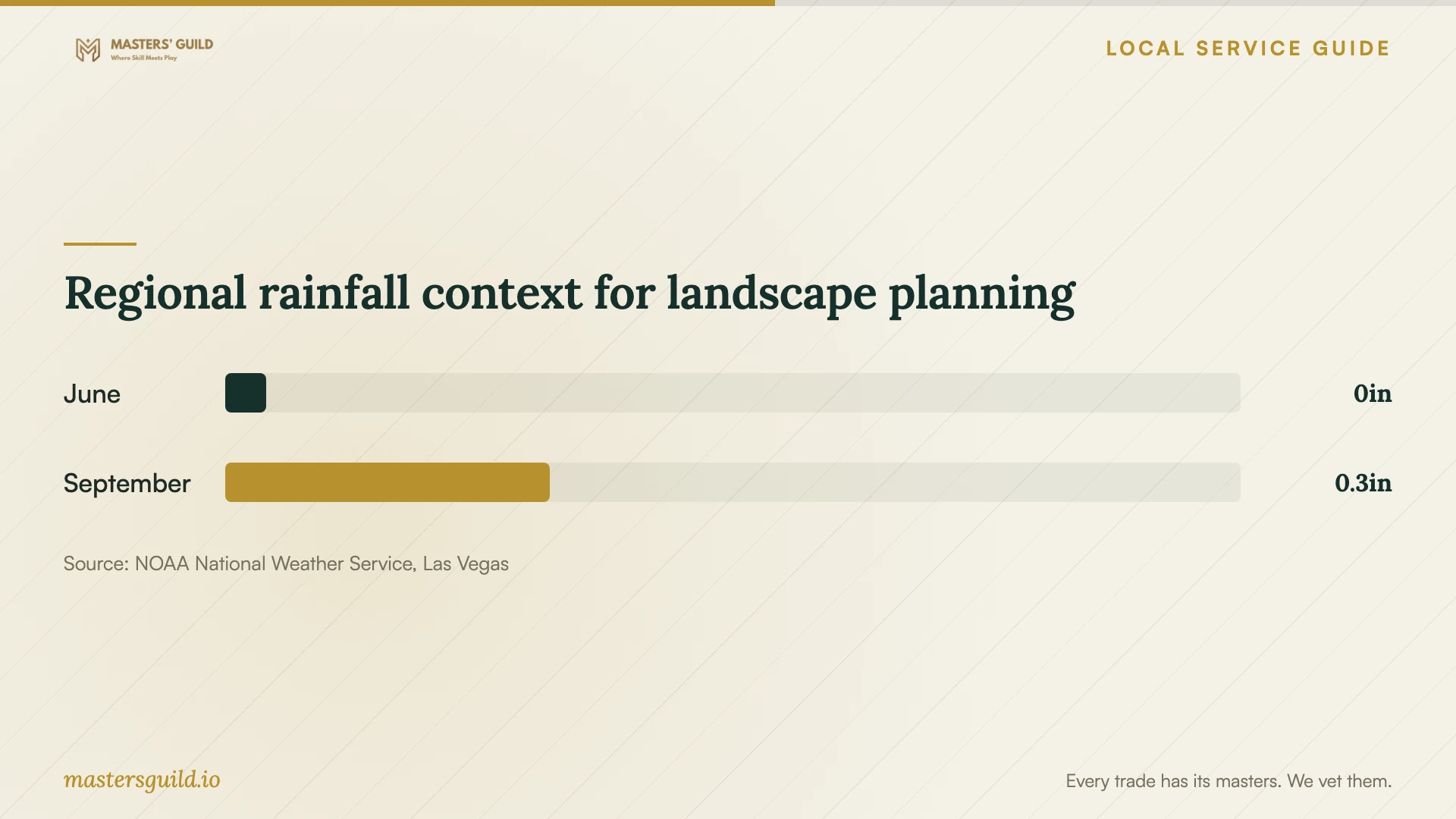
Use the regional rainfall chart as background when planning irrigation checks. The National Weather Service reports Las Vegas climate normals, not measurements from your yard. Check actual soil and plant conditions rather than asking the crew to change watering solely because a month appears dry. [3]
Keep lawn conversion under a separate agreement
If you are considering the Water Smart Landscapes rebate, tell bidders before they start. SNWA requires a pre-conversion site inspection and authorization before lawn removal. Starting without approval makes the conversion ineligible. Its residential application says a representative will call within 14 working days to arrange the visit; that is not a promised inspection date. [2]
Ask for separate cleanup and conversion scopes so you can authorize debris removal while holding back lawn removal. The residential program requires living, maintained lawn in qualifying areas and generally requires at least 400 square feet of conversion, with discretionary exceptions for smaller eligible areas. Confirm eligibility with SNWA before assuming an overgrown or neglected lawn qualifies. [2]
Review the long-term commitment before including a rebate in your budget. SNWA requires a conservation easement that restricts certain uses of the converted area in perpetuity. Ask the conversion bidder to identify plant coverage, irrigation and surface-treatment work separately from the initial cleanup. [2]
Regional rainfall context for landscape planning
Local details that affect your job
Fall watering affects the cleanup handoff
For a cleanup during September or October, ask the crew to leave the controller on your assigned schedule. SNWA limits landscape irrigation to three assigned days per week during those months, applies restrictions to drip systems and excludes Sunday. Include controller settings in the handoff if the crew operates irrigation during the visit. [1]
Rebate approval must precede lawn removal
For a residential SNWA rebate project, complete enrollment and the pre-conversion inspection, then obtain authorization before removing lawn. Ask the cleanup bidder to mark lawn removal as pending approval. SNWA states that starting without its approval makes the conversion ineligible. [2]
Choose the scope to request
| Your situation | Scope to request | Before work starts |
|---|---|---|
| Loose debris and weeds | Defined cleanup with loading and hauling | Mark plants to keep and agree on disposal. |
| Growth conceals drip tubing | Cleanup with irrigation protection | Flag components and agree how the crew will report damage. |
| You want heavy pruning | Separate plant-specific pruning scope | Discuss timing; SNWA recommends late winter. |
| You want a lawn-conversion rebate | Separate cleanup and conversion agreements | Obtain SNWA inspection and authorization before lawn removal. |
Your hiring checklist
- Send matching photos and cleanup boundaries to each bidder.
- Mark plants, gravel and landscape features you want preserved.
- Identify drip tubing, valve boxes and sprinkler heads before work.
- Confirm gate access, vehicle staging and the debris removal route.
- Get hauling, disposal, exclusions and extra-work approval terms in writing.
- Hold rebate-related lawn removal until SNWA authorizes it.
- Inspect the finished yard and record unresolved irrigation problems.
Frequently Asked Questions
How should I compare cleanup prices?
Give bidders the same scope and ask for a written total covering labor, loading, hauling and disposal. Compare exclusions and extra-work terms alongside price. For hourly proposals, request crew size, expected hours and an approval limit.
Should the crew remove all the mulch?
Ask the crew to distinguish debris from mulch you want to retain. SNWA recommends mulch around plants to help limit moisture loss, root freezing and weed growth. Specify any mulch removal or replacement as its own task. [1]
Can cleanup begin while I wait for rebate approval?
Keep any authorized debris cleanup separate from lawn removal. SNWA requires inspection and authorization before removing lawn for a rebate conversion. Ask SNWA about any proposed work that could alter the lawn before inspection. [2]
Sources and scope
This guide combines the sources below with practical planning guidance. Figures apply to the stated geography and period; request a written quote for your property.