
Local service guide
Tile Setting in Henderson, NV: Hiring and Planning
For Tile Setting in Henderson, choose a contractor whose active Nevada license covers the proposed work, then agree on preparation, materials, payment stages, and room access in writing. Nevada lists C-20 as its tiling classification and requires contractors to hold licenses before bidding unless an exemption applies. Treat a small repair exemption as a scope question to resolve before hiring. [1]
Choose the contractor for the full scope
Ask for the legal business name and Nevada contractor license number before requesting a bid. The Nevada State Contractors Board says specialty contractors must hold a license before submitting bids and identifies C-20 as tiling. Check that the business you plan to hire holds an active license with classifications covering its proposed work. [1]
Use the Board’s license search by license number, company name, or principal or qualifying individual. Match the search result to the business named on your proposal. The Board cautions that its online information may not reflect recent changes, so resolve a missing or unclear record with the Board before signing. [2]
For a shower remodel, ask who will handle each part of the work, including any plumbing changes. Have the bidder identify the responsible businesses and explain which work each will perform. Keep those names in the written scope rather than accepting a general promise that someone will handle it.
Separate a small repair from a remodel
Nevada’s repair and maintenance exemption covers qualifying work valued below $1,000 including labor and materials. The Board lists exclusions for permit-required work, specified trades, certain public-safety classifications, and work connected to larger projects. Do not assume that replacing a few tiles qualifies because the quoted labor falls below the threshold. [1] [3]
The Board’s detailed guidance also excludes work performed as part of a larger project valued at $500 or more, or involving contracts below $500 awarded to evade licensing requirements. Before using the exemption for a repair within a bathroom renovation, describe the whole project to the Board and ask whether the exemption applies. [1]
Send photographs of the damaged area and surrounding surfaces. Explain whether you want a cosmetic replacement or an investigation into recurring damage. Ask the contractor to describe what they will inspect after removal and how you will approve additional work before they proceed.
Compare quotes with the same preparation scope
Give each bidder the same room measurements, tile selection, pattern, and photographs. Request separate descriptions of demolition, disposal, surface preparation, installation, grout, edge finishing, and cleanup. Ask who buys the tile and who pays for replacement material if the order arrives damaged or differs from your selection.
For floors, ask the contractor to explain how they will assess the existing surface and handle cracks, uneven areas, and transitions to adjoining rooms. For showers, request a written description of the proposed waterproofing system and any testing. Ask the installer to identify the manufacturer instructions they will follow.
Agree on the layout before installation: starting points, visible cuts, grout width, edge trim, and transitions. Ask for a drawing or a dry layout at the most visible wall or doorway. Record how you will approve changes if removal exposes a condition the contractor could not inspect during the estimate.
Agree on payments and usable-room dates
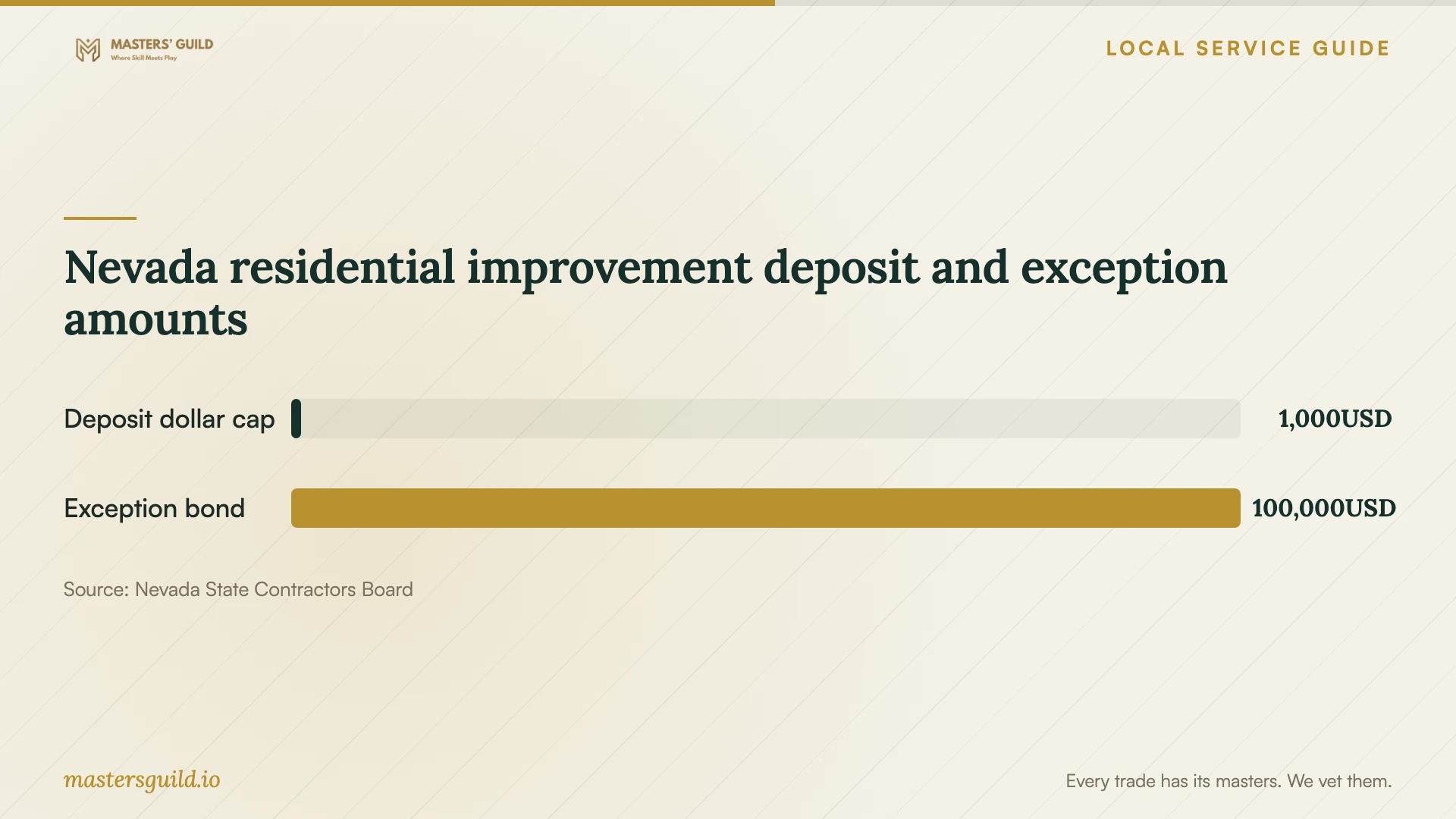
For contractors performing residential improvement work, the Board states that the down payment cannot exceed $1,000 or 10% of the contract price, whichever is less. It lists exceptions involving a $100,000 Consumer Protection Bond or prior relief from the license-bond requirement. Ask the Board to confirm any claimed exception before paying a larger deposit. [1]
Ask for payment stages tied to described work and put changes in writing before authorizing them. Keep the signed proposal, payment receipts, material selections, and photographs together. Have the contractor explain warranty coverage and who you should contact about a defect.
Request separate dates for installation completion and return to use. Ask when you may walk on the floor, move furniture back, or use the shower under the selected products’ instructions. Plan another bathroom or access route if the work affects your household’s only practical option.
Nevada residential improvement deposit and exception amounts
Local details that affect your job
Nevada licensing applies to Henderson tile work
Nevada’s contractor rules provide the hiring check here: C-20 covers tiling, and an inactive license holder may not bid or contract for work. Before accepting a proposal, check the business through the Board’s license search and resolve any uncertainty about the classifications needed for the full scope. [1] [2]
Check a larger deposit with the Southern Nevada office
For residential improvement work, compare the requested down payment with Nevada’s lesser-of-$1,000-or-10% rule. If the contractor claims an exception, ask the Board to confirm it. The Board lists 702-486-1100 for Southern Nevada licensing and customer service. [1]
Resolve the scope before choosing a bid
| Project situation | Hiring or planning step |
|---|---|
| New floor or wall installation | Check active licensing and whether the classifications cover the work; Nevada lists C-20 tiling. |
| Standalone repair below $1,000 total | Check all exemption conditions with the Board, including materials, permit requirements, and trade exclusions. |
| Tile repair within a larger renovation | Review the larger-project restriction before relying on the repair exemption. |
| Shower project involving plumbing | Identify the licensed business responsible for plumbing; the repair exemption excludes plumbing-type work. |
Your hiring checklist
- Photograph the work area, adjoining finishes, and existing damage.
- Write down the tile selection, layout preferences, and rooms included.
- Obtain the contracting business name and license number.
- Request written descriptions of preparation, removal, disposal, and finishing.
- Identify who handles any plumbing or other work outside the tile scope.
- Agree on how to approve concealed-condition repairs and added costs.
- Record payment stages, warranty terms, and return-to-use instructions.
Frequently Asked Questions
Does a tile setter need a Nevada contractor license?
Nevada generally requires contractors, including specialty contractors, to hold a license before bidding. The Board lists C-20 tiling. A qualifying repair or maintenance exemption may apply, but check the complete scope and exclusions before relying on it. [1] [3]
Can I hire an unlicensed person for a small tile repair?
A repair below $1,000 including labor and materials may qualify for an exemption. Price alone does not establish eligibility. The Board lists permit, trade, public-safety, larger-project, and other exclusions. Ask the Board about your specific repair before hiring under the exemption. [1] [3]
How much should I pay upfront?
For residential improvement work, the Board states a down-payment limit of $1,000 or 10% of the contract price, whichever is less, subject to specified exceptions. Confirm a claimed exception with the Board before agreeing to a larger deposit. [1]
How should I compare tile installation prices?
Request quotes against the same tile selection and preparation scope. Ask each bidder to identify exclusions and explain how they will price hidden damage. Compare the full written scope, payment stages, and return-to-use plan alongside the total.
Sources and scope
This guide combines the sources below with practical planning guidance. Figures apply to the stated geography and period; request a written quote for your property.