
Local service guide
Snow removal in Henderson, NV: Plan the Right Visit
Snow removal in Henderson calls for a property-specific plan: start by comparing an on-call clearing and ice-treatment visit with any seasonal offer. Ask the provider to name the areas they will clear, the conditions that trigger dispatch, and the arrival window. The National Weather Service describes measurable snowfall as infrequent at the Las Vegas Valley’s official airport station, so use that regional context to question a recurring commitment, while checking conditions at your own home. [1]
Choose a visit that matches your access needs
Start with the route you need to use: the front door to the vehicle, steps, a ramp, or the driveway exit. Tell the provider when you need that route cleared and whether anyone in the household needs step-free access. Ask whether they can accept an advance arrangement for a storm call and how they confirm dispatch.
NWS says snow in the Las Vegas Valley usually melts as it falls and that measurable snow at the official climate station occurs about once every four or five years. That station sits at Harry Reid International Airport. Treat this as regional background, rather than a forecast or a service-frequency estimate for a Henderson address. [1]
Compare a per-visit offer with a seasonal proposal using the same scope. For a recurring agreement, ask what you pay during a winter without a qualifying visit, whether the provider includes ice-only calls, and how cancellation works. Choose terms that match the access you need and the standby service the provider promises.
Write a snow and ice scope before comparing prices
Send photos and measurements of the driveway, walks, and steps. Identify the surface material, slope, gate clearance, and places where the crew can leave cleared snow. Mark irrigation heads, landscape edging, and other obstacles. Ask the provider to specify equipment and treatment products before you approve the work.
Request an itemized quote covering the call-out minimum, clearing, ice treatment, and any return visit. Ask whether the provider charges by visit, time, or area, and what changes the total after arrival. Define who approves extra work and whether the provider charges if you cancel after dispatch.
Ask for proof of insurance covering the proposed work and a process for reporting surface or landscape damage. If you share an entrance or driveway, confirm which areas your household is arranging and which belong to an association or another owner before booking.
Include irrigation ice in the plan
SNWA advises residents to water in midmorning during winter to reduce icing associated with early-morning or evening watering. It also directs residents to adjust sprinkler heads so they do not spray driveways or sidewalks. Before arranging repeated ice-treatment visits, inspect whether your sprinklers wet the affected route. [2]
Ask the clearing provider to identify wet areas during the visit and photograph the completed route. Arrange irrigation adjustment as a separate task if it falls outside the agreed scope. For any proposed deicer, ask for the product name, application instructions, and compatibility with your paving and nearby planting.
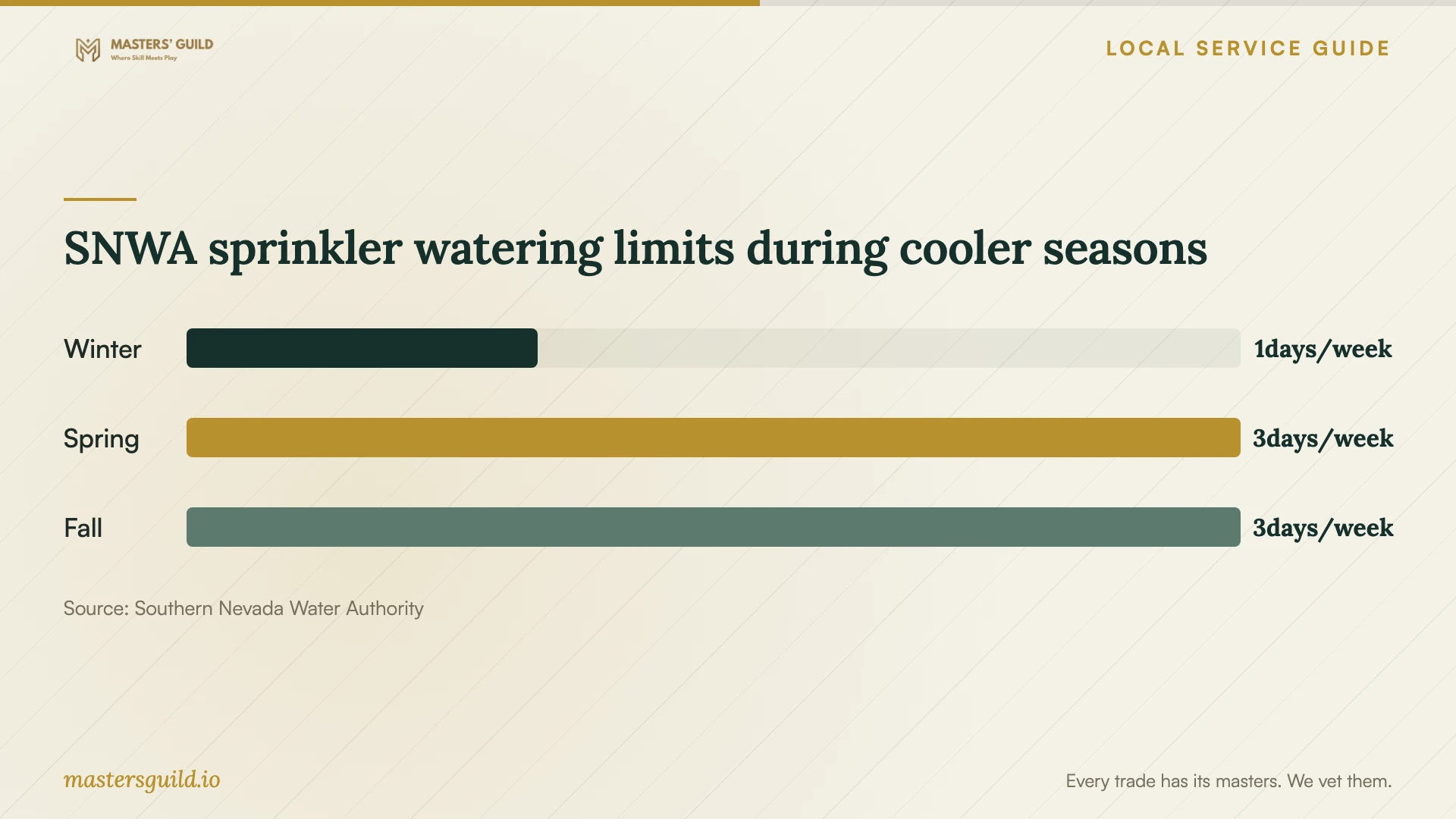
Keep watering restrictions in view when changing the controller. SNWA limits winter sprinkler irrigation to one assigned day per week; its spring and fall schedules allow three assigned days. SNWA also says watering restrictions apply to drip irrigation and Sunday is not an optional watering day. [2]
Set dispatch and return-visit terms
Use observable conditions in your agreement: accumulation on the driveway, ice on the entrance route, or another trigger you and the provider define. Ask who checks the property, how you request a visit, and when the provider will tell you about a delay. Include access instructions and a contact number.
NWS’s review of the February 2019 valley storms explains that surface temperatures, snow levels, and precipitation intensity affected where snow accumulated. During the second event, daytime warming brought a transition to rain and removed the previous night’s ground accumulation. This historical example supports checking your address before dispatch; it does not predict the next storm. [3]
Agree on the result you expect at completion and how you will check it. Ask whether the quote includes a later inspection, additional treatment, or another clearing pass if conditions change. Keep those return terms in writing alongside the initial arrival window.
SNWA sprinkler watering limits during cooler seasons
Local details that affect your job
Prevent sprinkler-fed ice on the entrance route
SNWA’s winter guidance connects early-morning and evening watering with icing and recommends midmorning watering. It also advises keeping sprinkler spray off paved access areas. Check controller timing and spray direction before arranging repeat treatment of the same icy patch. [2]
Change timing within the assigned watering schedule
SNWA limits winter sprinkler watering to one assigned day per week and excludes Sunday as an optional watering day. When addressing an icing problem, check your assigned watering group rather than adding watering days to compensate for a timing change. [2]
Request an address-level dispatch check
The regional NWS review of February 2019 documents uneven accumulation and transitions between rain and snow. Ask the provider to check your driveway or review a current photo before applying the same dispatch decision across their route. [3]
Match the arrangement to the job
| Your situation | Arrangement to compare | Terms to confirm |
|---|---|---|
| You want help only when access needs clearing | On-call visit | Dispatch trigger, minimum charge, and arrival window |
| You need a defined route available by a set time | Advance standby arrangement | Service deadline, delay notice, and backup contact |
| You need ice treatment without snow clearing | Ice-only visit | Product, treated area, and return inspection |
| You are considering a recurring commitment | Seasonal agreement against per-visit service | Standby charge, included visits, and cancellation terms |
Your hiring checklist
- Photograph and measure the access areas you want cleared.
- Identify the route that needs priority and your required access time.
- Mark steps, surface edges, irrigation heads, and gate restrictions.
- Agree on snow placement and treatment products.
- Get the dispatch trigger, arrival window, and delay procedure in writing.
- Confirm the total charge, extra-work approval, and return-visit terms.
- Check insurance and the process for reporting damage.
Frequently Asked Questions
Should I buy a seasonal snow contract?
Compare an on-call quote first, then decide whether the seasonal provider’s standby commitment serves your household. NWS describes measurable snow as infrequent at the regional airport station, but that does not establish service needs at your home. Ask what a seasonal payment covers when no clearing occurs. [1]
What should a snow-removal quote include?
Ask for the exact areas, clearing method, snow placement, treatment product, dispatch trigger, and arrival window. Include call-out charges, extra-work approval, cancellation terms, and the cost of a return visit.
Why check sprinklers when arranging ice treatment?
SNWA warns that early-morning or evening winter watering can cause icing and recommends midmorning watering. It also advises adjusting heads to avoid spraying driveways and sidewalks. Inspect those settings when the affected area lies beside irrigated landscaping. [2]
Sources and scope
This guide combines the sources below with practical planning guidance. Figures apply to the stated geography and period; request a written quote for your property.