
Local service guide
Lawn mowing in Henderson, NV: Planning and Hiring
Arrange lawn mowing in Henderson by asking the provider to identify your grass, quote the work included in each visit, and explain how visits will change with growth and winter dormancy. University of Nevada, Reno Extension distinguishes summer-growing warm-season grasses from cool-season lawns that perform best in cooler months. Before accepting a year-round plan, agree on mowing frequency, edging, cleanup, and who handles irrigation adjustments. [1]
Choose visits around the grass you have
Ask the person quoting to identify the lawn before proposing weekly or biweekly service. Extension’s Mojave Desert guidance describes warm-season grasses entering winter dormancy around November and emerging around March. Tall fescue can retain green color through winter, while owners may overseed Bermuda with ryegrass for winter color. Those differences matter when you discuss winter visits. [1]
Ask the provider to write down the intended cutting height and explain when they would change the visit interval. For an existing zoysia lawn, Extension gives a mowing interval of 10 to 14 days. Treat that as species-specific guidance rather than a schedule for all lawns. [1]
For dormant grass, agree whether the provider will pause mowing, inspect growth before cutting, or visit for a separate cleanup scope. If you want winter overseeding, request a separate proposal and discuss the resulting mowing schedule before approving the work.
Get a quote you can compare
Send each provider the same photos and description of the front, back, and side lawn areas. Include gate access, steps, slopes, trees, furniture, and any area that needs a smaller mower. Ask them to inspect the property before confirming a recurring price if the photos leave questions.
Request separate prices for the first visit and recurring maintenance. Have the provider specify mowing, trimming around obstacles, edging along hard surfaces, clipping collection or mulching, and cleanup of paths. Ask whether bagging and removal cost extra, and require approval before add-on work.
Compare the billing terms alongside the visit price. Ask what you pay during dormant periods, how the provider handles skipped visits, and whether a monthly charge covers a fixed number of visits. Set a process for weather delays, access problems, cancellation, and reporting damage. Request proof of insurance and ask who will perform the work.
Coordinate mowing and irrigation
Check your watering group before agreeing to a regular service day. In the guidance fetched October 15, 2026, SNWA directs residents to water grass on their three assigned days each week through October 31 and says never to water on Sundays. Confirm the next seasonal schedule before changing the controller for winter. [2]
Tell the provider your watering schedule and ask them to arrange mowing when the turf is dry. Assign responsibility for controller changes, and require your approval before anyone adds watering. Ask the crew to report broken sprinkler heads, overspray, and persistent wet patches rather than changing irrigation without discussion.
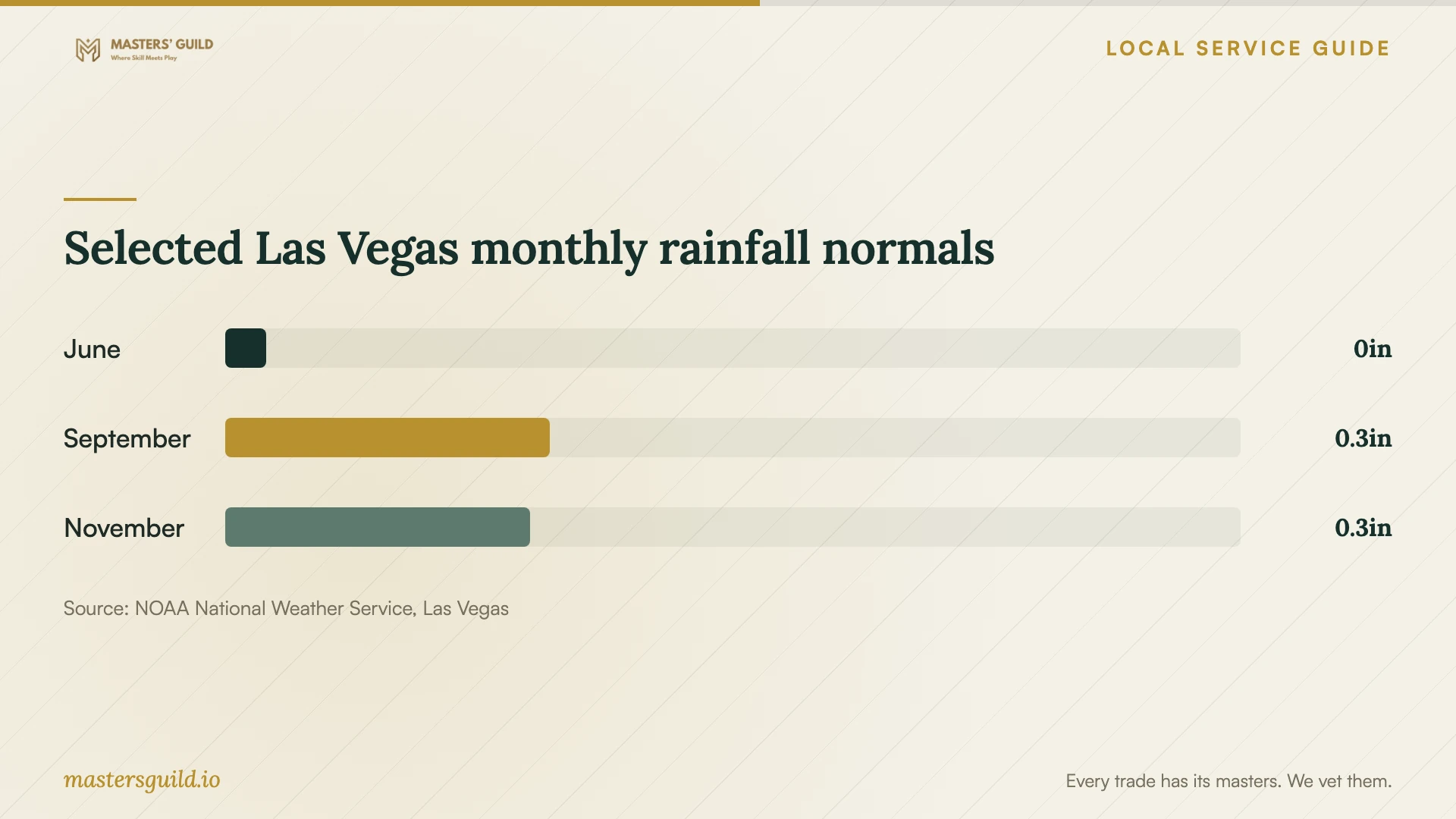
Regional rainfall offers limited help with planning irrigation. The National Weather Service reports Las Vegas monthly precipitation normals of 0.04 inches in June, 0.32 inches in September, and 0.30 inches in November for 1991 through 2020. These regional figures provide background; use your property’s conditions and current watering rules to arrange service. [4]
Prepare for the first visit and review the result
Clear toys, pet waste, hoses, and loose objects before the crew arrives. Mark sprinkler heads or other features you want the provider to inspect, explain gate access, and arrange for pets to stay away from the work area. Identify any newly seeded area and ask the provider to agree on its care before mowing it.
After the first visit, walk the lawn with the agreed scope in hand. Check the edges, paths, clipping handling, and any areas the crew could not reach. Photograph concerns and ask the provider to explain the correction. Confirm the next visit and any proposed schedule change before settling into recurring service.
Selected Las Vegas monthly rainfall normals
Local details that affect your job
Use assigned watering days when choosing a service day
SNWA’s October 2026 guidance permits grass watering on three assigned days per week through October 31 and prohibits Sunday watering. Check your group, share those days with the mower, and agree who will update the controller at the seasonal change. Avoid granting open-ended permission to add watering for the crew’s convenience. [2]
Check responsibility for HOA grass before signing
SNWA says the restriction beginning in 2027 concerns Colorado River water delivered by member agencies to nonfunctional grass. It excludes single-family front and back yards, while certain HOA-managed areas fall within its scope. If your proposed service includes common landscaping, ask the HOA which areas it maintains and whether it plans turf removal before you accept a long contract. [3]
Match the service plan to your lawn
| Your situation | Relevant distinction | What to arrange |
|---|---|---|
| Warm-season lawn without winter overseeding | Extension describes winter dormancy around November through March in the Mojave transition zone. | Agree on growth checks, mowing pauses, and separate cleanup charges. |
| Tall fescue lawn | Extension describes tall fescue retaining green color through winter. | Ask how the provider will assess winter growth before changing visits. |
| Existing zoysia lawn | Extension gives a mowing interval of 10 to 14 days. | Discuss that interval and confirm the plan against actual growth. |
| Service includes HOA common turf | Certain HOA-managed nonfunctional turf falls within the 2027 irrigation restriction. | Confirm maintenance responsibility and removal plans with the HOA. |
Your hiring checklist
- Send matching lawn photos and access details to each provider.
- Ask the provider to identify the grass and propose a cutting height.
- Separate first-visit cleanup from recurring maintenance in the quote.
- Specify edging, trimming, clipping handling, and path cleanup.
- Agree on winter visits, skipped visits, and cancellation terms.
- Share assigned watering days and name the person responsible for controller changes.
- Clear loose objects, arrange pet access, and review the first completed visit.
Frequently Asked Questions
Should I choose weekly or biweekly mowing?
Ask the provider to identify your grass and assess its growth before choosing. Extension describes different seasonal growth patterns among Mojave Desert turfgrasses and gives zoysia a 10-to-14-day mowing interval. Have the provider explain how they will adjust visits as growth changes. [1]
Will I need mowing during winter?
Your grass and overseeding plan matter. Extension describes winter dormancy for warm-season grasses, winter-green tall fescue, and ryegrass overseeding for Bermuda winter color. Ask for a winter scope that separates mowing from leaf or debris cleanup. [1]
Does the 2027 grass rule mean I must remove my home lawn?
SNWA says the nonfunctional-grass irrigation restriction does not apply to single-family front and back yards. Certain HOA-managed common areas fall within its scope. Confirm ownership and maintenance responsibility if you are arranging work outside your own yard. [3]
What should the mowing price include?
Ask for a written list of lawn areas, mowing, trimming, edging, clipping handling, and cleanup. Request separate charges for overgrowth, bagging, removal, and other work. Compare the same scope and billing terms across quotes.
Sources and scope
This guide combines the sources below with practical planning guidance. Figures apply to the stated geography and period; request a written quote for your property.