
Local service guide
Henderson gardening: Hiring and Planning
Arrange gardening in Henderson by defining the beds, plants and cleanup work you want covered, then request a separate irrigation check and an itemized quote. For weed spraying, verify pesticide licensing; for backflow assembly installation, resolve the plumbing permit before installation. Agree on a written watering schedule and who will care for new plants between visits. [1] [4]
Define the first visit and ongoing maintenance
Write a task list by area: front beds, side yard, vegetable beds, lawn and containers. Mark plants you want retained or removed. State whether you want hand weeding, trimming, planting, mulch placement or debris hauling, and have the gardener identify exclusions before agreeing on a price.
Separate an initial cleanup from recurring care. Agree on a completion description for each: which beds the gardener will weed, which shrubs they will trim, where they will place material and whether they will haul the waste away. For hourly work, set a spending limit and require approval before extra work.
Request a property-specific quote with separate amounts for labor, plants, soil amendments, mulch, irrigation parts and disposal. Specify plant quantities and container sizes in planting quotes. Give each gardener the same written scope so you can compare what each price includes.
Include irrigation diagnosis in the scope
Have the gardener run each irrigation zone with you present. Identify broken tubing, clogged or missing emitters, runoff and sprinkler spray reaching paving. SNWA recommends monthly checks for drip-line breaks and emitter problems, alongside weekly sprinkler checks. [2]
Record emitter flow rates before agreeing on run times. SNWA bases drip duration on emitter output, soil and weather, and advises separate schedules for lawns and plants. Before accepting a single timer setting for the entire yard, have the gardener explain how it serves each planting area. [3]
For new beds, request an irrigation parts list and a plan for future plant growth. SNWA identifies filtration and pressure regulation as required drip-system components and recommends adjusting emitter number and placement as plants grow. Decide who will flush lines and check that water reaches the intended root areas after installation. [1] [3]
Choose seasonal work with the plants in mind
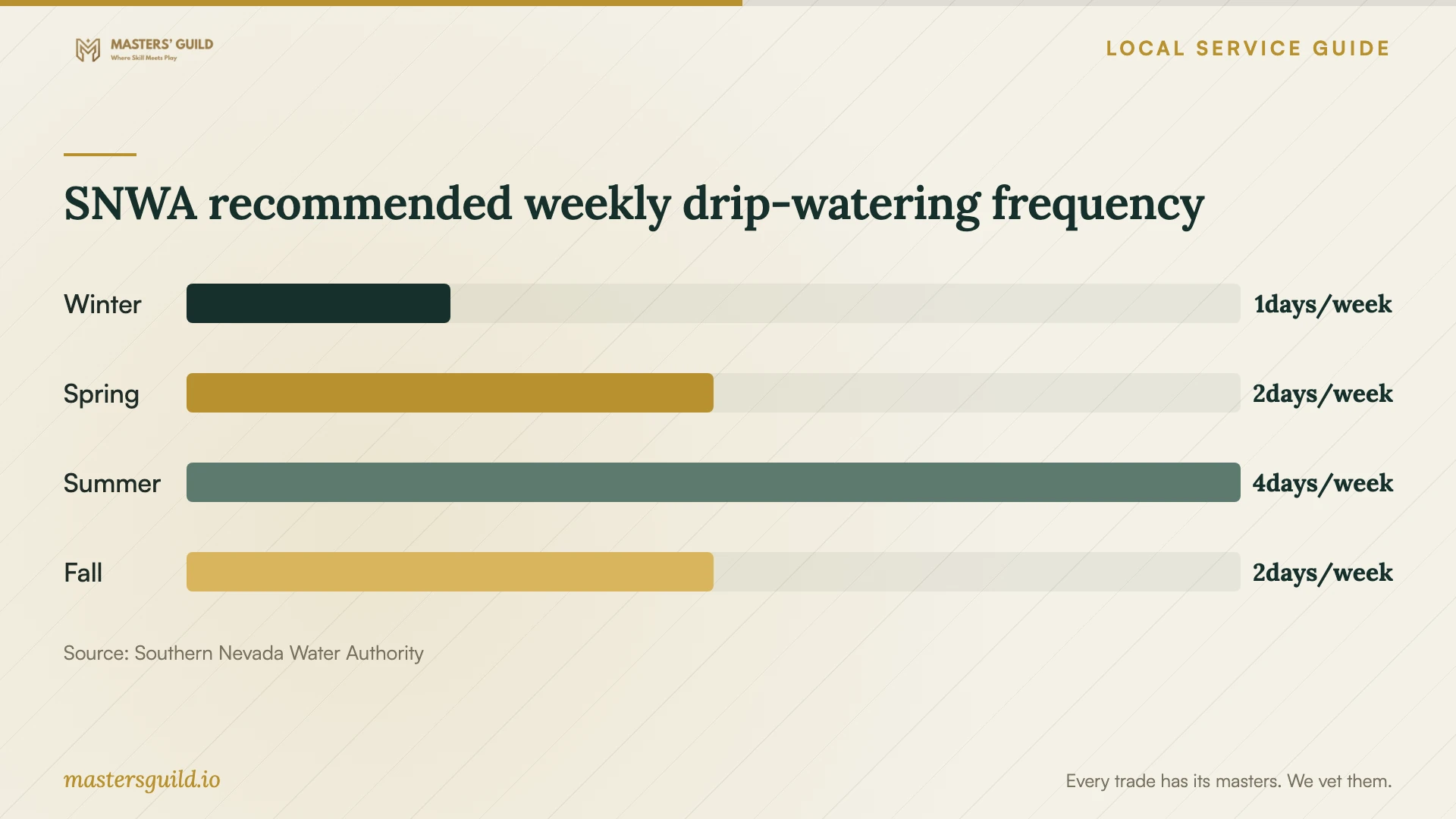
For work arranged on October 15, 2026, have the gardener check the fall controller settings and plan the winter adjustment. SNWA limits fall landscape watering from September 1 through October 31 to three assigned days per week and recommends two weekly drip-watering days. Its winter guidance limits sprinkler watering to one assigned day per week. [2]
Discuss pruning by plant before requesting a full-yard cutback. SNWA identifies late winter as the ideal time for tree and shrub pruning and advises finishing heavy pruning by mid-February, before buds swell. Have the gardener identify which plants need attention now and which they propose to leave until that period. [2]
If you are removing turf around mature trees, require a tree-protection plan before work starts. SNWA advises protecting major roots, avoiding trenching beneath the canopy and supplying drip irrigation beneath the canopy out to the drip line. Have the quote explain how the gardener will maintain tree watering after removing the lawn. [2]
Agree on handover and follow-up care
Before planting, decide who will monitor soil moisture between visits and who can change the controller. SNWA gives establishment-watering guidance for the first eight weeks of new low-water-use and desert-adapted plants, while noting that mandatory restrictions allow extra watering for new plants during the first 14 days. Have the gardener distinguish plant-care recommendations from watering permissions. [2]
At handover, walk the work area together. Check the agreed plant placements, collected waste and irrigation operation. Request a list of installed plants, replaced parts, controller settings and unresolved concerns. Agree on the next visit’s tasks and how you will approve replacements or treatment if a plant declines.
SNWA recommended weekly drip-watering frequency
Local details that affect your job
Backflow installation changes the job scope
SNWA’s Southern Nevada installation guidance requires a plumbing permit for backflow-prevention assembly installation and directs owners to the city or county for code requirements. If a quote includes installing or relocating an assembly, establish who will confirm the applicable requirements and handle any required permit before you approve that portion of the work. [1]
Weed spraying requires a licensing check
Nevada requires licensing for pesticide application for hire. Its C6 category covers weed control in landscape and turf maintenance; C1 covers specified pest and disease treatments on urban ornamentals and turf. Ask which category covers the proposed treatment. A restricted-use pesticide certificate alone does not authorize paid pest control. [4] [5]
Fall watering needs a winter handover
For this October booking, have the gardener document the property’s assigned sprinkler days and arrange the winter controller change. SNWA’s regional guidance moves from three assigned fall days through October 31 to one assigned winter day, with Sunday unavailable as an optional sprinkler-watering day. [2]
Match the work to the scope you request
| Your situation | Request in the quote | Resolve before work |
|---|---|---|
| Overgrown beds | Named beds, hand weeding, trimming and waste removal | Plants to retain and the spending limit |
| Plants struggling on drip | Zone testing, emitter checks and a written schedule | Emitter flow, soil conditions and separate lawn settings |
| New planting | Plant quantities, irrigation changes and follow-up care | Who monitors moisture between visits |
| Proposed weed spraying | Treatment details and applicable pesticide license category | Authorization for paid application, including landscape weed control |
| New backflow assembly | Installation scope and responsibility for the plumbing permit | City or county code requirements before installation |
Your hiring checklist
- Photograph each work area and mark plants to retain or remove.
- List cleanup, trimming, planting and hauling as separate tasks.
- Provide access to the controller and identify zones you cannot operate.
- Request itemized labor, materials, disposal and irrigation charges.
- Ask for pesticide license details if the proposal includes spraying.
- Confirm responsibility for permit checks if backflow work is proposed.
- Agree on watering instructions, follow-up tasks and approval for extras.
Frequently Asked Questions
How much should I budget for a gardener?
Request an itemized quote for your property based on the beds, access, cleanup and materials. Give each gardener the same task list and compare labor, materials, disposal and follow-up care. For hourly work, agree on a spending cap and require approval before extras.
Can my gardener spray weeds as part of maintenance?
Nevada requires a pest control license for pesticide application for hire, including herbicides. Ask for license details and confirm that the authorization covers the proposed work; the state identifies C6 as the landscape and turf weed-control category. [4] [5]
Should my gardener increase watering when leaves scorch?
Request a diagnosis before changing the timer. SNWA notes that both overwatering and underwatering can damage leaves, and improper fertilization can also cause stress. Have the gardener check delivery, soil moisture and fertilizer use. [2]
Should I book heavy pruning with an October cleanup?
Ask for a plant-specific recommendation. SNWA identifies late winter as the ideal tree and shrub pruning period and advises completing heavy pruning by mid-February before buds swell. Keep the cleanup and pruning decisions separate in the quote. [2]
Sources and scope
This guide combines the sources below with practical planning guidance. Figures apply to the stated geography and period; request a written quote for your property.