
Local service guide
Henderson flooring installation and repair
Arrange flooring installation and repair in Henderson by asking contractors to inspect the affected rooms and quote the same removal, preparation, installation and finishing work. Verify the contractor’s Nevada license status, classification and monetary limit before signing. The Nevada State Contractors Board recommends at least three written bids. Request a repair option where appropriate, and agree on how you will approve additional work after removal. [1]
Get a repair or replacement scope you can compare
Show the contractor the damaged area, adjoining rooms and spare flooring. Describe previous repairs and any known leak. Ask the contractor to explain what they can inspect now, what removal would expose, and whether they can offer a limited repair. Request a description of the proposed boundary between existing and replacement flooring.
The Board recommends giving bidders accurate plans or drawings so they can determine the scope and cost. For your flooring project, prepare a room sketch and mark the areas you want included. Have each bidder confirm their measurements and list the material they propose. Ask for separate repair and replacement proposals if you want to compare both approaches. [1]
The Board advises questioning bids that fall far below the others because the contractor may have made a mistake or omitted work. Review each proposal for removal, disposal, surface preparation, installation, transitions and trim. Ask the bidder to explain omissions before you compare totals. [1]
Match the Nevada license to the proposed work
Nevada requires contractor licensing with limited exceptions. The Board lists C-16 finishing floors, C-19 installing terrazzo and marble, and C-20 tiling. Ask which classification covers your selected material and preparation work. Have the Board resolve unclear coverage or an exemption claim before you accept it. [2]
Match the contractor’s business name to the license and confirm its status, classification and monetary limit. The Board states that an inactive license holder may not bid or contract for work. Southern Nevada licensing and customer service staff can help at 702-486-1100. [1] [2]
The Board recommends contacting previous customers and viewing completed work. Ask for references with a similar flooring scope. During those calls, ask how the contractor handled preparation changes, room access and unfinished details. [1]
Set removal and preparation terms before installation
EPA says a qualified laboratory must test material to establish whether it contains asbestos. It recommends testing suspect material when damaged or when renovation would disturb it, with samples collected by a trained, accredited asbestos professional. If you suspect existing floor tile or another material contains asbestos, arrange that assessment before authorizing disturbance. [3]
The Board recommends a written contract that describes the work and materials, with changes documented in writing and signed by both parties. Apply that guidance to preparation: identify the work included in the original price, the conditions the contractor will inspect after removal, and the approval process for additional work. [1]
Ask the contractor to show you any condition that prompts additional preparation and provide a description and price before you approve it. Request the selected product’s installation instructions and ask the contractor to explain how they will check the relevant requirements. Agree on who handles furniture, deliveries, storage and access to essential rooms.
Review the deposit and payment schedule
For residential contractors performing improvement work on existing residential structures, the Board states that the down payment cannot exceed $1,000 or 10% of the contract price, whichever is less. It identifies exceptions for a $100,000 Consumer Protection Bond or previously granted relief from the license-bond requirement. Confirm any claimed exception with the Board before paying more. [2]
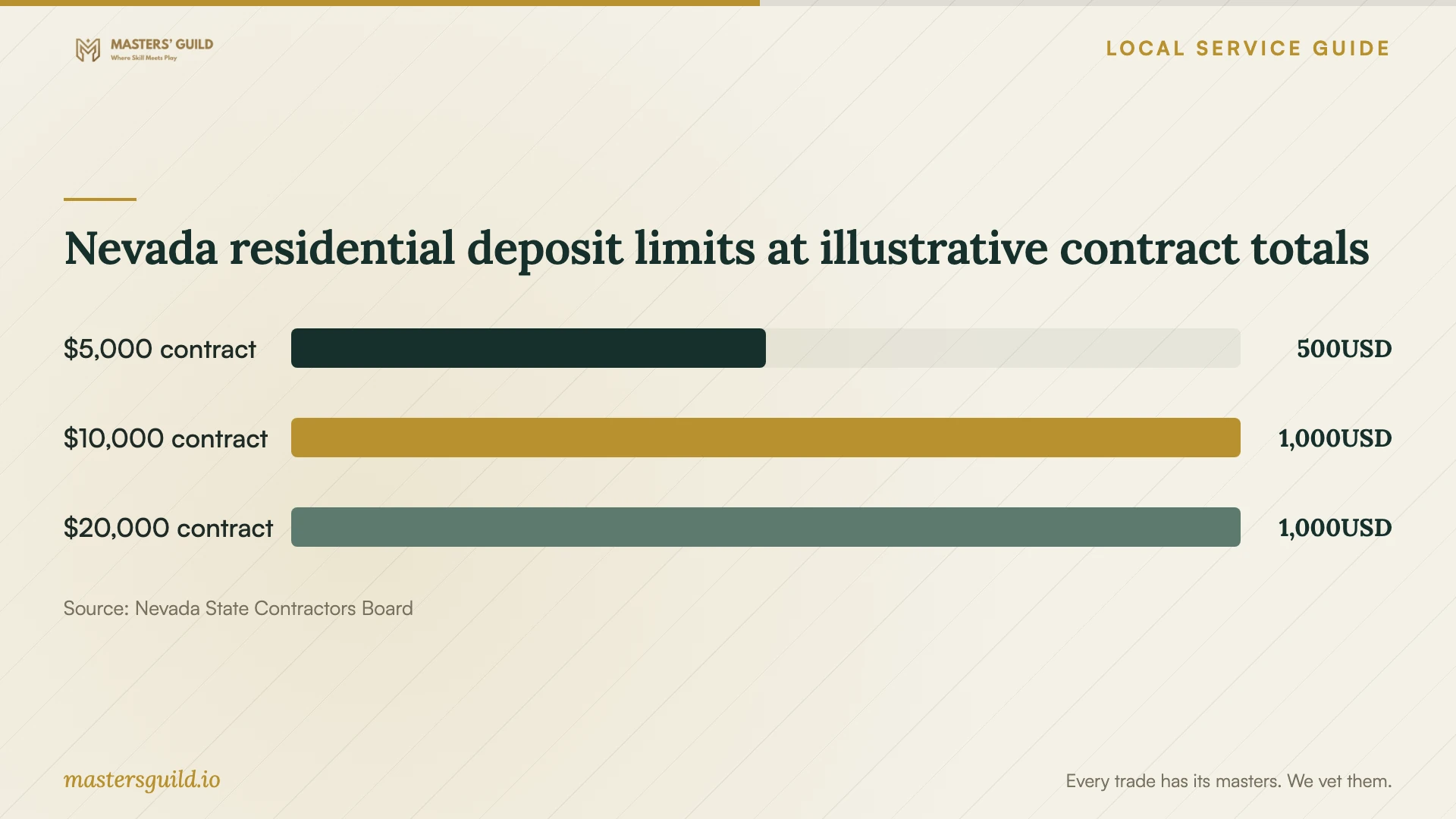
The deposit examples show how the published rule applies to illustrative contract totals. A $5,000 contract has a $500 limit; a $10,000 or $20,000 contract has a $1,000 limit before exceptions. These amounts illustrate payment planning and do not estimate flooring prices. [2]
The Board recommends reviewing payment schedules and warranty terms in the contract. Ask the contractor to name the work associated with each payment and distinguish their workmanship warranty from any product documentation. Keep signed changes and payment records with the original agreement. [1]
Check the finished rooms with the contractor
The Board recommends a final walk-through and a written punch list of work that needs completion or repair. It also advises keeping repair agreements in writing. Schedule that review with the contractor and record unresolved items with an agreed action and completion date. [1]
Use your signed scope during the walk-through. Check the agreed room boundaries, transitions and trim, and ask the contractor to demonstrate door clearance. Request care instructions and retain the product name, spare-material details and warranty documents. Photograph concerns so you and the contractor can discuss the same location.
Nevada residential deposit limits at illustrative contract totals
Local details that affect your job
Nevada classification checks affect who you hire
For this Henderson job, use Nevada’s classification list to question license coverage before accepting a flooring bid. The Board lists C-16 finishing floors, C-19 installing terrazzo and marble, and C-20 tiling. Ask Southern Nevada licensing staff at 702-486-1100 to confirm coverage if the contractor combines materials or proposes preparation work whose classification is unclear. [1] [2]
Nevada’s residential deposit rule affects what you pay
Apply the Board’s existing-residential-improvement guidance when reviewing your payment terms: the down-payment limit is the lesser of $1,000 and 10% of the contract price. The Board identifies a $100,000 Consumer Protection Bond and previously granted license-bond relief as exceptions. Ask the Board to confirm the contractor’s claimed exception before accepting a larger deposit. [2]
Choose the next step before booking the crew
| Situation | Next step | Question to resolve |
|---|---|---|
| Damage in a limited area | Request an inspection and a repair proposal | How would you match the existing floor and finish the repair boundary? |
| Preparation scope remains unclear | Request written inclusions and change-approval terms | What can you inspect now, and what will you assess after removal? |
| Suspect material would be disturbed | Arrange professional assessment and appropriate testing | Who will collect samples before removal? |
| License coverage is unclear | Ask the Nevada Board to confirm the classification | Does the active license cover the complete proposed scope? |
| Deposit exceeds the published residential limit | Confirm the claimed exception with the Board | Does the contractor qualify for a specified bond-related exception? |
Your hiring checklist
- Photograph the affected areas and sketch the rooms included in the job.
- Give bidders the same material specification and request comparable scopes.
- Verify the licensed business, active status, classification and monetary limit.
- Resolve suspect-material assessment before authorizing disturbance.
- Record preparation allowances and the process for approving additional work.
- Agree on furniture handling, storage and access to essential rooms.
- Review deposit terms, payment stages and warranties before signing.
- Arrange a final walk-through and keep a written punch list.
Frequently Asked Questions
Does a flooring contractor need a Nevada license?
Nevada requires contractor licensing with limited exceptions. Verify the bidder’s active license, classification and monetary limit. Ask the Board to resolve exemption claims or unclear coverage for your material and preparation work. [1] [2]
How much should I pay as a deposit?
For residential improvement work on existing residential structures, the Board states a limit of $1,000 or 10% of the contract price, whichever is less. Specified bond-related exceptions apply. Confirm a claimed exception with the Board before paying more. [2]
Should I test old floor tile before removal?
EPA recommends testing suspect material when damaged or when renovation would disturb it. A qualified laboratory establishes asbestos content. Arrange sample collection through a trained, accredited asbestos professional. [3]
How should I handle extra preparation after removal?
Ask the contractor to show you the condition and provide the proposed work and price before you approve it. The Board advises documenting change orders in writing with both parties’ signatures. Keep the signed change with your project records. [1]
Sources and scope
This guide combines the sources below with practical planning guidance. Figures apply to the stated geography and period; request a written quote for your property.