
Local service guide
Duct cleaning in Henderson, NV: Scope and Hiring
Duct cleaning in Henderson should start with an inspection and a written scope. Ask the contractor to show the contamination that justifies cleaning, identify your duct materials, and price the affected heating and cooling system components. EPA recommends cleaning as needed for substantial contamination, pests, or excessive debris, rather than on a routine schedule. Before booking, separate outdoor dust entry, filter problems, and moisture issues from deposits inside the ducts. [1] [2]
Decide whether cleaning addresses your problem
Ask the inspector to distinguish dust on the grille from contamination deeper inside the system. EPA identifies substantial visible mold on hard surfaces, pest infestation, and excessive dust or debris clogging ducts or escaping through supply registers as reasons to consider cleaning. Request photographs with the location of each finding so you can connect the proposed work to your system. [1]
For recurring household dust, check filter fit and other particle sources before authorizing a whole-system job. EPA notes that outdoor pollutants and indoor activities can contribute more exposure than dirty ducts. Use the highest-efficiency filter your equipment manufacturer recommends, replace clogged filters, and address gaps that let air bypass the filter. [1]
If someone reports mold, ask them to show the affected surface and explain the moisture source. Appearance alone cannot confirm mold; EPA says an expert may need laboratory analysis. Wet or moldy duct insulation requires replacement because cleaning cannot resolve that condition. [1]
Compare the scope before comparing the price
Get written estimates from at least three providers. Ask each to identify the supply and return ducts, registers, grilles, air handler, blower, coils, and drain pans included in the proposal. EPA warns that leaving a contaminated component untreated can contaminate the system again. Have the provider explain exclusions and any separate maintenance or repair work. [1]
Request a total price, the basis for any additional charge, and approval before extra work starts. Record how many systems the contractor inspected and which rooms each serves. Ask for an expected work duration and the planned cooling interruption so you can arrange access and household needs.
EPA's guidance includes a broad national cost reference of $450 to $1,000 per heating and cooling system, with exceptions. It ties variation to scope, system size, access, region, and contamination. Treat that figure as background from a longstanding guidance document, not a verified Henderson price or a current local budget. [1]
Ask how the crew will protect the ducts and rooms
Ask where the vacuum exhaust will go. EPA calls for equipment that exhausts particles outdoors, or HEPA vacuum equipment when the exhaust stays indoors. The provider should protect furnishings, use controlled brushing with vacuum collection, and seal and reinsulate access openings after cleaning. [1]
Have the provider identify sheet metal, flexible duct, and fiberglass-lined sections before choosing tools. EPA specifies soft-bristled brushes for fiberglass materials and notes that replacing accessible flexible duct can sometimes cost less than cleaning it. Request a separate explanation and quote for any proposed replacement. [1]
Require a separate discussion before approving chemical treatments. EPA reports unresolved questions about biocides and interior sealants and says no biocides are registered for fiberglass duct board or fiberglass-lined ducts. Ask for the product label, the intended surface, and the reason physical cleaning and moisture correction would not suffice. [1]
Plan access and verify the finished work
Before the visit, clear space around registers and the air handler, identify access restrictions, and agree on arrangements for pets. Tell the contractor about renovation dust, leaks, pest activity, or previous duct repairs. Ask how long the equipment will remain off and choose a workable appointment for your household.
At completion, ask the technician to show the cleaned components and photographs of inaccessible areas. EPA recommends a visual inspection, checking that registers are secure, access openings do not leak, and the system operates after cleaning. Review any damaged insulation or remaining debris before accepting the work as complete. [1]
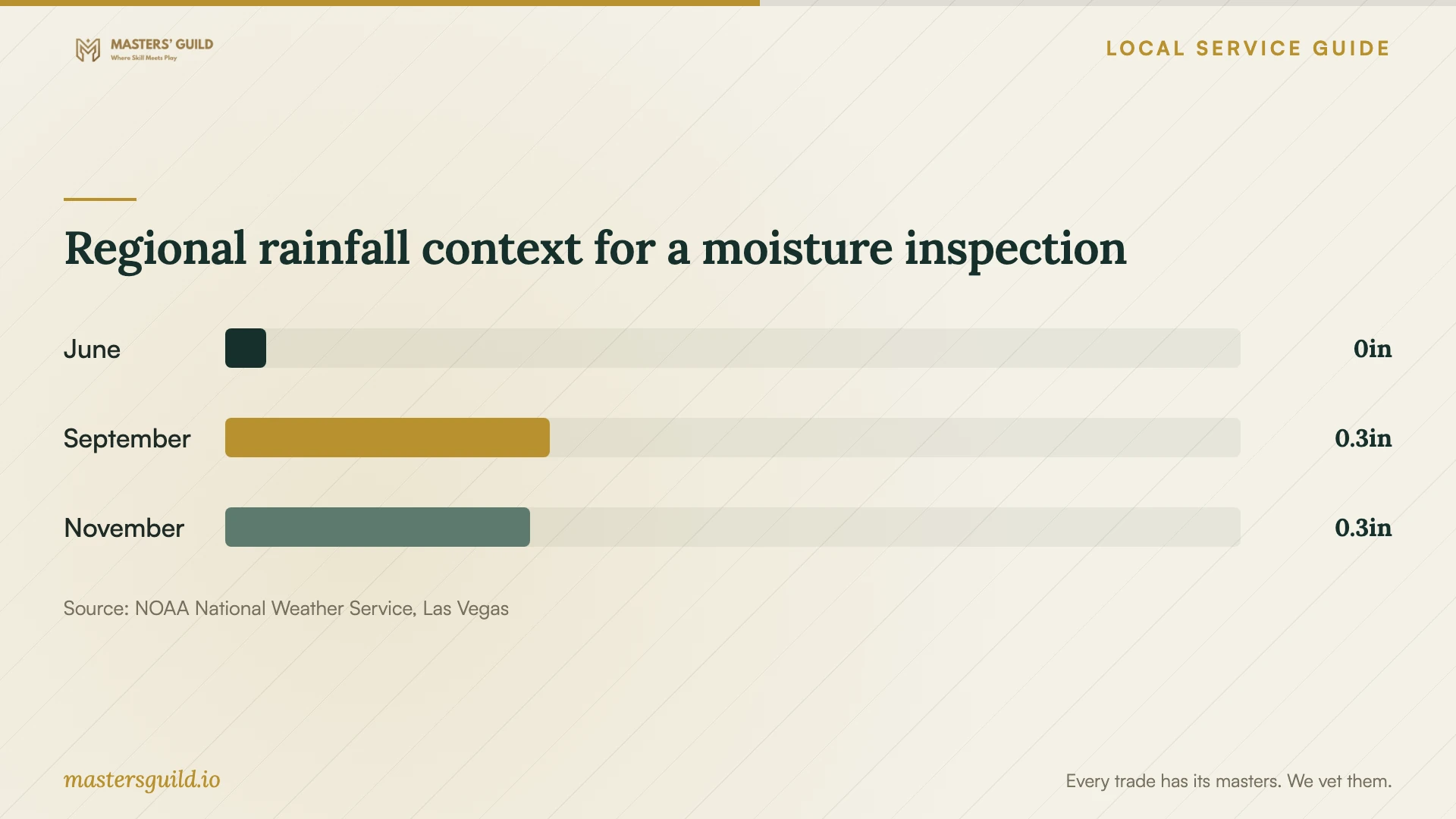
Regional rainfall context for a moisture inspection
Local details that affect your job
Check outdoor dust before ordering another cleaning
Clark County's August 11, 2026 advisory documented Arizona thunderstorm winds carrying dust into Southern Nevada. This is a dated regional example, not a current warning. If household dust follows windy conditions, consult the county's daily air-quality forecast and check filter fit before assuming the ducts need another cleaning. During dusty conditions, the county advises closing windows and doors and running air conditioning to filter particulates. [1] [2]
Report an ongoing outdoor source
For excessive blowing dust from construction sites, vacant lots, or facilities, Clark County provides the dust complaint hotline at 702-385-3878. If you can identify such a source near your property, report it and record when dust reaches your home. Addressing that source belongs alongside any indoor inspection; EPA recommends preventing dirt from entering the system to limit contamination. [1] [2]
Choose the next step from the inspection finding
| Finding | Next step | Reason |
|---|---|---|
| Dust on a return grille | Clean the grille and inspect before booking duct cleaning. | EPA says normal return airflow deposits dust on grilles. |
| Excessive debris or particles leaving supply registers | Request evidence and a system-cleaning scope. | EPA identifies these conditions as reasons to consider cleaning. |
| Wet or moldy duct insulation | Arrange replacement and correct the moisture source. | EPA says affected insulation cannot be effectively cleaned. |
| Dust arriving from nearby outdoor activity | Check filtration and use the county complaint hotline for excessive blowing dust. | Clark County accepts reports concerning construction sites, vacant lots, and facilities. |
Your hiring checklist
- Describe the problem and note whether it follows wind, renovation work, or a leak.
- Ask the inspector to show and locate the contamination behind the proposed work.
- Request matching written scopes and total prices from the providers you compare.
- Confirm duct materials, cleaning tools, vacuum exhaust location, and access-hole repairs.
- Agree on cooling downtime, access, furniture protection, and pet arrangements.
- Require approval before additional repairs or chemical treatments.
- Review completion photographs and ask the technician to demonstrate system operation.
Frequently Asked Questions
Does desert dust mean I need annual duct cleaning?
No. EPA recommends cleaning as needed, based on system conditions. Southern Nevada dust events justify attention to outdoor exposure and filtration, but they do not establish contamination inside your ducts. [1] [2]
Will duct cleaning lower my cooling bill?
EPA finds little evidence that cleaning ducts alone improves system efficiency. Cleaning dirty coils, fans, and heat exchangers may help efficiency. Ask which component has a documented problem before accepting an energy-savings claim. [1]
Can a company be EPA-certified for duct cleaning?
EPA says it does not certify, endorse, or approve duct-cleaning companies. Ask about experience with your duct materials, references, relevant credentials, and the procedures the crew will use. [1]
Does the dry regional climate rule out moisture problems?
No. The National Weather Service reports low precipitation normals for Las Vegas, but EPA identifies cooling-coil condensation, leaks, and drainage problems as potential moisture sources inside HVAC systems. Ask the inspector to check the drain pan and nearby insulation when moisture is suspected. [1] [3]
Sources and scope
This guide combines the sources below with practical planning guidance. Figures apply to the stated geography and period; request a written quote for your property.