
Local service guide
Hartford, CT wall painting: Hiring and prep
Arrange wall painting in Hartford by defining the rooms and repairs, checking the contractor’s Connecticut home improvement registration, and settling the preparation plan before signing. Connecticut includes residential painting in its registration requirements, subject to listed exemptions. For a home built before 1978, address possible lead paint before anyone disturbs painted surfaces. Ask each bidder to price the same preparation, paint products, surfaces and cleanup so you can compare the work. [1] [3]
Give bidders the same wall painting scope
Walk through each room with the painter and mark the surfaces you want included. Separate walls from ceilings, trim, doors and closets. Identify holes, peeling areas, stains and cracks you want assessed. Ask the painter to distinguish cosmetic patching from repairs that need a separate decision before painting.
Request a written description of preparation, primer, paint brand and product line, finish, coat count and colors. Agree on who moves furniture, protects floors, removes wall fixtures and puts the room back together. For an occupied home, identify which rooms you need to keep accessible during work.
Compare those details before comparing totals. Ask a bidder to explain any omitted repair or surface rather than assuming the quote includes it. Request a site-specific estimate and agree on a schedule.
Resolve lead-safe preparation before work starts
Connecticut DPH says homes built before 1978 may contain lead-based paint and warns that renovation, repair and painting can create hazardous dust when workers disturb those surfaces. Its homeowner guidance directs homeowners to hire an EPA RRP-certified firm for renovations and repairs on pre-1978 housing. [3]
Tell bidders the home’s construction year if you know it. Ask how they will assess the proposed preparation, establish containment and keep debris from spreading beyond the work area. Have them explain the work-area boundaries and household access before you choose dates.
Do not start dry scraping or sanding suspect paint to prepare for the painter. DPH’s lead-safe guidance advises against dry scraping or sanding and calls for containment and barriers. If you want to do some preparation yourself, settle the lead question and work practices first. [3]
Check registration and write the agreement
Connecticut DCP includes painting among permanent residential changes covered by home improvement registration. Its page provides a license lookup or verification option and lists exemptions, including homeowner work, subcontracted work and contracts below $200. Ask the business contracting with you for its registration details and check them before signing. [1]
DCP states that home improvement contracts must be written, signed and dated. Required contents include the contractor’s name, address and Connecticut registration number, both parties’ signatures, start and completion dates, and the complete agreement about work and price. Put any later scope changes in writing and retain your copy. [2]
Include the agreed paint products, cleanup responsibility and payment schedule. DCP recommends including these details and identifying who obtains any needed permits. If the proposed project extends into repairs beyond painting, ask about permit responsibility rather than treating the paint quote as permission for the added work. [2]
Agree on payments and the final walkthrough
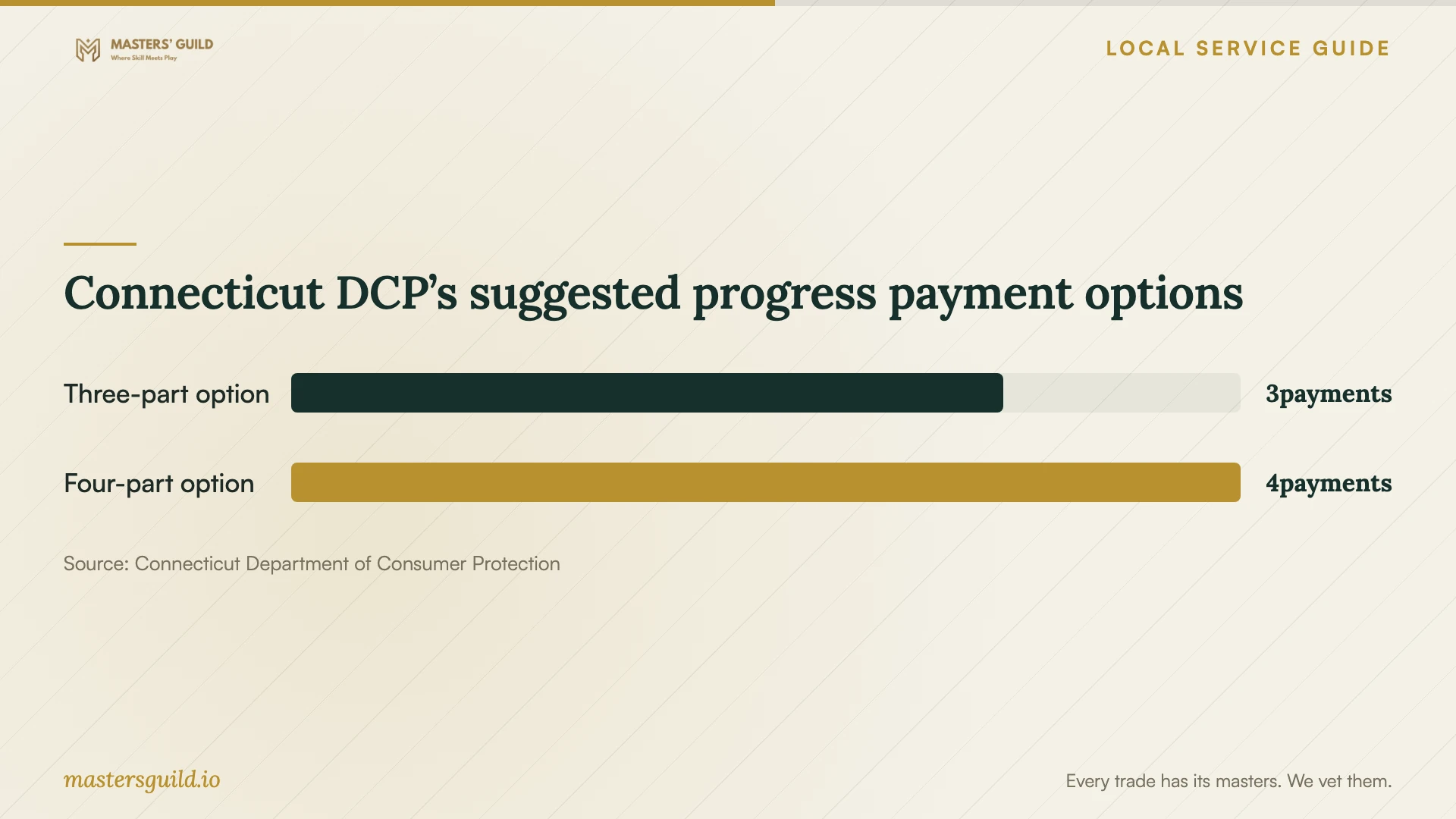
DCP suggests a three-part or four-part payment schedule tied to progress, with final payment when the work meets the homeowner’s satisfaction. It says an upfront payment generally should not exceed one-third of the total and advises homeowners to avoid cash and obtain receipts. [2]
Define each payment milestone in terms you can check, such as completion of the agreed preparation or specified rooms. Before final payment, walk through the painted areas with the contractor, record unfinished items and agree on their completion. Ask the painter to leave labeled leftover paint and the product information for future touch-ups.
Connecticut DCP’s suggested progress payment options
Local details that affect your job
Connecticut cancellation timing includes Saturday
For a covered home improvement contract in Hartford, Connecticut DCP says the contract must state the cancellation deadline, three business days after signing, and notes that Saturday counts as a legal business day. The contractor must also provide a separate cancellation notice. Review the stated deadline before committing to the work schedule. [2]
Connecticut offers a lead-abatement route
Connecticut DPH identifies a free state lead-abatement program for removing lead hazards. If lead hazards need attention, review the program information through DPH’s homeowner guidance before commissioning cosmetic repainting. Confirm eligibility, available funding and approval timing with the program before planning around assistance. [3]
Choose the next step for your walls
| Situation | Next step | Detail to settle |
|---|---|---|
| Sound walls and a defined repaint | Request matching written scopes | Included surfaces, preparation, paint products and cleanup |
| Pre-1978 home with paint disturbance planned | Address lead-safe work before preparation | EPA RRP firm certification and containment |
| Residential painter ready to contract | Check Connecticut registration and any applicable exemption | Identity of the business signing your agreement |
| Contract ready for signature | Review required dates and cancellation notices | Start, completion and cancellation dates |
| Contractor requests most of the price upfront | Reconsider the proposed payment arrangement | DCP advises progress payments and generally no more than one-third upfront |
Your hiring checklist
- List included rooms and surfaces, with ceilings and trim identified separately.
- Photograph wall damage and ask which repairs the painter includes.
- Share the construction year and resolve lead-safe preparation before disturbing paint.
- Check the contracting business’s registration details through Connecticut DCP.
- Record paint products, preparation, coats, colors and cleanup in the agreement.
- Review cancellation paperwork, work dates and progress payment milestones.
- Arrange a final walkthrough and retain the contract, changes and payment receipts.
Frequently Asked Questions
Does a residential painter need Connecticut registration?
Connecticut DCP includes painting in residential home improvement work requiring registration when a business contracts with a consumer. The state lists exemptions, including contracts under $200. Check the registration of the business you will contract with and ask it to explain any claimed exemption. [1]
Can I sand the walls before the painter arrives?
For a pre-1978 home, settle possible lead paint concerns first. Connecticut DPH warns that disturbing lead paint can create hazardous dust and advises against dry scraping or sanding. Agree on preparation responsibilities before doing work yourself. [3]
What should the painting contract include?
DCP requires a written, signed and dated agreement with contractor identification and registration number, both signatures, cancellation information, work dates, and the complete work and price agreement. Add the specific preparation, paint products, cleanup and payment milestones you have negotiated. [2]
Sources and scope
This guide combines the sources below with practical planning guidance. Figures apply to the stated geography and period; request a written quote for your property.