
Local service guide
Pest control in Hartford, CT: Hiring and Planning
For pest control in Hartford, arrange an inspection, compare written treatment scopes and check the business registration separately from the applicator’s certification before approving pesticide work. Connecticut requires both business registration and individual certification. Identify the supervisor who chooses the treatment and the person who will apply it. Then agree on preparation, total charges and follow-up before signing. [1] [2]
Start with identification and an inspection scope
Send photos of the pest or signs you found, identify the affected rooms and describe when you noticed the problem. Include any treatments you have tried. Ask the inspector to explain the identification and findings before you approve a treatment package.
Separate the proposed tasks: inspection, monitoring, pesticide application, removal, entry-point repairs and cleanup. Request itemized prices where practical. For an unclear problem, agree on the inspection charge and what you will receive from that visit before committing to recurring service.
Check the business and the people doing the work
Connecticut DEEP requires a Certificate of Registration before someone operates a pesticide application business. Registration runs from September 1 through August 31, with annual renewal. Request the current certificate and match the business name to your quote and contract. DEEP also requires the business registration number on written pesticide-service contracts. [1]
DEEP distinguishes supervisory certification from operator certification. The supervisor decides pesticide selection, dosage, timing, application methods and precautions. An operator applies pesticides under a certified supervisor’s direction and receives written instructions for each application. Have the company identify who fills each role for your home. [2]
Request proof of liability insurance and identify who handles accidental damage or a treatment complaint. Keep the contract, preparation instructions and service records together. If the attending business differs from the one that quoted, resolve that difference before work starts.
Compare the full contract and any subcontracting
Connecticut requires businesses that subcontract pesticide applications to register too. DEEP describes an arrangement in which a company without its own certified commercial supervisor subcontracts application to a properly registered company. If your proposal involves another business, request both business names, registration details and the responsible supervisor’s name. [1]
Request a total for the proposed work, including the inspection, preparation services, return visits and applicable taxes. Separate the initial treatment from optional recurring service. For monthly payments, compare the minimum term, total commitment and cancellation conditions.
Define follow-up before signing. Agree on when the contractor will reassess the home, what findings would justify another visit and whether you would pay extra. For a guarantee, request the covered pest, covered areas, duration, exclusions and duties you must meet. Compare quotes against the same description of your problem.
Get product information and preparation instructions
DEEP’s business-registration guidance identifies providing pesticide label information before contract agreements as an obligation in the subcontracting arrangement it describes. If another company will perform your application, request that information before agreeing to the contract and direct treatment questions to the responsible supervisor. [1]
Request written preparation instructions for the proposed treatment. Tell the contractor about children, pets, aquariums and anyone who needs help leaving or returning. Confirm which rooms require access, what to move or cover, and the conditions for returning to treated areas.
Agree on who moves furniture, opens storage areas and restores rooms afterward. Before adding another pesticide treatment while you wait, consult the responsible supervisor. If you cannot complete a preparation task, tell the contractor before the appointment and agree on an alternative or revised scope.
Confirm exterior-work scheduling
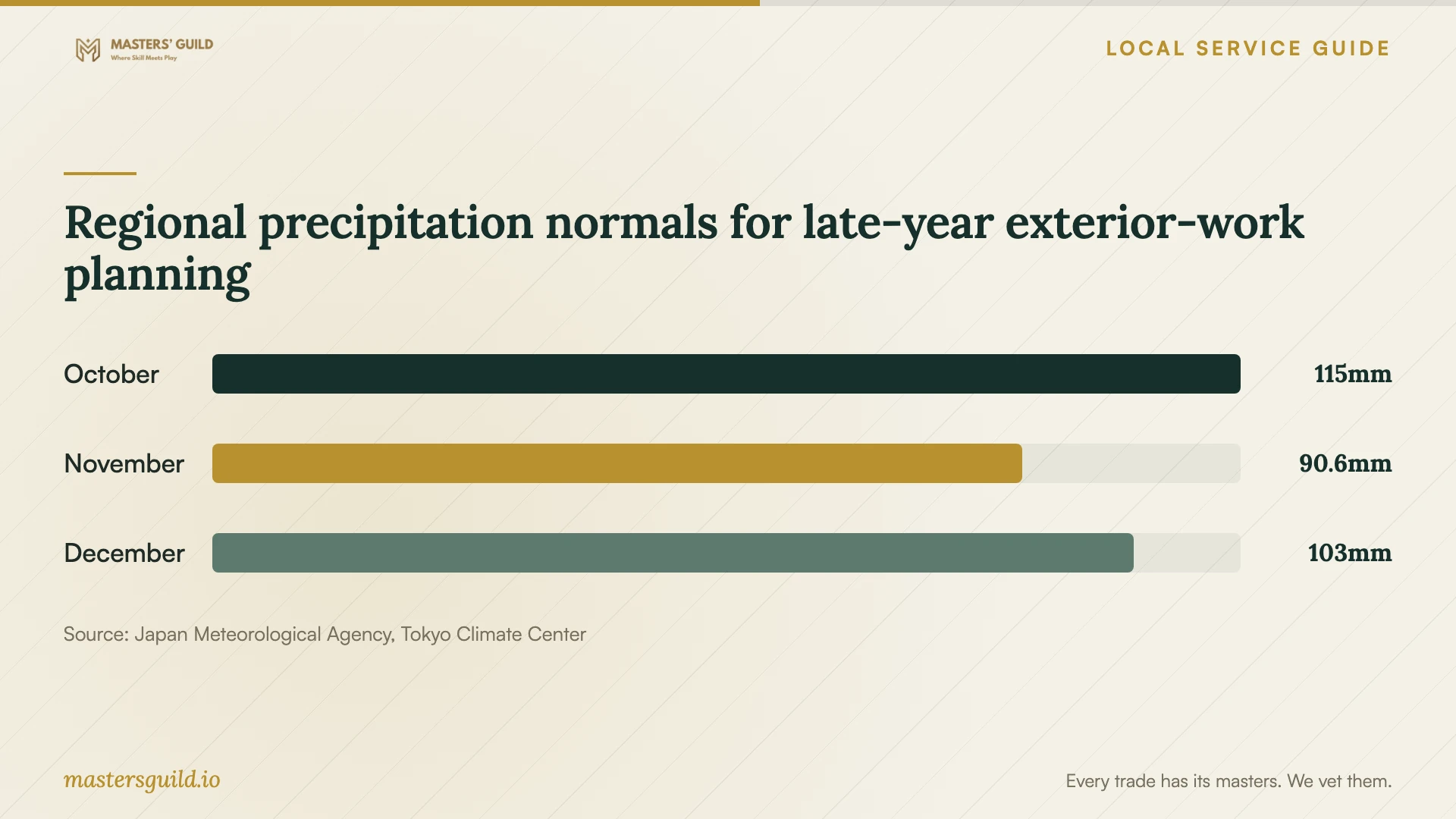
The Japan Meteorological Agency publishes monthly precipitation normals for Hartford/Bradley International, a regional station reference. Its table lists October at 115.0 millimeters, November at 90.6 and December at 103.0. The table does not state the averaging years. Use these figures as context for scheduling questions, without treating them as a forecast for your property. [3]
For exterior work, have the contractor explain the weather requirements for the proposed method. Confirm who decides whether the visit proceeds, when they will contact you and whether a delay changes any indoor work. Resolve those details before moving outdoor belongings or arranging time away.
Regional precipitation normals for late-year exterior-work planning
Local details that affect your job
Connecticut contract and subcontractor checks
For a Hartford pesticide job, look for the business’s PMBR registration number on the written contract. DEEP requires that display and requires registration for businesses that subcontract pesticide applications. If the quoting company will send another business, obtain both business names and registration details before signing. Keep the subcontracting arrangement with your agreed scope. [1]
Connecticut separates treatment decisions from application
An operator certificate does not authorize its holder to run a pesticide business. Connecticut operators work under a certified supervisor and receive written instructions for each application. Identify the supervisor who chooses your treatment separately from the person attending the appointment. If an operator will attend, ask how the supervisor will direct the work and answer treatment questions. [2]
Resolve these questions before booking
| Your situation | Information to request | Decision before signing |
|---|---|---|
| You cannot identify the pest | Inspection charge and an explanation of findings | Review identification before approving treatment. |
| The proposal includes pesticide application | Business registration and individual certification details | Check the business and treatment team separately. |
| Another business will apply the pesticide | Both business names, registrations and the supervisor’s identity | Record the subcontracting arrangement and follow-up responsibility. |
| The proposal includes recurring visits | Visit scope, total commitment and cancellation terms | Compare the full contract with the initial treatment. |
| The proposal includes exterior treatment | Method-specific weather requirements and rescheduling arrangements | Agree on who decides whether the visit proceeds. |
Your hiring checklist
- Photograph the pest or signs and list affected rooms and previous treatments.
- Agree on the inspection charge and request an explanation of the findings.
- Match business names, registration details and the contract’s PMBR number.
- Identify the responsible supervisor, attending applicator and any subcontractor.
- Compare total charges, included visits, recurring terms and cancellation conditions.
- Get product information, preparation instructions and return conditions before the visit.
- Confirm access, follow-up arrangements and the weather decision for exterior work.
Frequently Asked Questions
Is a business registration enough for pesticide work?
Connecticut requires pesticide business registration in addition to individual applicator certification. Request the business certificate and identify the supervisor responsible for treatment decisions. If an operator will apply the pesticide, ask how the supervisor will direct that work. [1] [2]
Can the company subcontract my treatment?
DEEP describes a subcontracting route for pesticide applications and requires businesses that subcontract those applications to register. Before accepting the arrangement, identify the attending business, responsible supervisor and company that will handle follow-up. [1]
How should I compare a single visit with a service plan?
Request the initial scope, included return visits, total commitment and cancellation terms for each option. Have the contractor explain which inspection findings justify recurring service and what they propose to inspect or treat during later visits.
Should I prepare rooms before receiving instructions?
Get treatment-specific instructions first. Confirm what to move, how to handle food and pet belongings, who needs to leave and the conditions for returning. Discuss any preparation task or access requirement you cannot meet before the appointment.
Sources and scope
This guide combines the sources below with practical planning guidance. Figures apply to the stated geography and period; request a written quote for your property.