
Local service guide
Mold Removal in Hartford, CT: Hiring and Planning
For Mold Removal in Hartford, ask a residential contractor for an active Connecticut Home Improvement Contractor registration with mold-remediation services added and the NORMI or IICRC certification required by the Department of Consumer Protection. Before accepting a quote, agree on the affected materials, containment, moisture investigation, cleanup and completion checks. Ask who will handle repairs and what each price includes. [1]
Check residential credentials before comparing bids
Connecticut DCP places residential mold-remediation work under Home Improvement Contractor registration and requires certification from NORMI or IICRC. Its definition includes removal, cleaning, sanitizing, demolition and other treatment of mold-contaminated matter. Ask the business to identify its registration and certification, then explain which crew members will supervise and perform your work. [1]
Read the state’s guidance with care. DPH’s general indoor-environment page says Connecticut does not license or certify mold abatement professionals, while DCP’s dedicated mold-remediation page describes residential registration and certification requirements. For a residential hiring decision, use DCP’s specific instructions to check the contractor’s status. Do not treat a claim of state approval as sufficient documentation. [1] [2]
DCP states that Home Improvement Contractor registration does not cover commercial mold remediation. If your proposed job includes business premises, ask DCP to clarify the applicable requirements before relying on residential credentials. [1]
Define the moisture investigation and removal scope
Ask the contractor to record the areas they inspected, the materials they propose to clean or remove, and any spaces they could not access. Request a separate explanation of the suspected moisture source and who will investigate or repair it. DPH explains that damp indoor environments encourage mold growth, so include moisture management in your planning. [2]
For a recurring patch, describe when you first noticed it, whether it changes after rain or household activities, and what previous cleaners or contractors did. Provide photographs and repair records you already have. Ask the estimator to distinguish observations from assumptions and explain what additional investigation they recommend before opening walls or ceilings.
If you hire a separate indoor-environment consultant, ask about experience with your type of building and problem. DPH advises homeowners to check credentials and references because consultants differ in training and experience. Ask the consultant what question any proposed inspection or sampling will answer and how the result would change the work. [2]
Agree on containment and household access
DPH advises contractors removing moldy materials and contents to contain or segregate their work area from uncontaminated areas. Before work starts, ask the contractor to describe the work boundary, debris route and arrangements for belongings. Have them identify which rooms and entrances you can use during the project. [2]
Discuss your household’s access needs before agreeing to a start date. Ask whether you need to move furniture, clear storage or arrange somewhere else to stay. Request written instructions about entering the work area and using nearby heating or cooling equipment. Ask who will communicate changes if the crew discovers additional affected material.
Compare the full job and agree on completion
Request separate quote lines for investigation, containment, material removal, cleaning, disposal, moisture-source repairs and rebuilding. Ask the contractor to mark each item as included, excluded or dependent on further inspection. For uncertain work, agree on how the contractor will document discoveries and obtain your approval before increasing the scope.
Ask for a completion plan before signing. Specify the photographs, inspection notes and repair records you want to receive. Agree on who will review the finished work, what they will check and how the contractor will address unfinished items. If someone proposes testing, ask them to explain its purpose and interpretation in the contract.
DPH recommends making compliance with the Connecticut Guidelines for Mold Abatement Contractors a condition of payment. DPH also states that these guidelines are not enforceable regulations. Ask the contractor to identify the guidance they will follow and describe their commitments in the written agreement. [2]
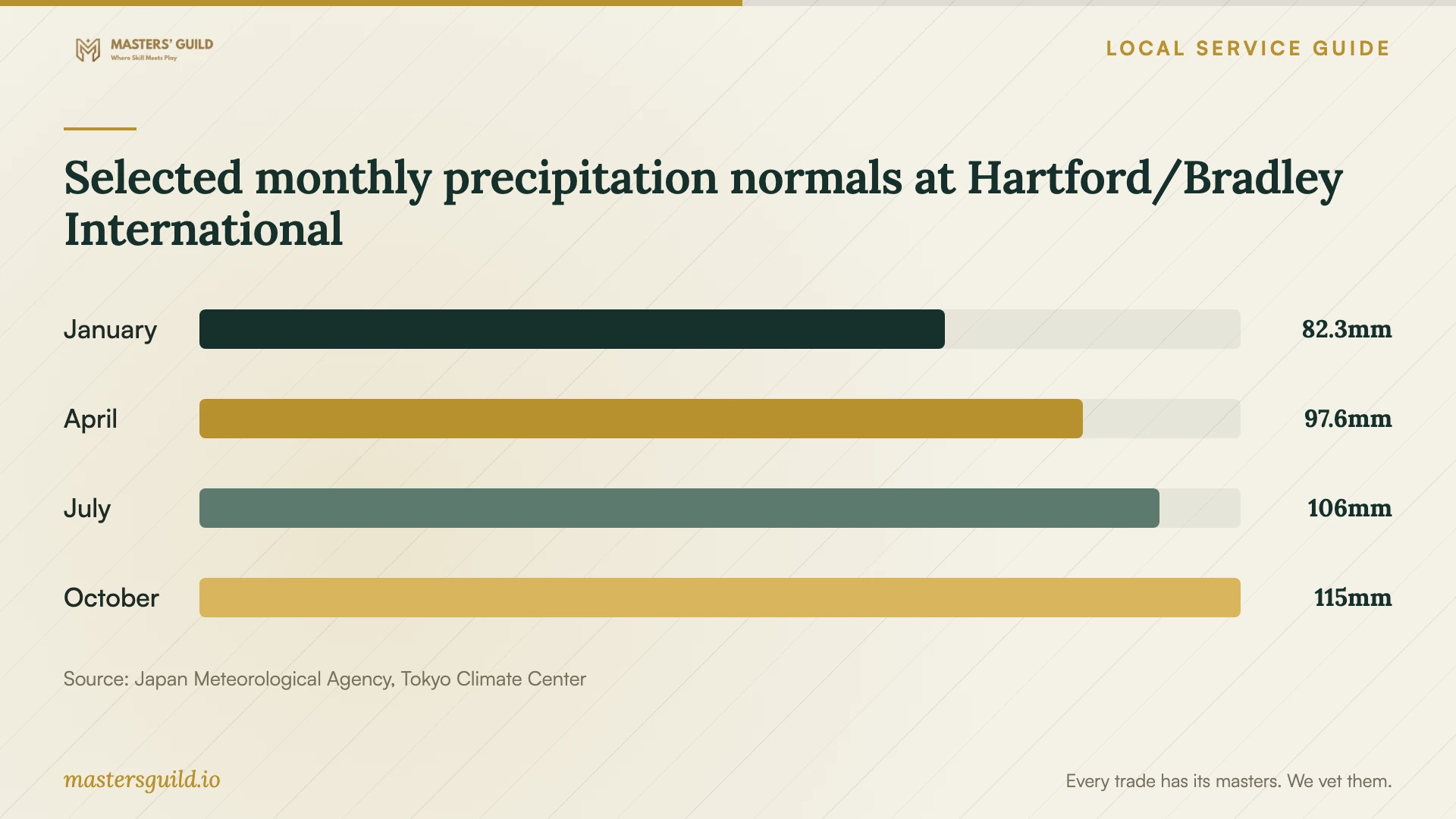
Selected monthly precipitation normals at Hartford/Bradley International
Local details that affect your job
Ask for the Connecticut mold-remediation registration update
DCP gives existing Home Improvement Contractor registrants a specific process for adding mold-remediation services: sign into the state’s eLicense account, select License Maintenance, choose Start beside the registration, then select Update Mold Remediator. Ask a bidder to confirm that they completed this step and provide the associated certification. A contractor who lacks an active registration must follow DCP’s Home Improvement Contractor application route. [1]
Use Connecticut’s guidance in your payment agreement
For this residential job, ask the contractor to include adherence to the Connecticut Guidelines for Mold Abatement Contractors in the agreement and payment conditions, as DPH recommends. Since DPH describes these as guidance rather than enforceable regulations, ask for explicit commitments about containment and work review instead of assuming a general promise to follow state rules covers your concerns. [2]
Choose the next step for your situation
| Situation | Next step | Question to ask |
|---|---|---|
| Hiring for a home | Check DCP residential registration and required certification. | Have you added mold-remediation services to your registration? |
| Need an assessor or consultant | Check relevant experience, credentials and references. | Have you evaluated this type of moisture problem? |
| Removing moldy building materials | Request containment or segregation from unaffected areas, as DPH advises. | Where will you establish the work boundary and move debris? |
| Setting payment conditions | Consider DPH’s recommendation to require adherence to Connecticut abatement guidelines. | Which written commitments will you complete before payment? |
Your hiring checklist
- Record the affected rooms, visible areas, odors and dates you noticed changes.
- Gather photographs and records of earlier leaks, repairs or cleanup.
- Request the contractor’s registration details and mold-remediation certification.
- Ask each bidder to identify inspected areas and inaccessible spaces.
- Get written containment, debris-route and household-access arrangements.
- Separate removal, moisture repairs and rebuilding in the quote.
- Agree on change approvals, completion records and payment conditions.
Frequently Asked Questions
Does Connecticut require a mold-removal credential?
DCP’s residential mold-remediation page requires Home Improvement Contractor registration and certification from NORMI or IICRC. Ask for documentation of both the registration’s mold-remediation status and the required certification. DCP says this residential registration does not cover commercial remediation. [1]
Should I hire a separate mold consultant?
Consider a separate consultant if you want another assessment before agreeing to removal work. Ask what they will investigate and how their findings will help you decide. DPH recommends checking credentials, references and experience with your particular situation. [2]
Can I compare quotes using only the total price?
Compare the written scope alongside the price. Ask each bidder to cover the same areas and identify exclusions, moisture repairs, rebuilding and completion documentation. Resolve differences before choosing a contractor.
Does the regional rainfall chart explain my mold problem?
No. The chart describes published monthly precipitation normals at Hartford/Bradley International. It does not measure moisture inside your home or identify a leak. Use it as background when discussing rain-related observations with an assessor. [3]
Sources and scope
This guide combines the sources below with practical planning guidance. Figures apply to the stated geography and period; request a written quote for your property.