
Local service guide
Hartford lighting installation: hiring and planning
For lighting installation in Hartford, hire through a Connecticut licensed electrical contractor and agree on fixture locations, controls, and installation scope before accepting a quote. Connecticut licenses individual electricians, and only contractors can sign contracts and obtain permits. Ask who holds that responsibility, then have that person assess your proposed work before you buy fixtures. [1]
Identify who will contract for the work
Connecticut’s Department of Consumer Protection requires electricians to hold a license to perform electrical work. The department distinguishes contractor licenses from journeyman or employee licenses and offers limited and unlimited categories. Ask the person quoting your job to identify the license holder responsible for your installation and explain whether that license covers the proposed scope. [1]
Keep the contractor’s identity with the written quote. Ask who will supervise the installation, who will answer questions about the finished work, and who will handle any permit application. Connecticut allows only contractors to obtain permits and sign contracts. Before work starts, have the contractor confirm with Hartford whether your proposed scope requires a permit. [1]
Define the job before comparing quotes
Describe each location as a replacement, a relocation, or a new light. Include photos of the room and existing fixture, your proposed fixture model, ceiling height, and desired switch location. Ask the contractor to assess the existing wiring, electrical box, mounting support, and access before committing to a final scope.
Request itemized written quotes for the same fixture list and scope. Ask each contractor to separate installation labor, fixtures, controls, wiring changes, and ceiling or wall repairs. Include removal of the old fixture, packaging disposal, setup of smart controls, and testing in your questions about what the price covers.
For an owner-supplied fixture, agree on who handles missing parts, damaged products, and returns. Ask each contractor to identify exclusions and explain how you would approve additional work after they inspect the existing installation. Compare the total for the agreed work alongside those exclusions before setting your budget.
Choose brightness and light appearance
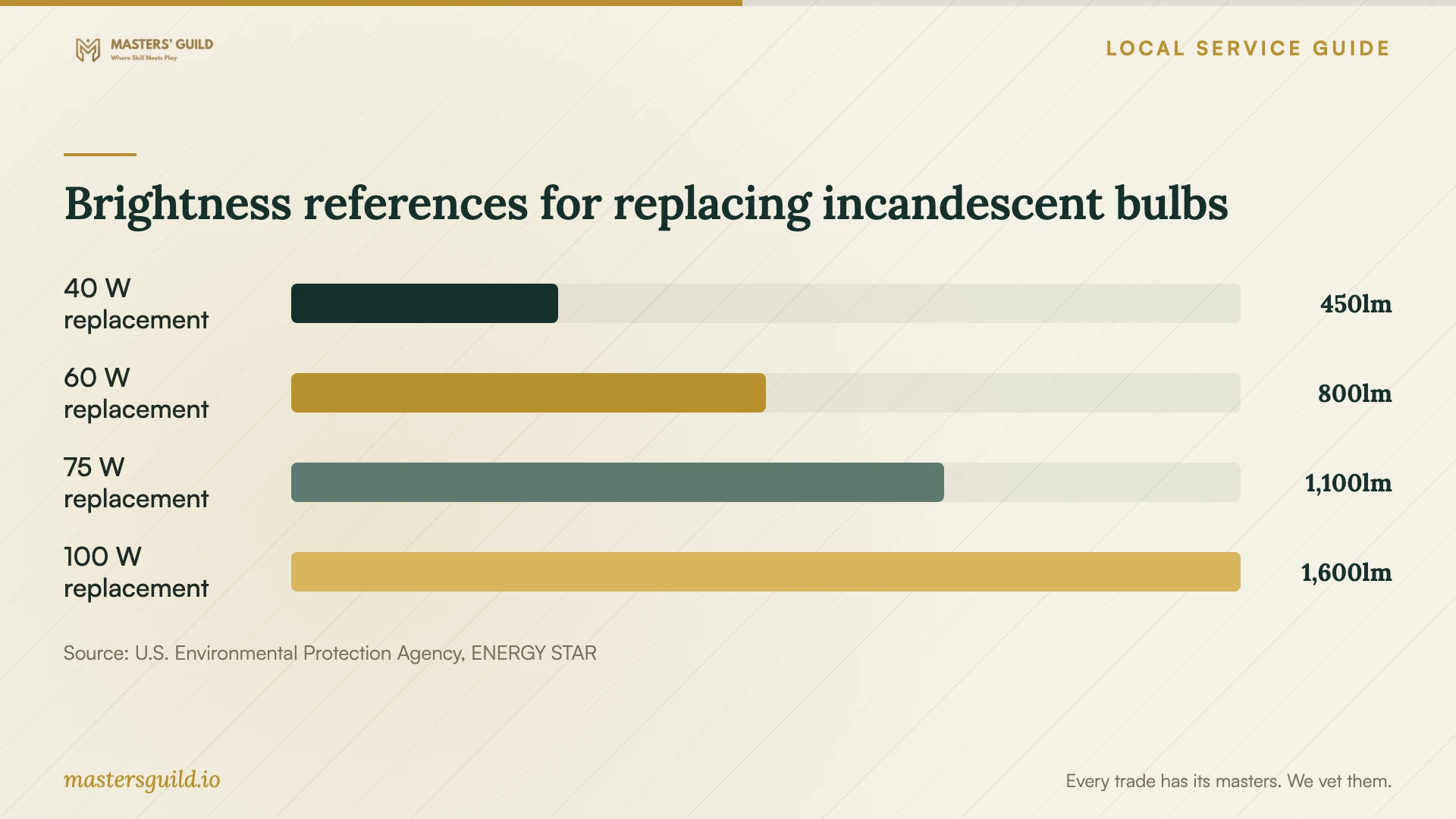
ENERGY STAR describes lumens as a measure of light output; the Department of Energy describes watts as a measure of power input. ENERGY STAR’s reference table pairs a traditional 40-watt incandescent bulb with at least 450 lumens, a 60-watt bulb with 800 lumens, a 75-watt bulb with 1,100 lumens, and a 100-watt bulb with 1,600 lumens. Use those references to describe the brightness you want when replacing familiar bulbs. [2] [3]
Specify light appearance alongside brightness. The Department of Energy describes 2,700 K as warm and 3,000 K as soft, with both appearing among its home applications. It warns that a large change in color temperature can cause dissatisfaction. If you like your current light, record its color temperature before choosing a replacement. [2]
Describe how you use the room: reading beside a chair, preparing food, lighting a dining table, or moving through a hallway. Ask the installer to review placement and controls against those activities. Bring a fixture specification sheet so you can discuss the actual product alongside its appearance.
Check the fixture, bulb, and control together
The Department of Energy advises buyers to check whether LED lamps support dimming and whether they work with the dimming system. For enclosed fixtures, it also advises checking the packaging or technical specifications for enclosed-fixture suitability because trapped heat can affect LED performance and life. [2]
Before ordering, ask the contractor to review your fixture, bulb, and dimmer selections together. Agree on the intended dimming behavior and ask for a demonstration during handover. For a fixture with an integrated light source, ask how you would obtain replacement components and who handles a product fault.
Brightness references for replacing incandescent bulbs
Local details that affect your job
Connecticut licenses the individual electrician
For a Hartford home, check the named electrician rather than treating a company name as the electrical credential. Connecticut’s Department of Consumer Protection licenses individuals, not electrical companies, and distinguishes limited from unlimited licenses. Ask for the responsible person’s license category before agreeing to the scope. [1]
Connecticut restricts who can contract with you
A journeyman or apprentice cannot work directly for a Connecticut consumer unless employed by, or employing, a licensed contractor of record. Only contractors can sign contracts and obtain permits. If your proposed installer identifies as a journeyman or apprentice, establish the contractor of record before accepting the offer. [1]
Resolve these choices before accepting a quote
| Your situation | Next step | Confirm in writing |
|---|---|---|
| Replacing an existing ceiling light | Ask the contractor to assess wiring, box, and mounting support. | Installation scope and any excluded repairs. |
| Adding or relocating lights | Mark proposed positions and discuss switches and wiring routes. | Locations, controls, and responsibility for wall or ceiling repairs. |
| Adding dimmable LED lighting | Check lamp dimmability and compatibility with the dimmer. | Selected lamp and control models. |
| Choosing bulbs for an enclosed fixture | Check packaging or specifications for enclosed-fixture suitability. | Suitable bulb selection. |
| Receiving an offer from a journeyman or apprentice | Establish the licensed contractor of record required for direct consumer work. | Contracting individual and permit responsibility. |
Your hiring checklist
- Record the responsible contractor’s name and license category.
- List each fixture location and identify replacements, relocations, and new lights.
- Share room photos, fixture specifications, ceiling height, and access constraints.
- Have the contractor confirm permit requirements for your scope with Hartford before work starts.
- Choose desired lumens, color temperature, and dimming behavior.
- Request itemized written quotes covering the same materials, installation work, repairs, disposal, and exclusions.
- Agree on approval of additional work and ask the installer to demonstrate the controls at handover.
Frequently Asked Questions
Does replacing a light require a Hartford permit?
Have your contractor confirm permit requirements for the proposed scope with Hartford before work starts. Include whether you plan to replace, relocate, or add fixtures and change wiring or controls. Connecticut’s Department of Consumer Protection says only contractors can obtain permits and sign contracts. [1]
How much should I budget for installation?
Request itemized written quotes for the same fixture list and scope. Ask each contractor to separate labor, products, wiring changes, and repairs, and identify exclusions. Specify the same owner-supplied materials in each request so you can compare the proposed totals.
Can I keep my existing dimmer with new LEDs?
Check the selected products before deciding. The Department of Energy advises confirming that the LED supports dimming and works with the dimming system. Ask the contractor to review the existing dimmer model alongside the proposed lamps. [2]
How do I replace the brightness of a 60-watt bulb?
ENERGY STAR lists at least 800 lumens as the brightness equivalent for a traditional 60-watt incandescent bulb. Select by lumen output, then check product fit and the fixture’s requirements with your installer. [3]
Sources and scope
This guide combines the sources below with practical planning guidance. Figures apply to the stated geography and period; request a written quote for your property.