
Local service guide
Hartford lawn mowing: scheduling and hiring guide
For lawn mowing in Hartford, choose a provider who agrees on the areas to cut, adjustments for grass growth, and clipping handling. Request a written total that separates the first cut from recurring visits and identifies applicable tax. Connecticut bans grass clippings from disposal, so confirm whether the crew will leave them on the lawn or use an appropriate recycling destination. [1]
Compare quotes for the same work
Send each provider the same description and photographs. Identify the front, rear and side lawns, then point out slopes, narrow gates, steps and areas you want the crew to avoid. Have the provider confirm whether they need to inspect the property before giving a firm price.
Request separate prices for the initial visit and ongoing mowing. Describe the current grass height and any accumulated clippings or leaves. Have the provider list mowing, trimming around obstacles, edging and clearing paved surfaces as inclusions or exclusions. Keep leaf removal and other garden work explicit.
Compare the total for the same scope, including agreed removal charges and applicable tax. For a seasonal agreement, establish how the provider bills skipped visits, extra cuts and an early end to service. Set a spending limit that requires your approval before the crew adds work.
Set a mowing schedule that follows growth
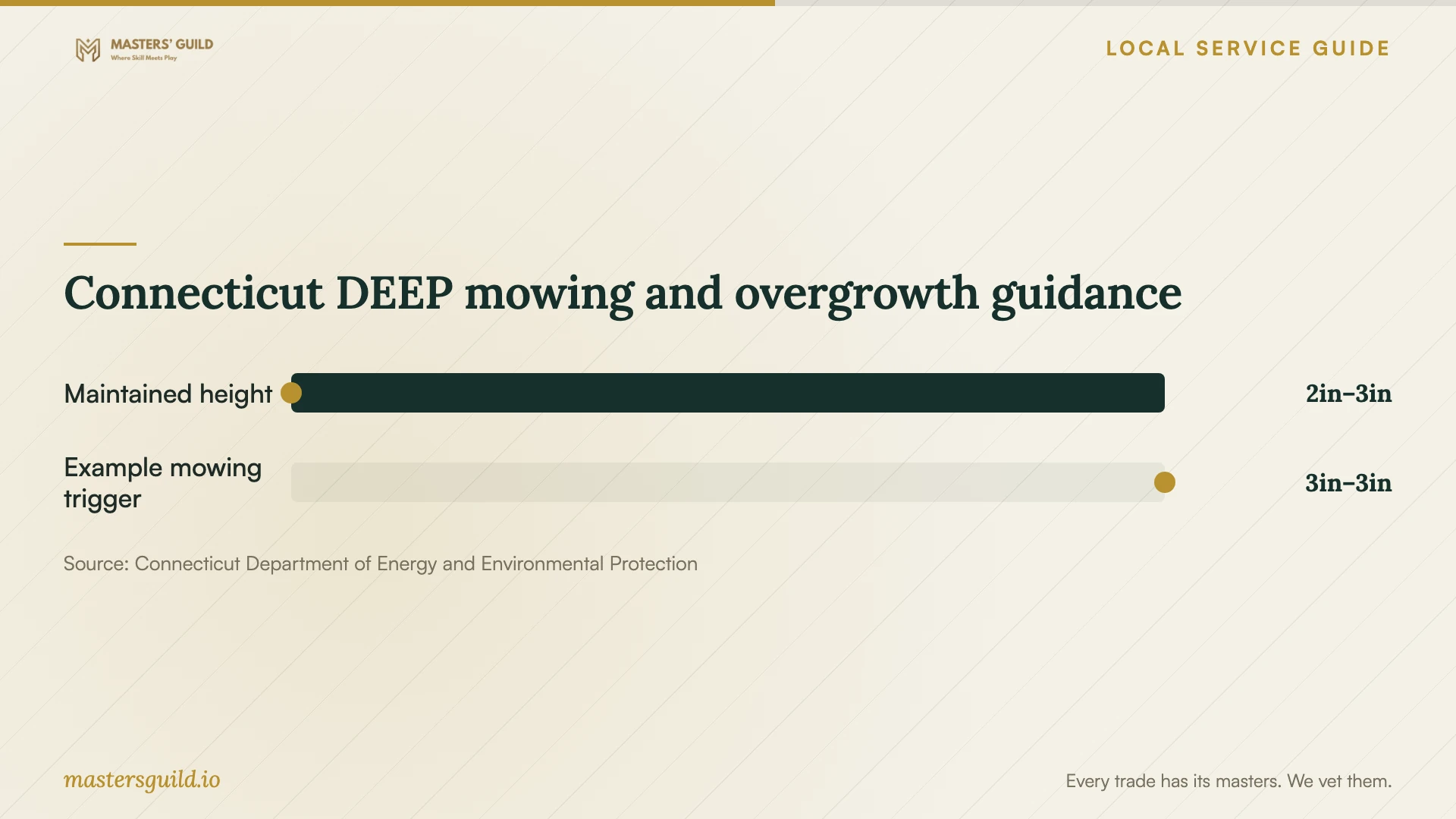
Use the cutting limit to discuss frequency. Connecticut DEEP recommends keeping grass 2 to 3 inches tall and removing no more than one-third of the blade per mowing. Have the provider explain the proposed cutting height for your lawn and how they will adjust visits when growth changes. [2]
Consider weekly and every-other-week service when discussing the schedule. Agree on who checks whether the grass needs cutting and how much notice you must give to change a visit. If you prefer a fixed interval, establish how the crew will handle grass that exceeds the planned cutting limit.
For an overgrown first visit, request a staged approach. DEEP advises raising the mower height after excessive growth, then lowering it over several mowings. Have the provider describe the finish you should expect after the first cut and price any follow-up work before starting. [2]
Agree on rain delays and clipping handling
Give the provider permission to reschedule when the grass needs to dry. DEEP recommends mowing dry grass and keeping mower blades sharp. Establish how the crew will notify you of a delay, when it will return, and how a delayed cut affects the next scheduled visit. [2]
Discuss leaving clippings on the lawn before paying for removal. DEEP recommends this practice because decomposing clippings return nutrients to the soil. If you want removal, have the provider identify the recycling destination and include hauling in the written scope. [1]
Describe the result you expect around entrances, patios and walkways. Request that the crew address visible clumps and clear clippings from paved areas. For autumn visits, specify whether the crew should handle leaves before mowing and whether that work needs a separate price.
Prepare the property and review the first visit
Before the crew arrives, remove toys, hoses and pet waste. Mark sprinkler heads and objects hidden in the grass. Give the provider gate instructions, explain where equipment can enter, and arrange to keep pets inside during the visit. Identify any newly seeded areas you want left alone.
Request proof of insurance and the name of the person who handles damage concerns. After the first visit, check the agreed areas, trimming and cleanup. Photograph any concern and discuss it before the next cut. Keep the accepted scope, price and schedule together so you can refer to the same agreement.
Connecticut DEEP mowing and overgrowth guidance
Local details that affect your job
Connecticut restricts grass-clipping disposal
Hartford homeowners should specify a recycling plan when requesting clipping removal. Connecticut DEEP states that grass clippings are banned from disposal and directs removed clippings to facilities permitted to accept them. DEEP requires leaf-composting facility operators to obtain approval before adding grass clippings. Have the contractor confirm that the proposed destination accepts grass before agreeing to hauling. [1]
Include Connecticut tax treatment in quote comparisons
Connecticut DRS lists landscaping and horticulture among services subject to sales and use taxes. Have each provider identify applicable tax and show the amount payable for the agreed work. Confirm the treatment of your mowing service rather than assuming it follows the tax treatment of another home project. [3]
Choose terms that fit your lawn
| Your situation | Request | Reason |
|---|---|---|
| Grass exceeds the planned cutting height between visits | Review the interval and cutting height | DEEP advises removing no more than one-third of the blade per mowing. |
| The first cut involves excessive growth | Price a raised first cut and staged follow-up | DEEP recommends lowering the cutting height over several mowings. |
| You want clippings removed | Name the recycling destination and hauling charge | Connecticut restricts disposal and requires appropriate recycling. |
| The lawn remains wet on the scheduled day | Use an agreed rescheduling process | DEEP recommends mowing when grass is dry. |
Your hiring checklist
- Photograph the lawn and identify all areas you want cut.
- Measure the narrowest gate and describe steps or slopes.
- Request separate initial-cut and recurring-service prices.
- Confirm trimming, edging, paved-area cleanup and clipping handling.
- Request the total including applicable tax and agreed extras.
- Agree on rain delays, skipped visits and schedule changes.
- Clear obstacles, mark hidden fixtures and arrange pet access.
- Review the first cut against the written scope.
Frequently Asked Questions
Should I choose weekly or every-other-week mowing?
Choose an interval that lets the provider meet the agreed cutting height without removing too much grass at once. DEEP advises removing no more than one-third of the blade per mowing. Arrange to review the interval when growth changes. [2]
Can the contractor put bagged grass in the trash?
Connecticut bans grass clippings from disposal. DEEP recommends leaving them on the lawn. If the contractor removes them, request a recycling destination permitted to accept grass clippings. [1]
What should I ask about the price?
Request the initial-cut price, recurring visit price, included tasks and charges for removal or extra work. Confirm whether the total includes applicable sales tax. Connecticut lists landscaping and horticulture among taxable services. [3]
Should the crew mow after rain?
DEEP recommends mowing when the grass is dry. Agree on a delay notification and return plan so you know how the provider will handle a wet scheduled day. [2]
Sources and scope
This guide combines the sources below with practical planning guidance. Figures apply to the stated geography and period; request a written quote for your property.