
Local service guide
Interior Design in Hartford, CT: Plan and Hire
Arrange Interior Design in Hartford, CT by defining the rooms, the problems you want to solve, and who will handle purchases and installation before you request proposals. Ask each designer for the same written deliverables and a separate furniture budget. Connecticut does not regulate who may practice interior design, but it restricts use of the registered interior designer title. The state also lists interior design services as taxable, so ask whether each proposal includes applicable tax. [1] [2]
Choose the service you need before comparing portfolios
Write a short brief around daily use. Identify where you need better seating, storage, work space, or lighting. Include the furniture you want to keep and the purchases you have already made. Ask prospective designers to explain how they would address those problems and show relevant examples from their portfolios.
For a decorating project, request the specific outputs you need: paint and fabric selections, furniture placement, a shopping list, or a consultation summary. For a room redesign, ask for a measured layout and the dimensions of proposed furniture. State whether you want to order items yourself or have the designer manage purchases.
If your plans include interior construction, ask who will prepare drawings and coordinate with the people responsible for the work. Connecticut describes registered interior designer services as including space planning and plans for non-load-bearing interior construction. That description does not establish approval for your particular project. Ask the designer to identify which responsibilities fall outside their proposal before you sign. [1]
Check the Connecticut credential that the designer advertises
Connecticut protects the registered interior designer title while allowing people to practice interior design without that registration. DCP says someone using the title must have registered with the department or be an architect licensed in the state. An unregistered designer can therefore offer interior design services; evaluate their proposed work and qualifications rather than assuming that the title is mandatory. [1]
Ask anyone advertising the registered title for their registration information and use the lookup option on DCP's interior designer page. Interior designer registrations expire on December 31 each year. For a project continuing across year-end, include a request to confirm renewed registration if the designer will keep using that designation. [1]
Ask for a sample deliverable and discuss a project with comparable scope. Review whether the designer explains measurements, revisions, purchasing responsibilities, and exclusions in terms you understand. Treat the credential check and the review of their work as separate hiring steps.
Compare the complete proposal before paying a deposit
Ask each candidate to separate design fees, furniture and materials, purchasing charges, delivery, installation, and applicable tax. Connecticut DRS lists interior design services described in NAICS industry group 54141 among services subject to sales and use taxes. Do not assume a home design fee receives the same tax treatment as a separate construction charge. [2]
For hourly billing, request the rate, the activities the designer will bill for, and an approval point before they exceed your agreed spending limit. For a fixed fee, ask which drawings, meetings, revisions, and site visits it covers. Request written prices for added rooms or changes after you approve a design.
If the designer orders products, agree on who owns the orders, who handles damage or returns, and how they will disclose purchasing fees or markups. Ask them to obtain your approval before substituting an item. Keep design spending and product spending separate in your own budget so you can reduce purchases without losing track of the professional fee.
Make lighting part of the design brief
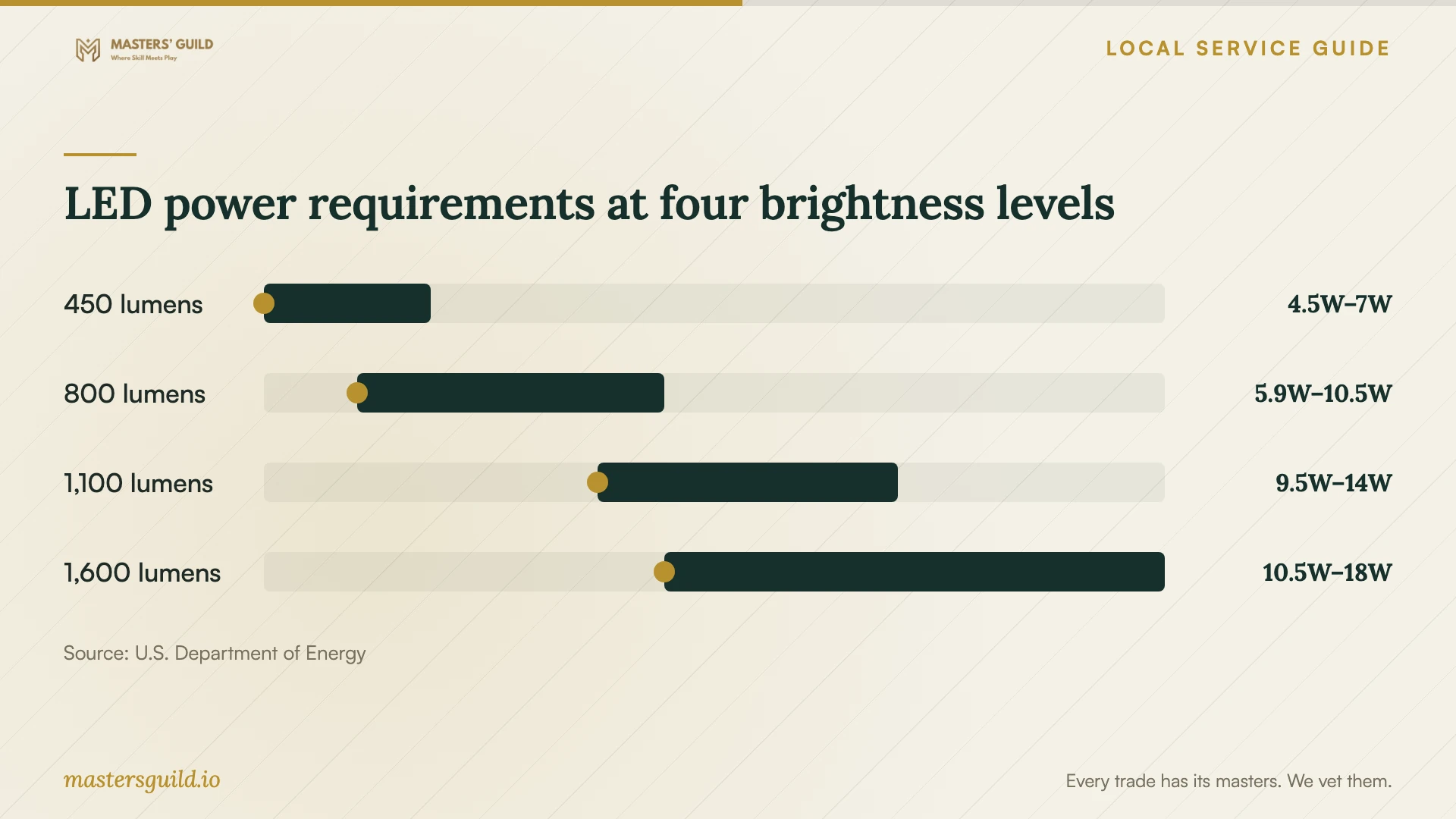
Ask the designer to specify brightness in lumens rather than choosing replacement bulbs by wattage alone. DOE's reference table compares bulbs at equal light output: its 800-lumen row lists 60 watts for incandescent bulbs and 5.9–10.5 watts for LEDs. These are national reference values, not Hartford electricity costs or a forecast of your savings. [3]
Review paint, fabric, and wood samples under the lighting you intend to use. DOE explains that color temperature affects the appearance of a space and that color rendering describes how accurately a light source renders colors. Ask the designer to name the proposed color temperature and discuss it with you before placing an order. [3]
Give the designer photos of enclosed fixtures and the details of existing dimmers. DOE advises buyers to check that bulbs suit enclosed fixtures and that dimmable LEDs work with the dimming system. Request those compatibility checks in the lighting schedule, alongside bulb shape and base size. [3]
Prepare for the first visit and approve work in stages
Send room photos, approximate dimensions, your budget, and a list of items to retain before the visit. Include door swings, outlets, and any access constraints you want the designer to consider. Have the person responsible for final decisions attend, and explain which parts of the home must remain usable during the project.
Ask the designer to confirm measurements before ordering fitted or large items. Agree on approval stages for the layout, finishes, product list, and orders. Request a schedule that separates design work from supplier delivery and installation, with a named person responsible for updating you when dates change.
LED power requirements at four brightness levels
Local details that affect your job
A statewide title rule changes the Hartford hiring check
Connecticut allows interior design practice without registration but restricts the registered interior designer designation. For your Hartford project, check a claimed registration through DCP rather than rejecting a decorating proposal solely because the provider lacks that title. If the provider uses the designation, ask for the registration information and confirm its status. [1]
Connecticut tax treatment changes how you compare quotes
DRS includes interior design services in its list of taxable services. Ask Hartford candidates to show applicable tax on the design fee and distinguish it from furniture purchases and other charges. Compare proposals using the total amount you would pay, with the same requested scope, rather than comparing pretax design fees alone. [2]
Match your project to a clear design scope
| Your project | Scope to request | Question before signing |
|---|---|---|
| Keep the furniture and refresh finishes | Consultation with written finish selections | Will I receive named products and a written summary? |
| Change furniture and room layout | Measured layout and dimensioned shopping list | Who confirms fit before ordering? |
| Have the designer manage purchases | Design plus a written purchasing agreement | How do you charge for purchasing and handle damaged deliveries? |
| Plan non-load-bearing interior construction | Defined drawing and coordination responsibilities | Which plans will you prepare, and who handles requirements outside your scope? |
| Select lighting | Lighting schedule with brightness and compatibility checks | Have you checked enclosed fixtures and the existing dimmers? |
Your hiring checklist
- List the rooms, daily-use problems, retained furniture, and purchase budget.
- Request the same deliverables from each candidate, including measurement and revision responsibilities.
- Check any advertised registered interior designer designation through Connecticut DCP.
- Ask for design fees, purchasing charges, delivery, installation, and applicable tax as separate lines.
- Confirm who approves orders, handles returns, and pays for substitutions or added work.
- Record bulb brightness, color temperature, fixture suitability, and dimmer compatibility in the lighting brief.
- Agree on approval stages and require measurement confirmation before major orders.
Frequently Asked Questions
Must I hire a registered interior designer?
Connecticut does not require registration to practice interior design. It restricts use of the registered interior designer title. Choose a provider whose experience and written deliverables fit your project, and verify the credential if they advertise it. [1]
Does Connecticut tax interior design services?
Connecticut DRS lists interior design services among taxable services. Ask the designer to identify applicable tax in the proposal and explain the treatment of separate product and construction charges. [2]
How should I set a design budget?
Separate the professional fee from furniture, materials, delivery, and installation. Give candidates your spending limit and ask them to propose a scope within it. For hourly work, agree on a spending checkpoint before they continue beyond the approved amount.
Can I choose new bulbs by their wattage?
Use lumens to compare brightness. Wattage measures power input. DOE also advises checking dimming compatibility and suitability for enclosed fixtures, so ask for those checks before you approve the lighting purchases. [3]
Sources and scope
This guide combines the sources below with practical planning guidance. Figures apply to the stated geography and period; request a written quote for your property.