
Local service guide
Gardening in Hartford: Hiring and Planning
Arrange Gardening in Hartford by defining the beds and tasks, requesting separate prices for labor, materials and debris removal, and deciding whether you want ongoing visits or a single cleanup. Before approving soil amendments, consider testing. If the work includes paid pesticide application or recommendations, Connecticut requires business registration in addition to individual applicator certification. [1]
Define the work before comparing gardeners
Walk through the garden and divide your request into cleanup, planting and ongoing care. Identify plants you want to keep, beds you want cleared and areas the gardener should leave alone. For an overgrown bed, ask the gardener to confirm plant identification with you before removal.
Describe the result you want in observable terms: weed named beds, remove agreed plants, install an approved plant list and take away the debris. State whether you want hand weeding or want the gardener to propose a treatment. Ask for separate approval before anyone adds chemical treatment to the job.
Include access details in the request. Show the gardener gate openings, steps, the water supply and a place for deliveries. Mark plants or containers you will move yourself. Ask who will buy materials, where the gardener will stage them and who will water new planting between visits.
Choose soil testing before approving amendments
Ask the gardener what information they need before recommending lime, fertilizer or a bed amendment. You can request a testing allowance in the quote and approve amendments after reviewing the report. Keep sample collection, laboratory fees and any return visit as separate items.
CAES offers soil testing without a fee for Connecticut residents. The agency lists a 1 to 2 week testing period and sends the report by mail. Allow for that published testing period when arranging work that depends on the results, and confirm current timing before setting the installation date. [2]
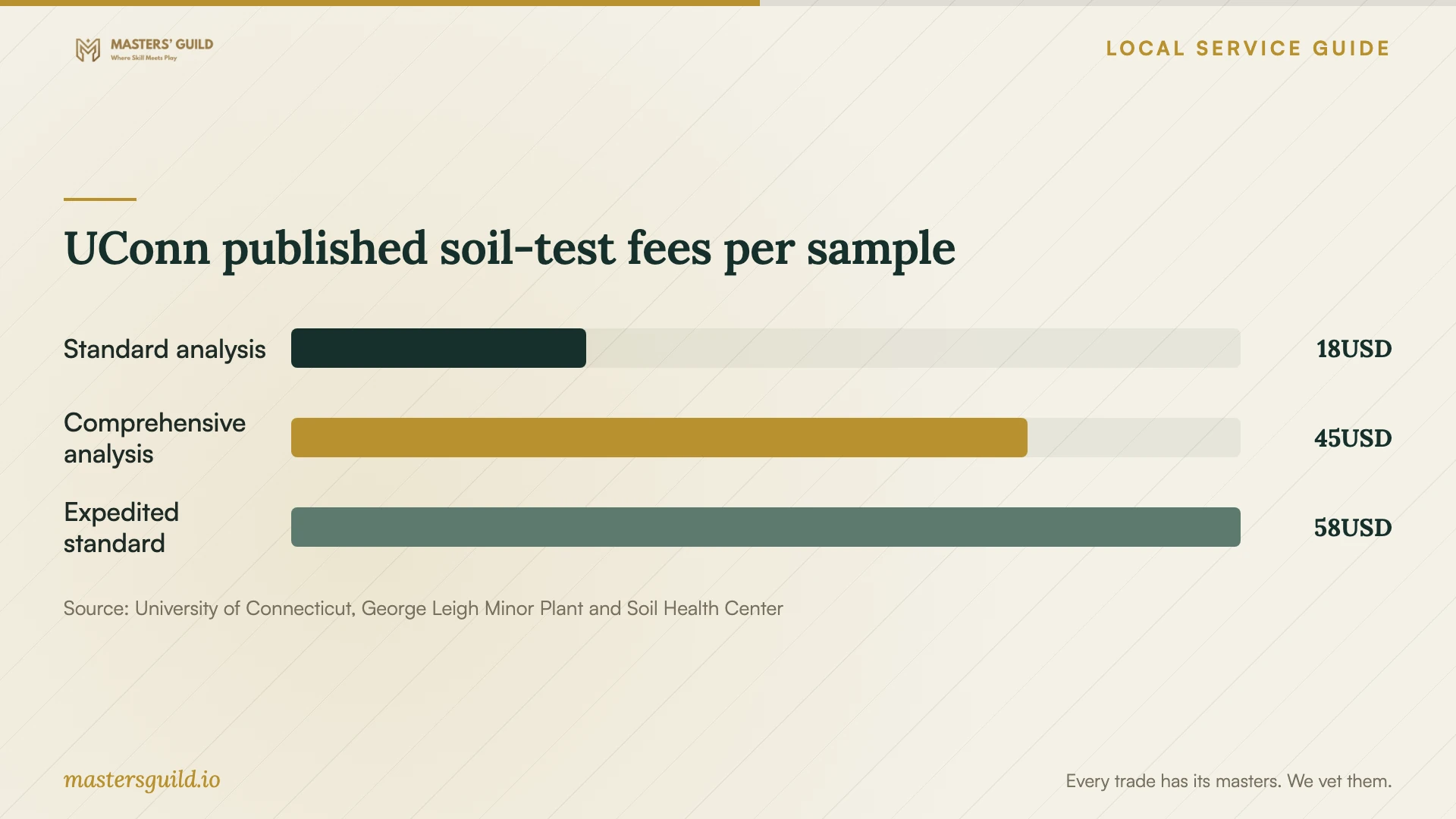
UConn lists its Standard Nutrient Analysis at $18 per sample. It includes soil pH, plant-available nutrients, lead screening and crop-specific lime and fertilizer recommendations. UConn recommends it for gardens and ornamentals grown in mineral soil and excludes compost and soilless media from this test's scope. Tell the gardener what material you intend to sample before selecting a test. [3]
Check credentials when treatment enters the quote
Connecticut DEEP requires pesticide application businesses to register before operating. The definition includes businesses paid to recommend pesticide use as well as those paid to apply it. Business registration supplements individual applicator certification, so ask for both credentials when reviewing a proposed treatment. [1]
Ask who will perform the application and which company will contract with you. DEEP also requires businesses that subcontract pesticide applications to register. A gardener's plan to bring in another company does not remove that business registration requirement. [1]
Request the proposed product label information before agreeing to treatment. DEEP describes providing pesticide label information before contract agreements among the requirements for subcontracted applications. Ask the provider to explain the target problem, treated area and instructions you must follow after application. [1]
Compare the full quote and agree on completion
Ask each gardener to separate labor, plants, soil products, delivery and debris removal. For hourly work, agree on a spending limit and a point at which the gardener must seek approval. For a fixed price, write down the included beds, tasks and quantities. Request written approval for substitutions and added work.
For repeat visits, specify the tasks included on each visit and how you will approve extra work. Agree on access, weather rescheduling and communication if the gardener finds a plant problem. Avoid assuming that planting, treatment or hauling comes with routine weeding.
Before the gardener leaves, review the agreed areas together. Check that the gardener kept marked plants, removed the agreed debris and completed the approved planting. Request a plant list and written watering instructions, then record who will handle follow-up care.
UConn published soil-test fees per sample
Local details that affect your job
Use the Windsor drop-off arrangement during construction
CAES lists its Valley Laboratory at 153 Cook Hill Road in Windsor as a soil-sample drop-off location during construction that began March 31, 2026. Staff take those samples to New Haven for testing. For a Hartford garden project, confirm the designated drop-off instructions before making the trip and allow time to receive the mailed report before approving amendments. [2]
Check the pesticide contract number and renewal period
Connecticut pesticide business registrations run from September 1 through August 31 and require annual renewal. For work arranged in October, request the current registration rather than relying on paperwork from an earlier visit. DEEP requires the assigned PMBR registration number on written pesticide application service contracts. [1]
Match the request to the next step
| Your planned work | What to request | Before approval |
|---|---|---|
| Bed cleanup | A defined removal list and debris handling | Mark plants to keep and agree on hand weeding or proposed treatment |
| New planting | A plant list, material quantities and care instructions | Agree on substitutions and who will water |
| Soil amendments | A testing plan and a separate amendment allowance | Consider CAES testing, which carries no testing fee for Connecticut residents |
| Pesticide treatment | Business registration and individual applicator certification | Check the PMBR number on the pesticide service contract |
| Recurring maintenance | A visit task list and extra-work approval process | Agree on access, rescheduling and debris removal |
Your hiring checklist
- Photograph the work areas and mark plants you want to keep.
- List cleanup, planting and recurring care as separate tasks.
- Provide gate, delivery, water and parking access details.
- Decide who will collect soil samples and review the results.
- Request separate labor, materials, delivery and hauling charges.
- Request pesticide business and applicator credentials if treatment is proposed.
- Agree on a spending limit and approval process for extra work.
- Assign watering and follow-up care before planting begins.
Frequently Asked Questions
How much should I budget for a gardener?
Request a property-specific quote using a shared task list. Separate the initial cleanup from recurring visits, and ask for labor, materials and hauling charges. The published fees below cover laboratory tests; use them only for the testing portion of your plan.
Can I get soil tested near Hartford without a testing fee?
CAES offers testing without a fee for Connecticut residents. During Valley Laboratory construction, you can leave samples at its designated Windsor drop-off area for transport to New Haven. CAES lists testing at 1 to 2 weeks and sends reports by mail. [2]
Does hiring a separate pesticide company remove the gardener's registration requirement?
DEEP states that businesses subcontracting pesticide applications must register. Ask for the contracting business's registration and the credentials of the company and applicator who will perform the treatment. [1]
Which UConn test includes lead screening?
UConn's $18 Standard Nutrient Analysis includes lead screening, soil pH, plant-available nutrient measurements and crop-specific lime and fertilizer recommendations. It covers mineral soil; UConn states that this test is unsuitable for compost or soilless media. [3]
Sources and scope
This guide combines the sources below with practical planning guidance. Figures apply to the stated geography and period; request a written quote for your property.