
Local service guide
Duct cleaning in Hartford, CT: Hiring and Planning
Arrange duct cleaning in Hartford after a provider shows you substantial contamination and gives you a written scope and total price. EPA recommends cleaning as needed for problems such as excessive debris, vermin, or substantial visible mold on hard surfaces. Before authorizing access work, ask about suspect insulation and separate cleaning from proposed repairs. [1]
Decide whether cleaning addresses your problem
Start with an inspection rather than a recurring cleaning schedule. EPA identifies substantial visible mold on hard-surface ducts or equipment, vermin infestation, and excessive dust or debris clogging ducts or blowing from supply registers as reasons to consider cleaning. Ask the inspector to show you the affected locations and explain the cause. [1]
You can vacuum or remove and clean dusty return registers. EPA says that dust on those grilles does not mean the ducts contain heavy deposits. The agency has found no demonstrated health-prevention benefit from duct cleaning and little evidence that cleaning ducts alone improves system efficiency. Treat promises to cure allergies or cut energy bills with caution. [1]
Ask for a separate diagnosis when the provider finds moisture or pests. EPA advises correcting underlying causes before cleaning or replacing ducts because contamination can recur. For wet or moldy fiberglass duct insulation, the agency recommends replacement rather than cleaning. [1]
Compare the full scope and price
Get written estimates from at least three providers, as EPA recommends. Give each bidder the same description of the problem and ask each to inspect the same areas. Request a total price and an explanation of anything that could change it before work begins. [1]
Ask each bidder to name the components included: supply and return ducts, registers and grilles, plenums, blower housing, coils, and drain pans. EPA warns that leaving a contaminated component uncleaned can contaminate the system again. Have the provider explain who will handle equipment components and list any exclusions. [1]
EPA's consumer guidance gives a broad reference of $450 to $1,000 per heating and cooling system, depending on scope, size, access, region, and contamination. That guidance originated in 1997; its range is not a Hartford price survey or a current local quote. Use inspected written bids to set your budget. [1]
Ask bidders to itemize any dryer-vent service, chemical treatment, insulation replacement, or duct repair they propose. Keep optional work separate so you can compare the base cleaning scope and decide which additions to authorize.
Ask how the crew will protect the system
Ask where the vacuum exhaust will go. EPA recommends equipment that exhausts particles outdoors, or HEPA vacuum equipment when exhaust stays indoors. The provider should protect furnishings, use cleaning tools suited to the duct material, and seal and reinsulate access holes after the job. [1]
Ask the crew to identify sheet metal, flexible duct, and fiberglass-lined sections before choosing brushes. EPA recommends soft-bristled brushes for fiberglass duct board and internally lined metal ducts. Have the provider explain how the crew will avoid damaging liners or fragile sections. [1]
Require a separate explanation before approving a biocide or interior coating. EPA cautions that research has not established the effectiveness or potential adverse health effects of these treatments in duct cleaning. Ask for the product label, its permitted use on your duct material, and the reason physical cleaning and moisture correction would not suffice. [1]
Prepare for access and check the finished work
Before the visit, send photographs of the equipment and accessible ductwork. Ask which registers, closets, basement areas, or attic entrances the crew needs to reach. Agree on furniture moving, pet arrangements, expected interruptions, and how the crew will obtain approval for additional work.
Before paying, ask the provider to show you the cleaned components and photographs of inaccessible areas. EPA recommends a visual inspection to verify cleanliness. Check that the crew reattached registers, secured access covers, and demonstrated system operation after cleaning. [1]
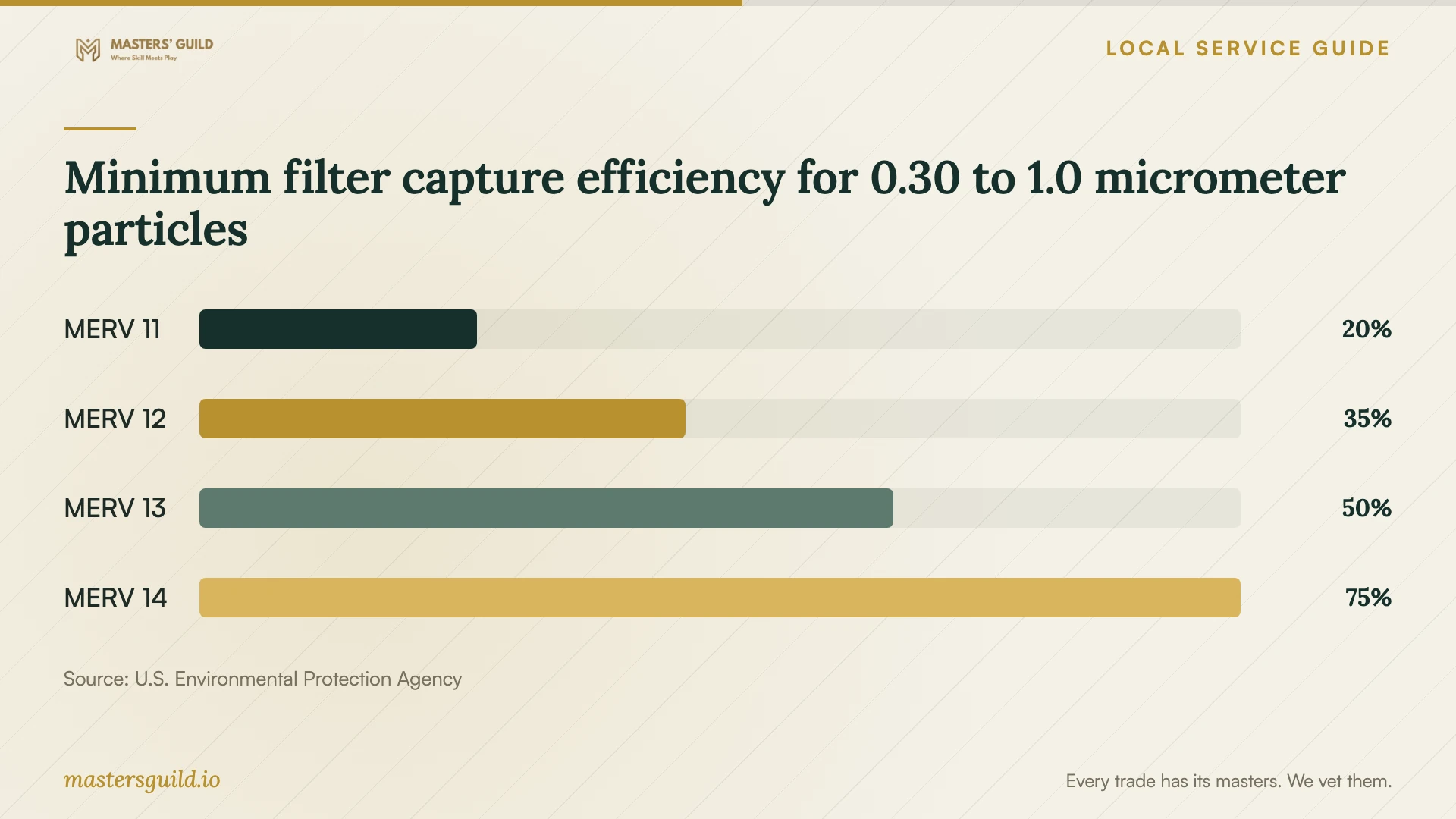
Discuss filtration during the visit. EPA advises choosing MERV 13 or the highest rating your fan and filter slot can accommodate when upgrading. Ask an HVAC technician to confirm compatibility rather than selecting by rating alone, and follow the filter manufacturer's replacement guidance. [5]
Minimum filter capture efficiency for 0.30 to 1.0 micrometer particles
Local details that affect your job
Connecticut registration depends on the work
For a Hartford cleaning-only estimate, do not use home improvement registration as your sole screening test. Connecticut DCP excludes property maintenance such as cleaning services from the Home Improvement Act's definition. If the proposal expands into permanent alterations or heating, cooling, or sheet metal work, ask DCP which registration or individual trade-license scope applies before authorizing that addition. DCP provides separate trade-scope guidance and a license verification service. [2] [4]
Resolve suspect duct insulation before disturbing it
Connecticut DPH lists duct insulation as a possible asbestos-containing material and says appearance cannot confirm asbestos; laboratory analysis is necessary. If a crew proposes cutting access through suspect insulation, pause that part of the job. DPH recommends a Connecticut-licensed asbestos inspector when remodeling or demolition could affect suspect materials and advises leaving undisturbed material alone otherwise. Ask who will assess the material before agreeing to access alterations. [3]
Choose the next step from the inspection
| Finding | Next step | Before authorizing |
|---|---|---|
| Dust on return grilles alone | Clean the accessible grilles and review routine maintenance. | Ask for evidence of contamination inside the ducts. |
| Excessive debris or particles from supply registers | Consider cleaning after identifying the cause. | Get a written scope covering affected system components. |
| Wet or moldy fiberglass insulation | Arrange moisture correction and insulation replacement. | Ask who will perform the replacement. |
| Suspect asbestos insulation near proposed access | Avoid disturbance and arrange assessment. | Confirm the assessment before approving access alterations. |
| Bid expands into HVAC or sheet metal work | Check the applicable Connecticut trade-license scope. | Identify the individual responsible for the added work. |
Your hiring checklist
- Describe the problem and ask bidders to show you the affected areas.
- Give each bidder the same component list for a comparable estimate.
- Request the total price, exclusions, and approval process for extra work.
- Ask who will assess suspect insulation before access cuts.
- Confirm vacuum exhaust arrangements and protection for furnishings.
- Agree on access, pet arrangements, and expected interruptions.
- Request a final walkthrough and photographs of inaccessible components.
Frequently Asked Questions
Should I book duct cleaning every year?
EPA recommends cleaning as needed rather than on a routine schedule. Keep filter changes and heating-equipment maintenance on their own schedules. EPA recommends inspecting and servicing fuel-burning equipment before each heating season. [1]
Does EPA certify duct cleaners?
EPA does not certify, endorse, or approve duct-cleaning companies. Ask about experience with your duct materials, references, collection equipment, and relevant Connecticut credentials for the work proposed. [1] [4]
Does a photograph prove that a stain is mold?
Ask the provider to show you the location and explain the evidence. EPA says an expert must identify suspected mold and may need laboratory analysis for confirmation. Address the moisture source before cleaning. [1]
Can a higher-rated filter replace cleaning?
Use filtration and cleaning decisions for their separate purposes. MERV describes filter capture performance; it does not measure existing duct contamination. Ask a technician which filter your equipment supports, and base cleaning on inspection findings. [1] [5]
Sources and scope
This guide combines the sources below with practical planning guidance. Figures apply to the stated geography and period; request a written quote for your property.