
Local service guide
Door and Window Repair in Hartford, CT
For Door and Window Repair in Hartford, arrange an assessment of the affected glass, hardware, and frame before approving replacement. Request a written repair scope, check Connecticut home improvement registration where required, and discuss lead-safe work before a contractor disturbs painted surfaces in a home built before 1978. Connecticut includes doors and windows in its residential home improvement rules; its public health guidance explains the separate EPA renovation requirements. [1] [2]
Describe the problem before requesting a quote
Tell the repairer what you observe: a door rubs at the top, a latch misses the strike plate, a window will not stay open, glass has cracked, or you see water around the frame after rain. Send photographs of the whole opening and close views of the affected part. Include visible manufacturer labels or hardware markings. Avoid forcing a stuck sash or removing glass for photographs.
Ask the repairer to identify the component they propose to repair and explain how they will check the result. For a sticking door, request an assessment of the hinges, latch, and frame. For a window, ask them to separate glass work from sash, hardware, and surrounding frame work. If they recommend replacement, ask which observed defect supports that recommendation.
Check Connecticut registration for the proposed work
Connecticut DCP requires an individual or business contracting with a consumer for covered residential home improvement to register with the department. The agency includes permanent changes involving doors and windows. It also lists exclusions, including contracts under $200, subcontracted work, homeowner work on their own property, and work within the scope of a trade license. [1]
Use the Lookup/Verify a License option on DCP's home improvement page. Compare the business you find with the name on your quote and ask the contractor to explain any difference. If the contractor claims an exclusion, ask which listed category applies to your scope. [1]
Request evidence of insurance and a written description of who will perform the repair. Ask who will order parts, supervise any additional workers, and respond if the original problem returns. Keep the quote and credential information together so you can review them before accepting the work.
Plan painted-frame work before removal
Connecticut DPH describes EPA's Renovation, Repair and Painting program as applying to renovation, remodeling, or paint removal in residential houses and apartments built before 1978. The program addresses work that may disturb painted surfaces. DPH explains that firms need EPA certification and workers must follow lead-safe practices. Non-certified workers can receive training and work under a certified renovator's direction. [2]
Before approving scraping, sanding, trim removal, or frame removal in an older home, share the construction year if you know it. Ask the contractor to explain whether RRP applies to the proposed work and identify the certified firm and renovator when applicable. [2]
Request a written description of containment and cleanup. Discuss where children and pets will stay during the repair, which rooms the crew needs to enter, and when you can use the work area again. Settle these arrangements before clearing furniture or accepting a start date.
Separate the repair price from unresolved work
Request a quote that names the opening, component, materials, labor, disposal, and finishing work. Ask whether the contractor will reuse existing trim and who will handle painting. For glass work, have them record the proposed glass specification. For hardware work, ask for the part identification and an alternative if they cannot obtain it.
Ask how the contractor will handle damage they discover after removing trim or a component. Agree that they will photograph the condition, explain additional work, and obtain your approval of a revised price before proceeding. Request a priced repair option and a replacement option where the contractor considers both feasible, with an explanation of each.
Arrange weather protection and check completion
Ask how long the contractor expects to leave the opening exposed and how they will secure it if they need another visit. Discuss exterior access, furniture clearance, and alarm contacts attached to the opening. For broken glass or an entrance that will not lock, request a temporary protection plan alongside the permanent repair proposal.
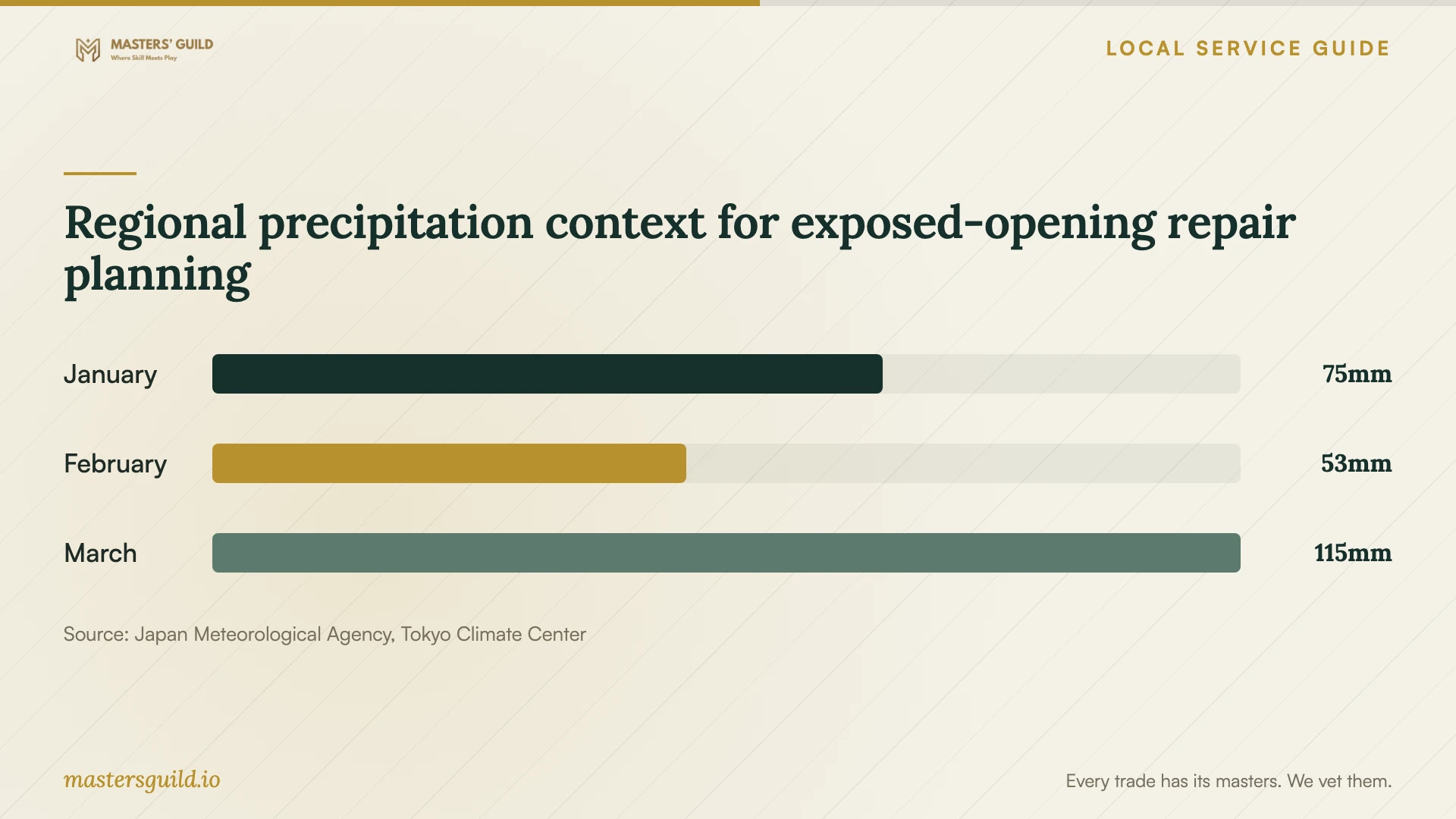
JMA's regional Hartford/Bradley International station table reports 75 mm of precipitation in January 2026, 53 mm in February, and 115 mm in March. These observations describe past monthly conditions at the station. For an exposed opening, ask the contractor to use the forecast for your address when arranging temporary weather protection and the work date. [3]
For exterior sealing or finishing, ask the contractor to check the chosen product's application instructions against expected working conditions. Before accepting completion, operate the repaired door or window with the contractor present. Check opening, closing, and locking, then review the agreed finish and cleanup. Request installed part details, any written warranty, and instructions for reporting a recurrence.
Regional precipitation context for exposed-opening repair planning
Local details that affect your job
Connecticut registration changes contractor screening
For residential door or window improvements, use Connecticut DCP's Home Improvement Contractor page to reach its registration lookup before accepting a quote. The state includes doors and windows in covered work but excludes contracts under $200 and several other categories. Ask a repairer claiming an exclusion to identify the applicable category for your contract. [1]
Lead renovation certification follows a federal route
For painted-surface work in a pre-1978 home, check EPA certification separately from Connecticut home improvement registration. DPH provides a certified-firm search route and says Connecticut does not administer EPA's RRP program. Ask about both credentials where applicable, and use the EPA contacts listed by DPH for RRP compliance questions. [1] [2]
Choose the next step for your repair
| Your situation | Next step | Question to settle |
|---|---|---|
| Door rubs or latch misses | Request a hardware and frame assessment | Which component needs adjustment or repair? |
| Cracked glass | Request glass identification and a protection plan | What glass will you install, and how will you secure the opening? |
| Visible frame damage or water entry | Request an assessment before approving finish work | What will you inspect, and how will you price additional damage? |
| Proposed permanent residential improvement | Check Connecticut DCP registration and listed exclusions | Does the business need registration for this contract? |
| Paint disturbance in a pre-1978 home | Discuss EPA RRP applicability and certification | Who will oversee lead-safe practices and cleanup? |
Your hiring checklist
- Photograph the opening, damaged component, and manufacturer or hardware labels.
- Describe when the problem occurs and whether the opening closes and locks.
- Compare the contracting business name with the applicable registration record.
- Share the home's construction year and ask about painted-surface disturbance.
- Obtain a written scope covering parts, labor, finishing, disposal, and exclusions.
- Agree on approval of additional work and temporary protection between visits.
- Test operation and locking with the contractor before accepting completion.
Frequently Asked Questions
Does a door or window repairer need Connecticut registration?
DCP includes doors and windows in residential home improvement and requires registration for covered consumer contracts. The agency lists exclusions, including contracts under $200 and work within a trade license's scope. Check the proposed work against those categories and verify the contracting business where registration applies. [1]
What should I ask before repairing an old painted frame?
Ask whether the contractor will disturb painted surfaces and whether EPA RRP applies. Connecticut DPH describes the program for renovation work in pre-1978 housing and explains firm certification and lead-safe practices. Request applicable credentials and a written containment and cleanup plan. [2]
Should I approve replacement at the first visit?
Ask the contractor to document the defect and explain the proposed remedy first. Request repair and replacement options where they consider both feasible. Compare the included work, finishing responsibilities, and handling of hidden damage before choosing.
How can I compare quotes without a local price benchmark?
Give each contractor the same photographs and requested scope. Compare parts, glass specifications, labor, finishing, disposal, access, and exclusions. Ask each contractor to price unresolved work separately or explain how they will obtain your approval after inspection.
Sources and scope
This guide combines the sources below with practical planning guidance. Figures apply to the stated geography and period; request a written quote for your property.