
Local service guide
Data Recovery and Backup in Hartford, CT
Arrange Data Recovery in Hartford through a device assessment, a written spending limit, and acceptance terms tied to the business files you need. Include a separate backup scope with a demonstrated restore. If you suspect unauthorized access to customer or employee information, involve your incident response adviser before authorizing changes to the affected equipment.
Choose recovery or restoration around your priority files
Start with the business task you need to resume: opening payroll, retrieving signed contracts, or using an accounting database. Identify any accessible backups before commissioning work on the original device. Have the provider describe whether the proposed scope covers restoring a backup, recovering files from equipment, or returning an application to operation.
For equipment that clicks, disconnects, or displays errors, pause routine use and obtain handling instructions from a recovery specialist before running repair tools. Establish who will perform the assessment and whether another facility will receive the device. Use a receipt that identifies the equipment and records each handoff.
Define acceptance through a recovered-file list and representative files opened on a separate destination. Your software administrator should check databases and business applications. Include a written account of missing or inaccessible files so you can decide whether the delivered result meets the agreed scope.
Compare complete quotes and delivery commitments
A device-specific quote should separate assessment, recovery labor, outside laboratory work, transport, destination storage, and priority service. Put a spending ceiling in the authorization. Record what you owe if you decline further work or the provider cannot recover your priority files, including the precise meaning of any advertised success condition.
Separate the expected assessment date from file delivery and operational restoration. Name the person who will explain delays or seek approval for a changed scope. When comparing proposals, give each provider the same file priorities and acceptance requirements. Identify any follow-on work your own IT support must complete.
Review the estimate's tax lines before approving the total. Connecticut's Department of Revenue Services distinguishes computer and data processing services from other taxable goods and services. Have the provider explain how it classifies recovery labor, software, and replacement hardware rather than assuming one rate covers the package. [2]
Control access and coordinate suspected breaches
Choose one business contact to authorize access and receive recovered data. Before handing over equipment, settle where technicians and subcontractors may access its contents, how they will transfer files, and how long they may retain copies. Include access records and deletion responsibilities in the service terms.
Connecticut's Attorney General describes breach disclosure duties for people, including companies, who own, license, or maintain computerized data containing personal information when a security breach compromises that information. If you suspect unauthorized access, have an incident response adviser assess notification duties and coordinate evidence preservation with recovery work. [1]
The Attorney General requires consumer notice without unreasonable delay and within 60 days of discovery, with notice to that office no later than consumer notification. If a Connecticut resident's Social Security number or Taxpayer Identification Number is believed compromised, the law also requires an offer of 24 months of credit monitoring. Assign an adviser to assess these obligations while technicians address recovery. [1]
Include a usable backup in the handover
Set how much recent work you could accept losing and how long you could operate without access. The backup proposal should identify covered folders, applications, and accounts, along with backup frequency, retained versions, storage locations, and administrator access. Assign responsibility for checking failed jobs and quote ongoing monitoring separately from setup.
Include a witnessed restore test before accepting the setup. Have staff open a restored document and check a business-critical dataset on a separate destination. Keep recovery instructions accessible to an authorized colleague if the usual administrator is unavailable. Establish who will repeat the test after changes to applications or storage.
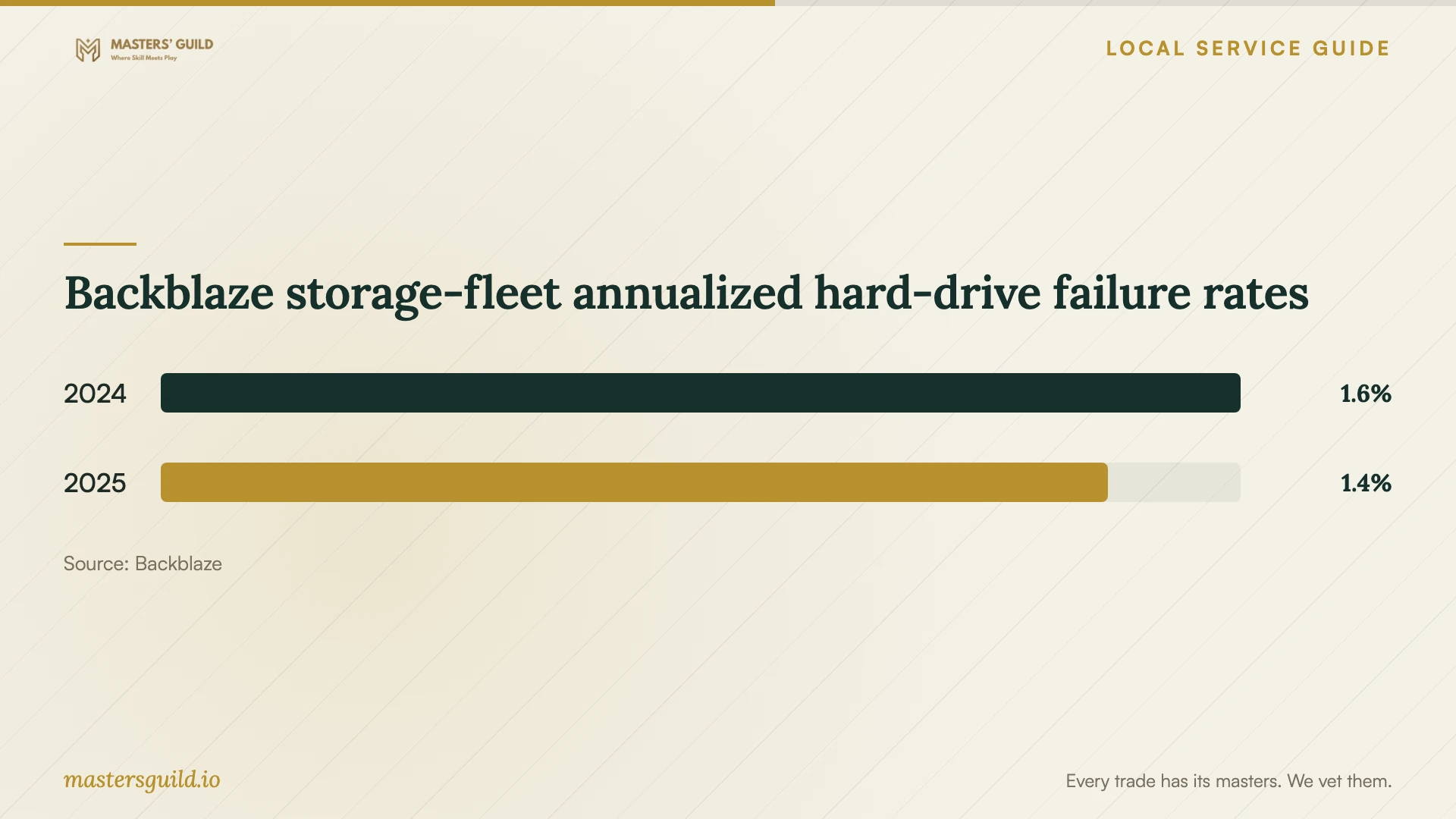
Backblaze reported storage-fleet annualized hard-drive failure rates of 1.55% for 2024 and 1.36% for 2025. Use the chart as historical context when discussing equipment failure and backup planning. These fleet observations do not establish an individual office drive's lifespan or a specialist's recovery success rate. [4]
Backblaze storage-fleet annualized hard-drive failure rates
Local details that affect your job
Prepare Connecticut breach submissions before starting
For a Hartford business with a reportable breach, the Connecticut Attorney General prefers its online notification form. Prepare the information in advance because the system cannot save an unfinished submission. For updates, the office directs senders to email its breach team with the reporting entity's name and case number in the subject. Assign this filing task to a named person alongside the technical recovery work. [1]
Check Connecticut tax categories on bundled work
Connecticut lists a 1% rate for computer and data processing services and a general 6.35% rate for most goods and taxable services. It imposes no additional municipal sales tax. For a bundled recovery and backup proposal, obtain separate service, software, and hardware lines with the provider's tax classification before approving payment. [2]
Arrange commercial disposal for office equipment
Connecticut DEEP's household electronics program covers residential equipment; business-generated electronics fall under separate state and federal waste rules. Plan a commercial disposal route for retired office computers. Complete recovery acceptance before authorizing erasure or destruction, and document whether the recovery provider will return the original drive or transfer it to a recycler. [3]
Match the next step to your situation
| Your situation | Scope to discuss | Approval condition |
|---|---|---|
| You have an accessible backup | Restore selected files to a separate destination | Staff can open the files and use the required application |
| You cannot access priority files on equipment | Device assessment and recovery proposal | Written spending limit and file acceptance terms |
| You suspect unauthorized access | Coordinated incident assessment and recovery | An adviser assesses Connecticut notification duties |
| You will retire business equipment | Commercial disposal with documented data handling | Recovery acceptance precedes disposal; the household program excludes business equipment |
Your hiring checklist
- Record the device identifier, symptoms, last successful access, and actions already attempted.
- List priority files, required applications, and available backups.
- Designate the person who can authorize spending and data access.
- Keep a copy of the signed scope and equipment handoff receipt.
- Schedule staff time for file acceptance and the backup restore demonstration.
- Retain the final file inventory, access instructions, and equipment disposition record.
Frequently Asked Questions
How much should I budget for recovery?
Obtain a device-specific assessment and itemized quote covering assessment, recovery, transport, destination storage, and any priority service. Before comparing totals, check what each provider charges if you decline the work or your priority files remain inaccessible.
Does a failed drive mean I must report a data breach?
Have an incident response adviser assess the circumstances. Connecticut's guidance concerns security breaches involving personal information. File inaccessibility alone does not establish that personal information was compromised. [1]
How should I choose a recovery deadline?
Give the provider your business deadline and identify the smallest usable set of files you need first. Separate that target from full recovery and application restoration. Put delivery expectations and the process for handling delays in the authorization.
Who should control the backup account?
Designate an authorized business owner for account access and billing. Document how another authorized colleague can retrieve backups, where recovery instructions live, and how you will transfer access if you change providers.
Sources and scope
This guide combines the sources below with practical planning guidance. Figures apply to the stated geography and period; request a written quote for your property.