
Local service guide
Concrete Work in Hartford, CT: Hiring and Planning
For Concrete Work in Hartford, choose a contractor after reviewing a site-specific scope, checking the applicable Connecticut home improvement registration, and agreeing on permit responsibility in writing. Connecticut includes residential driveways and patios within its home improvement rules, subject to exemptions. Before accepting a bid, ask the contractor to explain the proposed repair or replacement, drainage approach, access needs, and conditions for using the finished surface. [1] [2]
Define the problem before choosing the work
Describe what you want to fix before requesting a particular method. Photograph cracks, uneven edges, standing water, damaged steps, and the places where concrete meets your house or garage. Tell bidders whether you want easier walking access, a different layout, a repaired surface, or a replacement. Ask each contractor to explain how the proposed work addresses that goal.
For a repair proposal, ask what the contractor intends to leave in place and what would trigger additional removal. For replacement, request a sketch showing the boundaries, elevations at adjoining surfaces, and intended drainage direction. If a bidder raises concerns about steps, foundations, or structural support, ask who will assess those concerns before you approve the concrete scope.
Make concrete bids comparable
Give each bidder the same project description and request separate descriptions of removal, disposal, excavation, base preparation, and placement. Ask the contractor to specify slab thickness, concrete specification, proposed reinforcement, joints, edge details, and finish. Have the contractor explain the reasons for those choices rather than choosing technical specifications yourself.
Discuss delivery access during the site visit. Show the contractor gates, overhead obstructions, parking constraints, landscaping you want protected, and the route between the street and the work area. Ask whether the price includes the proposed delivery method, protection of adjoining surfaces, and restoration of disturbed areas.
Compare the total price alongside the exclusions. Ask how the contractor would price unexpected excavation or a change in project size, and require approval before additional work. Connecticut DCP says contract changes must be in writing and that the homeowner should receive a copy. Its guidance also recommends specifying materials, cleanup responsibility, permit responsibility, and a payment schedule. [2]
Set contract and payment terms before scheduling
For home improvement jobs covered by Connecticut's requirements, DCP says the contract must include the contractor's name, address, and registration number; both parties' signatures; signing and cancellation dates; work start and completion dates; and the entire agreement on work and price. Review the scope with the contractor and keep a signed, dated copy. [2]
DCP recommends payments tied to work progress and says an advance generally should not exceed one-third of the project total. Treat that fraction as agency guidance, not a quoted statutory deposit cap. The agency advises against cash payments and recommends keeping receipts. Ask the contractor to identify the work you will review before each payment. [2]
Assign responsibility for permit inquiries in the contract. DCP says homeowners retain ultimate responsibility for obtaining necessary building permits and should verify approval with the town before work starts. Ask Hartford's permitting staff about your specific scope rather than assuming that a patio, driveway, steps, and structural work share the same requirements. [2]
Plan the pour and your access around weather
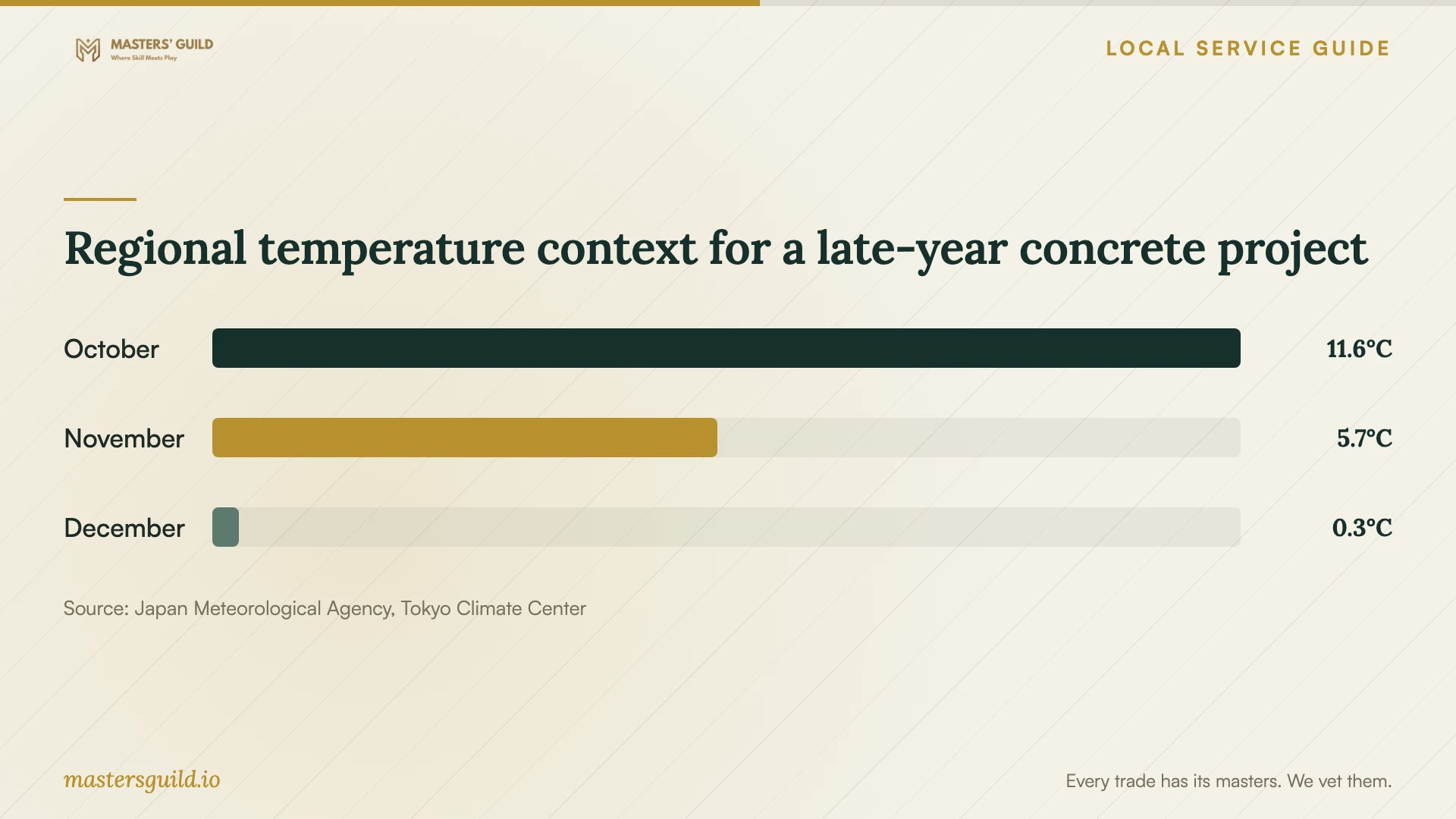
The Japan Meteorological Agency's table for Hartford/Bradley International reports monthly normal mean temperatures of 11.6°C in October, 5.7°C in November, and 0.3°C in December. Use that regional seasonal change as a reason to discuss the contractor's weather plan before accepting a late-year start date. The station does not measure conditions at your home. [3]
Ask who decides whether to postpone placement, what protection the contractor proposes, and whether the quoted price includes it. Agree on how a postponement affects access and payment milestones. Request separate written instructions for walking, parking, moving furniture, and other intended uses; avoid planning around an unexplained promise that the job will be finished in a few days.
Regional temperature context for a late-year concrete project
Local details that affect your job
Connecticut registration applies to residential concrete improvements
For a Hartford homeowner hiring a business to improve an existing residential driveway or patio, Connecticut DCP's home improvement registration rules provide the relevant starting point. DCP includes those projects in its definition and provides a license lookup option. It lists exemptions, including subcontracted work, work covered by a trade license, commercial work, and contracts below $200. Ask for the contracting business's registration number or an explanation of the applicable exemption before signing. [1]
Saturday counts toward Connecticut's cancellation period
Connecticut DCP says a covered home improvement contract must state the homeowner's right to cancel before midnight on the third business day after entering the contract. Saturday counts as a business day. The contractor must also provide a separate cancellation notice. Review the written deadline before accepting a proposed start date, especially if you plan to use the cancellation period to review the agreement. [2]
Questions to resolve before choosing a concrete proposal
| Your situation | Ask the bidder | Record before signing |
|---|---|---|
| You want to keep the existing slab | What problem will the repair address, and what will remain? | Repair boundaries, preparation, exclusions, and additional-removal terms |
| You want a replacement driveway or patio | How will you prepare the base and handle adjoining elevations? | Removal, base, concrete specification, drainage, joints, and finish |
| You need steps or work beside the house | Who will assess support and connections before placement? | Assessment responsibility and any resulting design or permit questions |
| You want a late-year pour | How will you decide whether conditions require postponement? | Weather protection, postponement terms, and access arrangements |
Your hiring checklist
- Photograph the existing surface and mark the proposed work boundaries.
- Ask each bidder to explain repair and replacement options for the same problem.
- Request written specifications for preparation, concrete, reinforcement, joints, and finish.
- Review drainage direction and elevations at doors, steps, and adjoining pavement.
- Identify delivery access, surface protection, cleanup, and restoration responsibilities.
- Confirm who will check permit requirements and document any required approval.
- Agree on written changes, payment milestones, weather contingencies, and return-to-use instructions.
Frequently Asked Questions
Does a concrete contractor need Connecticut home improvement registration?
DCP requires registration for individuals or businesses contracting with consumers for residential improvements, subject to listed exemptions. Driveways and patios fall within its definition. Check the business signing your agreement and ask it to identify any exemption it relies on. [1]
Does my concrete project require a Hartford permit?
The supplied state guidance does not establish the permit requirement for your particular concrete project. Give Hartford's permitting staff the location and scope, including any steps or structural work. DCP advises homeowners to verify required permit approval before work starts, even when the contractor handles the application. [2]
How much should I pay before work begins?
DCP recommends a progress-based payment schedule and says an advance generally should not exceed one-third of the total. Ask what the advance covers and record the remaining milestones in the contract. The agency recommends receipts and advises against paying cash. [2]
How soon can I use the finished concrete?
Request project-specific written instructions before scheduling. Ask the contractor to distinguish walking access from vehicle use and to explain how the concrete specification, proposed protection, and expected conditions affect those instructions.
Sources and scope
This guide combines the sources below with practical planning guidance. Figures apply to the stated geography and period; request a written quote for your property.