
Local service guide
Business Plan Consulting in Hartford, CT
Arrange Business Plan Consulting around the decision you need to make: launching, borrowing or expanding. Before hiring, get your intended lender’s document requirements and ask Connecticut SBDC about its no-cost, confidential advising. For a paid engagement, request a written scope covering research, financial assumptions, editable files, revisions and your submission deadline. [2]
Choose the help your decision requires
For internal planning, start by drafting your customers, offer, operating costs and sales assumptions. Ask an adviser to challenge the assumptions you cannot support. If you want someone to conduct research, build a financial model and write the plan, specify those tasks when requesting a consulting quote.
Connecticut SBDC says its advisers help owners craft and refine business plans, assess market feasibility and prepare financials and supporting loan documents. Ask what you will prepare yourself, what the adviser will review and what research support you can access before deciding whether to hire additional help. [2]
For expansion, give the consultant a specific question: can the business support another location, a new employee or an equipment purchase? Request a comparison of the proposed change against continuing current operations, with assumptions you can revise.
Define the financial work before approving a quote
Ask the consultant to connect sales assumptions to operating details such as customer volume, average transaction, staffing and supplier costs. Request cash-flow projections alongside the narrative, and agree how the consultant will handle owner pay, borrowing and opening expenses. You should be able to explain each major assumption after handover.
For a SAMA startup loan application, use its published requirements as your starting scope: a business plan with at least two years of sales and expense projections and a balance sheet. SAMA also says its staff can assist with preparing the plan and projections. Confirm the current checklist with its loan staff before paying for that work elsewhere. [1]
Request an editable spreadsheet with visible formulas and a written assumptions list. Ask the consultant to show how lower sales or a delayed opening would affect cash needs. Agree who will update the model if your lease, supplier quote or financing terms change before submission.
Compare consulting fees against the same scope
Request separate prices for discovery, market research, writing, financial modeling and follow-up revisions. Have each consultant identify what they expect you to supply. Compare proposals using the same deliverables, research questions and completion milestones rather than document length.
Ask to review a redacted sample and have the consultant explain a financial assumption in it. Confirm who will do the work, which research sources they propose to use and whether they will attend a lender discussion. Put revision limits, payment milestones and ownership of the final files in the agreement.
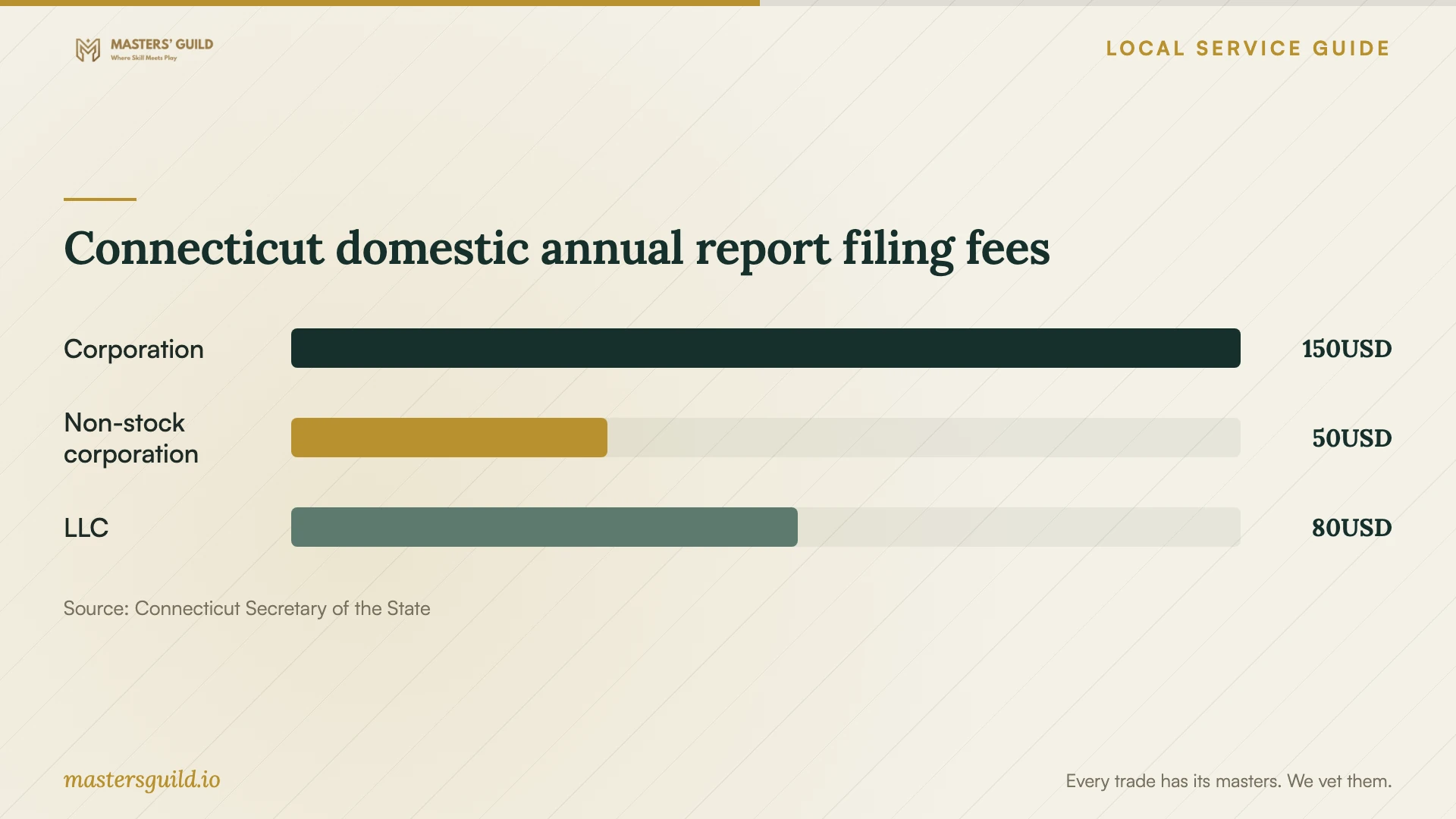
Keep recurring state fees in your operating budget. Connecticut’s published domestic annual report fees include $150 for a corporation, $50 for a non-stock corporation and $80 for an LLC. These are state filing charges; use a separate budget line for consulting. [3]
Arrange the work around your submission
Work backward from your funding or lease decision. Agree dates for the document handoff, assumptions review, first draft and final corrections. Leave room to answer questions from the recipient. Ask the consultant to distinguish your delivery deadline from any lender review timetable.
SAMA’s application process includes a completed application and a pre-qualifying interview. Its published checklist also calls for principals’ personal financial statements, two years of business and personal tax returns, resumes and other supporting records. Prepare the application materials alongside the plan rather than treating the written plan as the whole submission. [1]
At handover, review the figures against your source records and ask the consultant to explain any differences. Keep the final narrative, editable model, assumptions and research references together. Assign responsibility for answering follow-up questions and agree whether that work carries an additional charge.
Connecticut domestic annual report filing fees
Local details that affect your job
Hartford borrowers can ask SAMA about preparation help
SAMA lists a Hartford application location at 95 Park Street and says its staff assist with the loan application process. It also offers help developing business plans and projections. Ask its staff which preparation support applies to your proposed loan before commissioning a paid plan. The loan page carries a 2020 date, so confirm current requirements and availability. [1]
Check the Hartford Merchants loan condition first
SAMA describes its Merchants Revolving Loan Fund as available in Hartford and requires applicants to have a financing rejection from their financial institution, supported by a rejection letter. If you intend to pursue that program, confirm this condition before paying a consultant to prepare a program-specific application. [1]
Use regional advising to define your research needs
Connecticut SBDC lists its lead office at 222 Pitkin Street in East Hartford and offers no-cost, confidential advising. Its research services include industry benchmarks and location-based data tools. For a proposed shop or office, ask about help assessing the customer area and market feasibility before setting the paid research scope. [2]
Choose your next planning step
| Your situation | Next step | Scope to confirm |
|---|---|---|
| Testing a business idea | Explore Connecticut SBDC advising | Market feasibility, cash flow and owner preparation |
| Preparing a SAMA startup application | Confirm the current loan checklist | Plan, two years of sales and expense projections, balance sheet |
| Considering Hartford’s Merchants loan | Check the prior-rejection condition with SAMA | Financial institution rejection letter and current eligibility |
| Hiring someone to produce the plan | Compare written consulting proposals | Research, editable model, narrative and revisions |
Your hiring checklist
- Name the plan’s recipient and the decision you need it to support.
- Obtain the recipient’s current document checklist and submission deadline.
- Gather financial records, supplier quotes, lease information and owner resumes.
- Write down sales assumptions and identify where you need research.
- Request a quote that separates writing, research, modeling and revisions.
- Agree milestones, editable file formats and responsibility for follow-up questions.
Frequently Asked Questions
Can I get business-plan help without hiring a paid consultant?
Connecticut SBDC offers no-cost, confidential advising and helps owners craft and refine business plans. SAMA also says staff can assist with business plans and projections for its loan process. Ask each organization what support fits your situation and what work you must complete. [1] [2]
What should I request for a SAMA startup loan plan?
Its published checklist asks for a business plan with at least two years of sales and expense projections and a balance sheet. Confirm the current requirements with loan staff, then include those deliverables in the consulting agreement. [1]
How should I compare consulting quotes?
Give each consultant the same brief and recipient requirements. Compare research tasks, model detail, editable files, revision allowances and follow-up support. Ask each consultant to identify excluded work and the information you must supply.
What Connecticut annual report fee should an LLC budget?
Connecticut lists an $80 annual report fee for a domestic LLC and requires online filing. Keep that recurring state charge separate from your consultant’s fee and check the filing portal before payment. [3]
Sources and scope
This guide combines the sources below with practical planning guidance. Figures apply to the stated geography and period; request a written quote for your property.