
Local service guide
Bathroom Remodeling in Hartford, CT: Plan and Hire
Arrange Bathroom Remodeling in Hartford by defining the work before comparing bids: list the fixtures you will keep, the changes you want and who will handle each trade. Connecticut DCP advises checking contractor registration, verifying appropriate trade credentials and confirming permits with your town building official. Ask each bidder to put the scope, payment schedule and completion expectations in writing before you choose. [1] [2]
Define the bathroom you need before requesting prices
Write a room-by-room scope even if you are remodeling one bathroom. Identify the toilet, sink, tub or shower you want to keep or replace. Mark any proposed moves on a sketch. Include storage, lighting, ventilation, floor finish and the features you need for comfortable entry and use.
For shower work, ask each contractor to describe demolition, preparation, waterproofing, drainage and the finished enclosure. Request product names and a description of how the contractor will check the installation before covering it. Ask whether the quote includes removal of debris, protection of nearby rooms and final cleanup.
Separate your essential repairs from optional upgrades. Ask for an alternative quote that retains the existing fixture locations if you are considering a layout change. Request a written explanation of the work each option includes rather than relying on a single total.
Check the remodeler and the people doing trade work
Connecticut DCP directs homeowners to verify home improvement contractor registration through eLicense. Its guidance also distinguishes that registration from the specific credentials that skilled electrical, plumbing and HVAC work may require. For this project, request the contracting business's registration details and the names and credentials of the people responsible for trade work. [1] [2]
Ask for references from comparable bathroom projects, as DCP recommends for similar home improvement work. Ask those homeowners how the contractor handled changes, protected occupied rooms and communicated during interruptions. Request a current insurance certificate and identify your day-to-day contact before signing. [1] [2]
Resolve permits, payments and changes before demolition
DCP advises consumers to check with their town building official that the contractor has pulled the building permit. For a Hartford property, ask the contractor which permits the proposed scope needs, who will obtain them and when you can confirm them with the city's building official. Avoid assuming that every bathroom project has the same permit requirements. [2]
Connecticut DCP says home improvement work requires a signed written contract and describes a three-day cancellation right. Its 2023 consumer advisory recommends a small upfront deposit, traceable payments and a payment plan discussed before signing. Review the cancellation information with the agreement and tie later payments to defined stages of work. [2]
Ask the contractor to explain how you will approve discoveries after demolition. Put the added work, price and schedule effect in a written change agreement before authorizing it. Agree on inspection responsibilities and the documents you expect at completion, including product information and any written warranties the contractor offers.
Compare quotes and plan for bathroom downtime
Compare allowances as well as totals. Ask whether each bidder has included the same tile area, fixtures, shower enclosure and accessories. Identify owner-supplied items and who will check their dimensions before ordering. Ask the contractor to distinguish confirmed prices from allowances and exclusions.
Request a proposed sequence from demolition through final checks. Ask when you will lose access to the toilet, shower and sink, and arrange another bathroom before work starts. If this is your only bathroom, agree on a usable alternative and the response if work pauses. Confirm delivery dates for selected products before approving demolition.
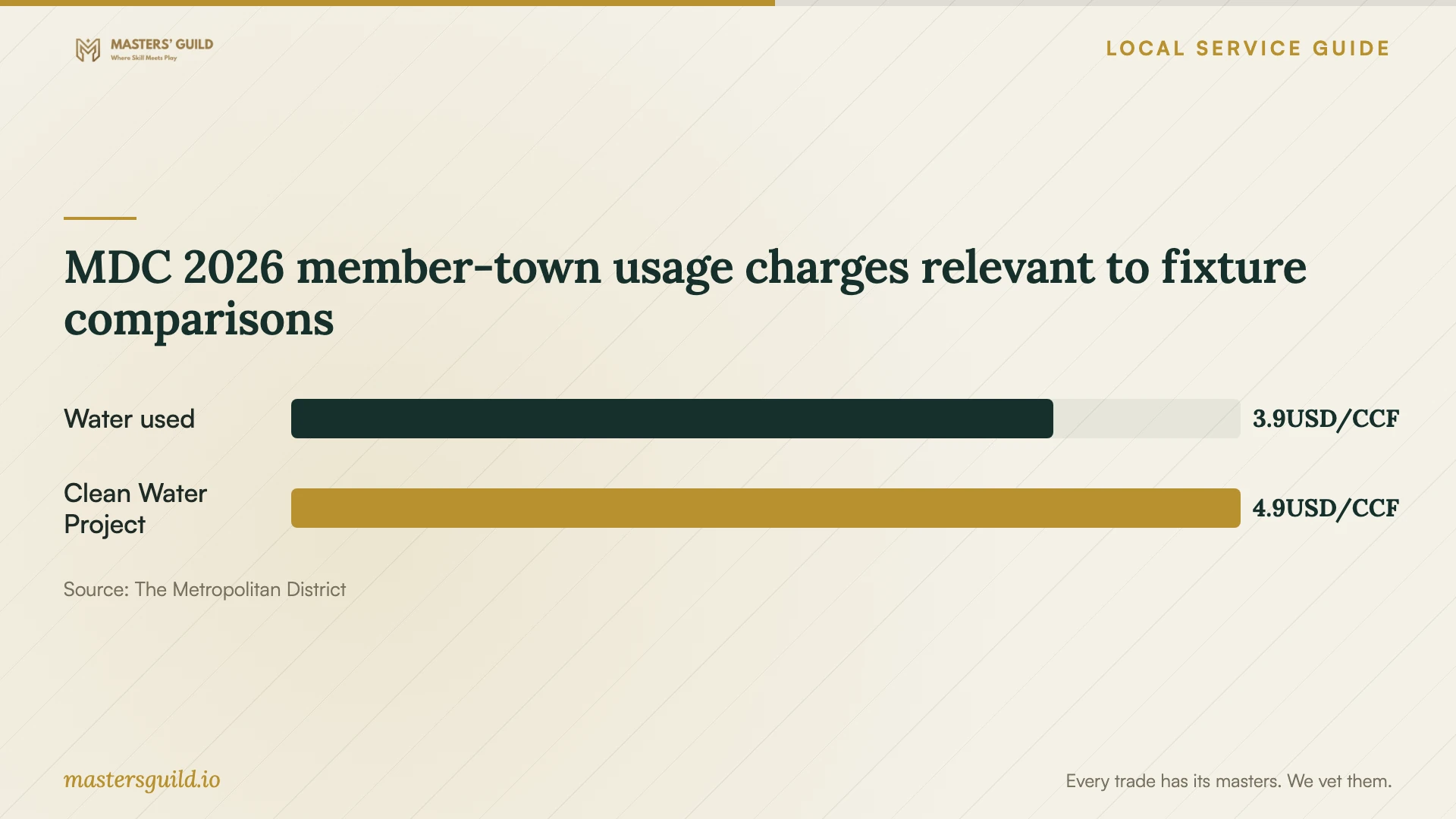
MDC 2026 member-town usage charges relevant to fixture comparisons
Local details that affect your job
Apply Connecticut's separate credential checks
For a Hartford home, use Connecticut DCP's registration check when evaluating the remodeler, then check the relevant trade credentials for plumbing and electrical work. DCP's guidance identifies these as separate checks. Ask the bidder to name the responsible tradespeople before you commit so you can verify the proposed team through eLicense. [1] [2]
Check the MDC sewer billing category before accepting savings claims
MDC's 2026 explanation says most member-town customers pay ordinary sewer costs through municipal property taxes. It identifies a separate usage-based sewer charge for specified tax-exempt and high-flow users. If a bidder estimates savings from replacement fixtures, ask which charges apply to your account and exclude inapplicable sewer rates from the calculation. [3]
Separate MDC usage charges from fixed charges
For 2026 member-town accounts, MDC lists water usage at $3.91 per CCF and the Clean Water Project charge at $4.87 per CCF. It also lists monthly customer service charges. When comparing fixtures, ask for a calculation that separates usage-related charges from fixed monthly charges and states the assumed change in consumption. [3]
Questions to resolve before choosing a scope
| Your situation | Ask the bidder | Resolve before signing |
|---|---|---|
| You want a cosmetic refresh | Which surfaces and fixtures will stay? | List preparation, finishes and exclusions. |
| You want to move fixtures | Who will perform the plumbing and electrical work? | Check relevant trade credentials and discuss permits with the town building official. |
| You are replacing the shower | How will you prepare, waterproof and check the installation? | Record the proposed products and inspection steps. |
| You have one bathroom | During which stages will each fixture be unavailable? | Agree on another bathroom and a plan for delays. |
| A bidder promises utility savings | Which MDC charges apply to my account? | Separate usage charges, fixed charges and the applicable sewer billing method. |
Your hiring checklist
- Prepare a fixture list and sketch showing retained and proposed locations.
- Give each bidder the same scope, finishes and owner-supplied product list.
- Request registration details and the responsible tradespeople's credentials.
- Ask who will obtain permits and how you will confirm them.
- Agree on allowances, exclusions and written approval for added work.
- Record payment stages, bathroom access arrangements and completion expectations.
Frequently Asked Questions
Does home improvement registration cover plumbing and electrical work?
DCP distinguishes home improvement registration from the specific licenses that skilled plumbing, electrical and HVAC work may require. Request the remodeler's registration and the relevant trade credentials, then verify the people proposed for your project. [1] [2]
Does my bathroom remodel need a permit?
Confirm requirements for your exact scope with Hartford's building official before starting. DCP advises homeowners to check with their town building official that the contractor has pulled the permit. Ask the contractor to document permit responsibility in the agreement. [2]
How much should I pay upfront?
DCP's 2023 advisory recommends a small deposit and traceable payments. Discuss a payment schedule before signing and define what the contractor must complete at each later payment stage. Read the cancellation terms before paying. [2]
Can I use these utility rates to estimate fixture payback?
Use them as inputs after confirming your billing category. MDC publishes separate usage and fixed charges, and most member-town customers pay ordinary sewer costs through property taxes. You also need a supported consumption estimate and the fixture's installed cost to assess payback. [3]
Sources and scope
This guide combines the sources below with practical planning guidance. Figures apply to the stated geography and period; request a written quote for your property.