
Local service guide
Basement remodeling in Hartford, CT
Basement remodeling in Hartford should start with a drainage review, radon testing and a written description of how you want to use the space. Choose a remodeler after identifying those needs and checking the business’s Connecticut home-improvement registration. For wet-weather flooding, investigate MDC’s assessment program before committing to finishes. Connecticut health officials recommend radon tests before and after converting an unfinished basement into living space. [1] [2] [3]
Define the room before requesting bids
Tell bidders whether you want a recreation room, office, sleeping room or space with a bathroom. Sketch the proposed rooms and mark the stairs, windows, equipment and existing drains. Ask each contractor which parts of your plan need further review before they can price construction.
Ask who will confirm permit requirements, proposed room use, ceiling clearance and exit arrangements with the municipal building official. Put responsibility for applications, inspections and completion documents in the contract. Resolve questions about a bedroom or separate dwelling proposal before ordering materials.
Investigate water before enclosing the basement
MDC explains that foundation drains, footing drains and roof leaders connected to sanitary sewers can contribute to sewer overloading during wet weather. Its Backwater Valve Program includes a plumbing survey to determine whether a property qualifies. If your basement has flooded, request that investigation before accepting a proposal covering only walls and flooring. [1]
Record when water appears, where it enters and whether you notice it near drains, wall joints or a sump. Share photographs and previous repair invoices. Ask the contractor to identify unanswered questions and describe the investigation needed before recommending a repair.
Ask MDC to assess the existing plumbing before choosing a valve replacement or sump installation. Despite the program’s name, MDC describes work that can include disconnecting an older backwater-valve arrangement and installing a sump pump to separate groundwater from sanitary sewage. Confirm which connections and program requirements apply to your property. [1]
Plan radon testing around construction
Connecticut DPH advises testing before and after a structural renovation that converts an unfinished basement into living space. The department also recommends testing on the lower level when you begin occupying it. Include both tests in your project plan and ask who will coordinate any mitigation work with the remodeler. [2]
DPH identifies November through March as the best testing season because homeowners keep houses closed and radon levels tend to rise in winter. It reports the EPA recommendation to reduce levels at or above 4 pCi/L and consider action between 2 and 4 pCi/L. If you begin planning in autumn, discuss test timing before committing to a construction date. [2]
If testing finds radon at or above the action level, ask a qualified mitigation professional to review the proposed layout before you approve enclosed walls and finished floors. DPH maintains lists of nationally certified professionals and states that Connecticut does not license or certify radon professionals. Ask candidates to explain their qualifications and the registration applicable to their work. [2]
Choose a contractor and compare complete scopes
Connecticut DCP requires an individual or business contracting with a consumer for residential improvements to register under the Home Improvement Act, with exemptions listed on its application page. The department includes flooring, insulation and waterproofing among home improvements. Request registration details for the entity named on your proposal and use DCP’s verification service. [3]
DCP distinguishes home-improvement registration from work covered by a trade license. Ask the remodeler to name the businesses responsible for plumbing, electrical and heating work, and request credentials applicable to each scope. Record who will perform and oversee each part of the job. [3]
Request separate prices for investigation and repairs, room construction, bathroom work and finish upgrades. Ask bidders to identify allowances, exclusions and the approval process for changes. Require a schedule naming the decisions you must make, the inspections the contractor anticipates and the documents you will receive at completion.
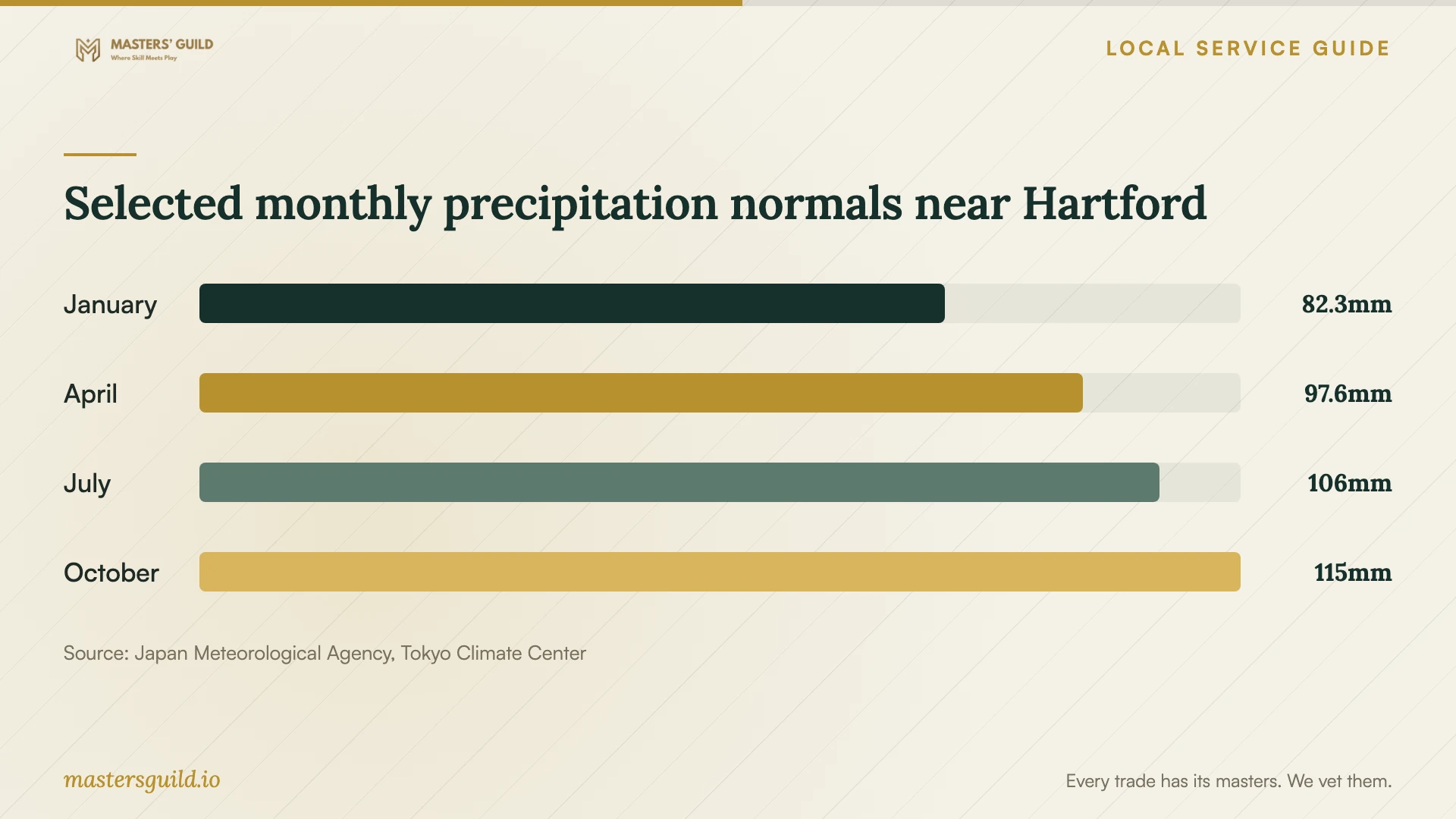
Selected monthly precipitation normals near Hartford
Local details that affect your job
MDC can assess wet-weather basement flooding
Homeowners experiencing basement flooding during wet weather may qualify for MDC’s Backwater Valve Program. Arrange the free property assessment through Utility Services at 860-278-7850, extension 3123. MDC reviews basement plumbing and the serving sewer piping; qualifying properties may receive work at no cost under program guidelines. Confirm eligibility before including that assistance in your budget. [1]
Connecticut guidance changes the testing sequence
For an unfinished basement conversion, follow Connecticut DPH’s advice to test for radon before renovation and after completion. Arrange your own test: DPH says adjoining homes can have different levels. Its November-through-March testing guidance gives homeowners planning in autumn a reason to coordinate testing before finalizing the construction schedule. [2]
Choose the next step before buying finishes
| Your situation | Next step | Resolve before construction |
|---|---|---|
| Flooding during wet weather | Ask MDC for a free eligibility assessment. | Whether existing drain connections qualify for program work. |
| Unfinished basement becoming living space | Arrange radon testing before renovation. | Any mitigation coordination and the test after completion. |
| Considering a residential remodeling contract | Check the contracting entity’s DCP registration. | Whether an exemption or separate trade credential applies. |
| Quotes include different rooms or finishes | Give each bidder the same written scope. | Allowances, exclusions and responsibility for unresolved work. |
Your hiring checklist
- Write down the intended room uses and draw a layout for bidders.
- Photograph water entry and collect previous drainage or plumbing records.
- Ask MDC whether your wet-weather flooding warrants a program assessment.
- Arrange radon testing and include a completion test in the project scope.
- Verify the contracting business’s registration and request applicable trade credentials.
- Assign responsibility for permit questions, applications and inspections in writing.
- Compare allowances, exclusions, change approvals and completion documents before signing.
Frequently Asked Questions
Can MDC pay for my basement drainage work?
MDC says qualifying properties may receive work at no cost under its program guidelines. Its inspection team must assess the plumbing, and MDC also reviews the serving sewer piping. Confirm eligibility and the covered work before including assistance in your remodeling budget. [1]
Should I test for radon if the basement feels dry?
Yes. DPH says you cannot see or smell radon and must test to determine its level. For an unfinished basement conversion, the department recommends tests before renovation and after the work. [2]
Does home-improvement registration cover all trade work?
DCP treats work covered by a trade license as a separate category from home improvement. Ask who will perform each trade scope and request the applicable credentials, alongside the remodeler’s registration details. [3]
How should I compare basement remodeling prices?
Give bidders the same intended room uses, layout and finish list. Ask them to separate drainage investigations, repairs, bathroom work and allowances. Compare the written scope and unresolved decisions before comparing totals.
Sources and scope
This guide combines the sources below with practical planning guidance. Figures apply to the stated geography and period; request a written quote for your property.