
Local service guide
Appliance installation in Hartford, CT
Appliance installation in Hartford starts with matching the installer to the work: send the appliance model and photos of the connections, request a written scope, and verify credentials before hiring. Connecticut distinguishes home improvement registration from trade licensing, so ask who will handle any plumbing, electrical, or gas work before you arrange delivery. [1] [2]
Define the installation before requesting quotes
Give each installer the same description: appliance make and model, replacement or first installation, fuel type, and whether you want removal of the old unit. Include photos of the opening, visible connections, and delivery route. Ask the installer to flag anything they need to inspect before committing to a price.
For a dishwasher, photograph the space under the sink and the cabinet opening. For laundry equipment, include the water connections, drain, outlet, and dryer vent connection. For a refrigerator with an ice maker, show the proposed water connection. Let the installer assess suitability rather than describing the setup as ready without review.
Ask for a quote that separates installation labor, connection parts, removal, and any changes to cabinets or utilities. Request a written explanation of what happens if the crew finds a connection they cannot use. Agree on who approves extra work and its price before installation day.
Check the credential for the actual work
Connecticut DCP tells homeowners that skilled electrical, plumbing, and HVAC work may require a specific license beyond home improvement registration. Ask for the responsible contractor’s credential details and verify them through the state license lookup before hiring. For a combined project, ask the contractor to identify each person responsible for trade work. [2]
For gas work, ask the contractor to explain how their license covers your proposed installation. DCP lists installation, replacement, alteration, and maintenance of gas piping systems and approved gas appliances within the G-1 contractor scope. Other listed credentials also include gas work within their stated limitations, so assess the scope rather than accepting a general claim of being licensed. [1]
Ask whether the quoted price includes checking permit requirements and arranging any required inspection. The supplied state sources do not establish Hartford’s permit treatment for your particular replacement. Confirm that question before authorizing connection changes or setting a firm installation date.
Coordinate delivery, access, and completion
Measure the appliance opening and the route from the entrance. Give the installer details about stairs, narrow turns, parking access, and any building delivery rules. Ask who will unpack the appliance, move it into position, and remove packaging. If you have a property manager, agree on access and any shutdown arrangements before booking.
Keep the model’s installation instructions available and ask the installer to review the required connections and clearances before arrival. Request an agreed completion check that covers the installed functions, visible connections, leveling, and any anchoring specified by the manufacturer. Ask the installer to demonstrate operation before you accept the work.
Keep the quote, approved changes, receipts, and any permit records together. DCP identifies contracts, receipts, permits, and accounts of contractor conversations as useful supporting material when homeowners submit a home improvement complaint. Document unresolved issues in writing while the details remain clear. [2]
Choose a dishwasher that fits your household
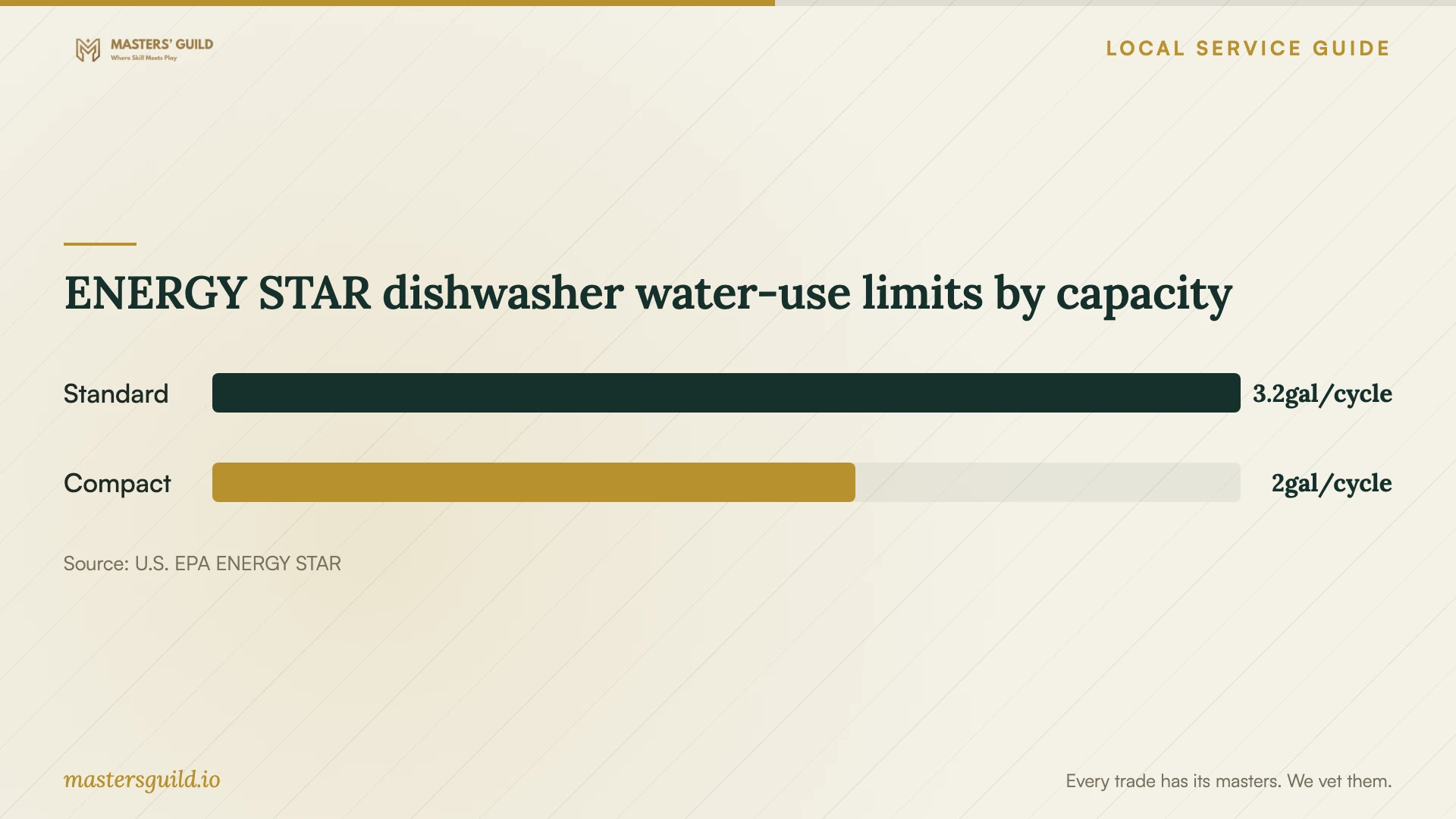
Compare usable capacity as well as cabinet dimensions. ENERGY STAR defines its standard dishwasher category as at least eight place settings plus six serving pieces; its compact category falls below that capacity. Ask the installer to confirm the selected model’s fit before you arrange delivery. [3]
The national water-use chart compares ENERGY STAR qualification limits for those two categories. Use it when comparing appliance specifications. It does not establish installation cost or your household’s water savings. ENERGY STAR also explains that EnergyGuide yearly cost estimates use assumptions about usage and energy prices, so treat those figures as comparison estimates. [3]
ENERGY STAR dishwasher water-use limits by capacity
Local details that affect your job
Connecticut gas credentials affect whom you hire
For a Hartford gas range or dryer project, ask the proposed contractor to identify the Connecticut credential covering the gas connection and any piping changes. DCP’s G-1 scope includes gas piping systems and approved gas appliances using natural gas or LP gas supplied by containers. Use that scope to question the contractor about the exact work included in your quote. [1]
State registration does not settle the trade-work question
Connecticut DCP requires home improvement contractors to register and explains that skilled electrical, plumbing, and HVAC work may need a more specific license. For an installation bundled with cabinet alterations or utility work, verify the registration and applicable trade credentials. Ask who contracts for each part before accepting a combined price. [2]
Match the proposed work to your next step
| Your project | Before accepting a quote | Question to resolve |
|---|---|---|
| Replacement using existing connections | Send photos and the model instructions for review. | Does the quote cover the connections this model needs? |
| Gas range or gas dryer | Check the contractor’s license scope; Connecticut’s G-1 scope includes gas piping and approved gas appliances. | Which credential covers the gas work you propose? |
| Electrical or plumbing changes | DCP advises that skilled trade work may require a specific license. | Who performs that work, and which credential applies? |
| Installation with cabinet alterations | Check applicable home improvement registration and trade credentials. | Who takes responsibility for the complete scope? |
Your hiring checklist
- Send the model number, installation instructions, and photos of the opening and connections.
- Measure the delivery route and disclose stairs, access restrictions, and building rules.
- Ask who will perform each connection and verify applicable credentials.
- Request separate prices for labor, parts, utility changes, and removal.
- Assign responsibility for checking permits and arranging any required inspection.
- Agree on approval of extra work and a completion demonstration.
Frequently Asked Questions
Can I use one contractor for the whole installation?
Ask the contractor to list the work they will perform and identify anyone handling separate trades. Connecticut DCP distinguishes home improvement registration from specific licenses for skilled work. Verify the credentials that apply to the proposed scope before accepting the arrangement. [2]
Which license should I ask about for a gas appliance?
Ask for the credential and its scope rather than requesting a generic installer license. Connecticut’s G-1 contractor scope includes gas piping systems and approved gas appliances. DCP also lists other credentials with gas-work permissions and limitations, so have the contractor explain which applies. [1]
How should I compare installation prices?
Give each installer the same model, photos, access details, and removal request. Compare the included work and exclusions. Ask each installer to price any connection changes separately and explain how you would approve additional charges.
Does a compact dishwasher’s lower water limit mean it is the better choice?
Choose capacity to suit your household and confirm fit. ENERGY STAR sets different capacity definitions and water limits for compact and standard dishwashers. Those qualification limits alone do not establish which appliance will use less water for your own dishwashing routine. [3]
Sources and scope
This guide combines the sources below with practical planning guidance. Figures apply to the stated geography and period; request a written quote for your property.