
Local service guide
Window cleaning in Halifax: Plan and Compare Quotes
Window cleaning in Halifax starts with a written scope and an access plan. Ask each contractor to quote the same glass, interior and exterior surfaces, screens and frames. Before booking, agree on customer access, dirty-water disposal and weather delays. For upper windows, ask how the crew will reach the glass and document relevant training.
Define the cleaning before comparing prices
Send each bidder photos and a window list grouped by floor or frontage. Identify entrance doors, display glass, interior partitions and windows behind furniture. Ask the contractor to state how they count panes and which surfaces they will clean. Include approximate dimensions where photographs leave the size unclear.
Request separate line items for screens, tracks, frames, adhesive removal and stain treatment. Point out film, coatings, damaged seals or existing scratches. Ask the contractor to confirm a suitable method before starting, and agree on a test area for treatments you have concerns about.
Use a written quote for your premises to set the budget. Ask bidders to state the total, applicable taxes, equipment charges, exclusions and conditions that could change the price. Require approval before extra work begins. Compare the final scope alongside the total rather than choosing on the initial price alone.
Match the contractor to the access method
Ask bidders to explain how they will reach each group of windows. Have them identify where they would place poles, ladders or a lift and how they would separate the work from customers. Request proof of liability insurance and ask whether the policy covers the proposed work.
Nova Scotia requires fall protection for fall risks of 3 metres or more and certain shorter falls onto additional hazards, subject to specified exceptions. Ask the contractor to explain the controls that apply to your premises and proposed method. [3]
For rope access, ask who will supervise and how the crew will handle an emergency. Provincial regulations restrict this work to competent rope-access technicians. Employers must develop a specific written plan when a technician faces a fall risk at any height, including emergency response, rescue operations, access and rigging. [3]
Arrange the visit around your premises
Choose an arrival window around deliveries, customer queues and staff access. Agree on which entrance customers will use during the work and who can authorize changes on the day. For leased premises, ask your landlord or property manager about shared areas, exterior glass and any roof access the contractor proposes.
Before the crew arrives, move stock and displays away from the glass, clear the agreed work area and arrange keys or staff access. Confirm whether the contractor needs a water supply. Identify nearby street drains and discuss dirty-water collection and disposal before cleaning starts.
Agree on a completion check and a deadline for reporting missed panes or streaks. Ask the contractor to identify glass they cannot reach within the quoted method, document existing damage and explain remaining marks before you sign off.
Agree on weather and rebooking terms
Ask the contractor to set weather cancellation criteria for the equipment and work area, then agree on notice and rebooking terms. Nova Scotia requires employers to address weather effects in the fall-protection procedures and plans specified by its regulations. [3]
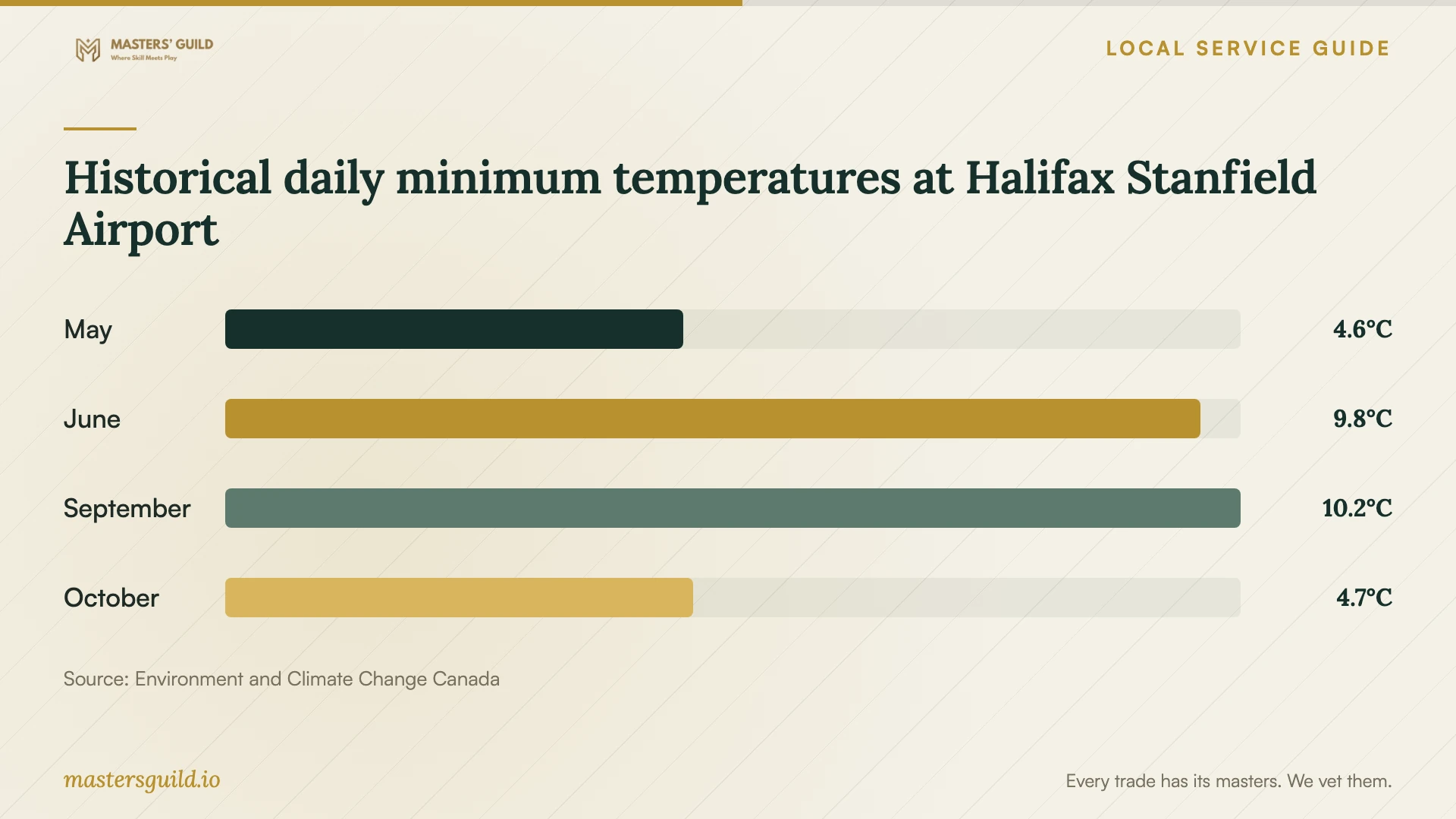
At Halifax Stanfield Airport, the 1991 to 2020 normal daily minimum temperature was 4.6°C in May and 4.7°C in October. Use the chart as background for a scheduling discussion. These historical airport averages do not predict conditions at your building or establish a safe working temperature. [4]
Historical daily minimum temperatures at Halifax Stanfield Airport
Local details that affect your job
Confirm sidewalk equipment requirements before booking
Halifax states within its demolition guidance that work interfering with the municipal right of way requires a Right of Way Permit. Confirm the requirements for your cleaning setup with the municipality rather than treating that page as a window-cleaning permit decision. If a bidder proposes equipment on a sidewalk or street, request its footprint and agree who will obtain any required authorization before setting the date. [1]
Keep dirty water out of street catchbasins
Halifax Water uses a business dumping mop water into a street catchbasin as an example of prohibited activity. The utility explains that street catchbasins serve the stormwater system and accept only rainwater runoff. Apply that distinction to your cleaning arrangements: ask how the contractor will collect dirty detergent water and confirm a suitable disposal route for the products used. The utility's example concerns floor washing and does not specify a window-cleaning disposal procedure. [2]
Choose the scope and checks for your premises
| Your situation | Request in the quote | Resolve before booking |
|---|---|---|
| Accessible display glass | Specified panes and surfaces, including entrance doors | Timing around customers and a clear work area |
| Upper windows | Proposed access method and equipment charges | Relevant training documentation and applicable fall controls |
| Equipment near a public sidewalk | Equipment footprint and pedestrian arrangements | Municipal confirmation of permit requirements and responsibility |
| Street catchbasin beside the frontage | Dirty-water collection and disposal method | A suitable disposal route that keeps cleaning water out of the catchbasin |
| Adhesive or persistent marks | Separate treatment price and agreed test area | Method, expected result and approval before additional work |
Your hiring checklist
- Send photos, approximate sizes and a list of glass surfaces to each bidder.
- Mark interior cleaning, screens, tracks and stain treatment as included or optional.
- Confirm the access method, equipment footprint and insurance coverage.
- Agree who will check sidewalk requirements and obtain any necessary authorization.
- Confirm water access, dirty-water collection and disposal arrangements.
- Arrange customer access, staff access and a contact for the visit.
- Record weather cancellation terms, extra-work approval and completion checks.
Frequently Asked Questions
Are screens and tracks part of the cleaning?
Ask the bidder to name them in the scope. Request separate prices to compare glass-only cleaning with a broader service, and confirm who removes and reinstalls screens.
What training should I ask about for upper windows?
Ask for documentation relevant to the proposed method. Nova Scotia requires fall-protection training before covered work and renewal at least every three years. Rope-access work has separate requirements for competent technicians and work planning. [3]
Can the crew pour dirty water into the street drain?
Halifax Water identifies street catchbasins as part of the stormwater system, reserved for rainwater runoff. Ask the contractor to arrange collection and suitable disposal of dirty cleaning water before the visit. [2]
How should I choose a recurring schedule?
Start with a visit and review the result before committing. Request separate one-time and recurring quotes, then choose an interval based on the appearance you need, access arrangements and disruption to trading hours. Record cancellation and rescheduling terms.
Sources and scope
This guide combines the sources below with practical planning guidance. Figures apply to the stated geography and period; request a written quote for your property.