
Local service guide
Technical Skills Training in Halifax: Planning Guide
Arrange Technical Skills Training in Halifax by defining the work your employees need to complete, then comparing a tailored trainer quote with provincial workplace education options. Nova Scotia offers customized workplace programs covering tools such as Excel and Microsoft 365. Before paying for a team course, discuss your needs with a regional coordinator; choose private coaching when you need a specific project, schedule or scope. [3]
Define the task before choosing a trainer
Write a brief that names the software, employees’ starting skills and the work they should handle after training. For example, ask for instruction on importing a sales file, checking errors and producing a monthly spreadsheet report. Include your software version and whether employees use desktop applications, browser tools or both.
Ask each trainer to explain the prerequisites, practice exercises and final assessment. Request a demonstration using a sanitized example from your business. For coding, data or cybersecurity instruction, ask the trainer to explain which topics they will cover and which tasks will require a separate specialist.
Agree on a practical completion test before booking. Have employees perform the target task using fresh sample data, explain their choices and identify when to ask for help. Ask the instructor to leave written steps that match your team’s software.
Compare provincial workplace training with private coaching
Nova Scotia’s Workplace Education Initiative offers flexible, fully funded, customized training online or in person. Listed computer topics include Excel, Google Workspace, Microsoft 365, website design and e-commerce. Regional coordinators work with individual businesses or groups of businesses to assess needs, develop programs and assist with funding applications. [3]
The province describes a typical program as 30 to 40 hours with 10 to 12 participants. Use that format as a discussion point when arranging staff coverage. If you have a smaller team, ask the coordinator about working with other businesses and whether the proposed program fits your needs. [3]
For a private quote, specify the same learning outcomes you would discuss with the coordinator. Ask how the instructor will adapt exercises for mixed skill levels, handle missed sessions and provide feedback between lessons. Compare proposals by the work included and the total commitment you must make.
Prepare a funding application before committing
The Workplace Innovation and Productivity Skills Incentive, or WIPSI, supports eligible Nova Scotia organizations with workforce development needs. Eligible activities include technology adoption, digital transformation and employee upskilling. The program may fund up to 75% of eligible costs, including training fees, instructor costs, course materials and travel; applicants fund the remaining balance. [2]
As of October 15, 2026, the published fall intake runs from September 28 to midnight on October 18, 2026. Applicants submit through LaMPSS. Required supporting documents include a proposal, itemized budget, trainer quotes on letterhead, a trainer’s training plan, participant names with job titles and trainer biographies or resumes. The province states that incomplete applications will not proceed to assessment. [2]
Ask the program team about eligibility, eligible dates and approval requirements before signing a training contract. Keep your budget workable without assuming an award. If you receive funding, the province requires financial and progress reporting throughout the project. [2]
Compare costs without confusing tuition and coaching
Request itemized Halifax training quotes for the same scope. Ask each trainer to include preparation, teaching, exercises, materials, software access, travel and follow-up. Confirm applicable taxes, cancellation terms and the price of extra sessions.
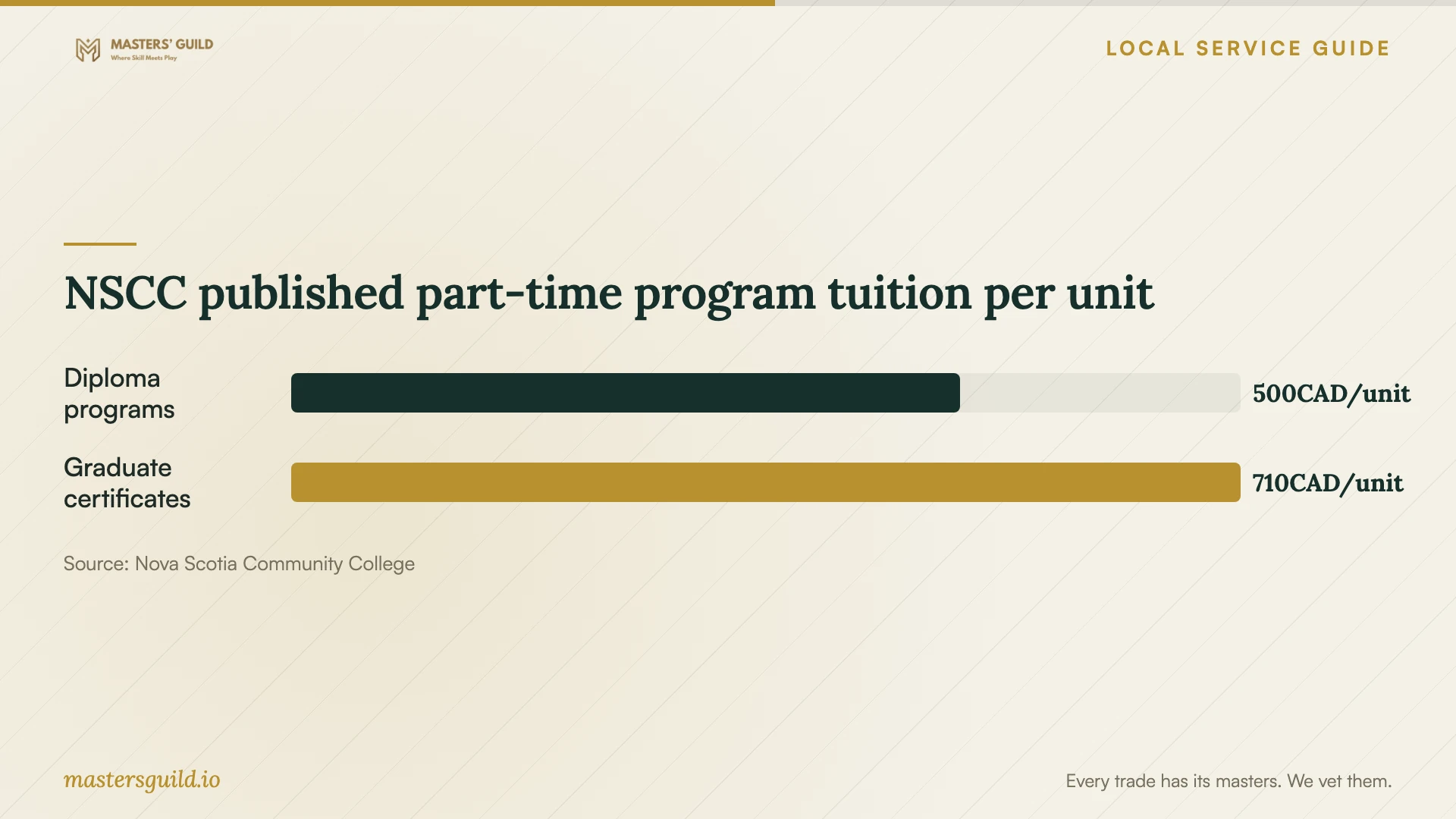
NSCC publishes 2026–27 part-time tuition for students within Canada at CAD 500 per unit for certificate, diploma and advanced diploma programs, and CAD 710 per unit for graduate certificate programs. NSCC defines a unit as four credits or 60 hours. Use these program tuition amounts as a reference when considering formal study; request separate prices for standalone continuing education courses or private instruction. [4]
NSCC also lists separate fees and directs students to program costs for textbooks, supplies, tuition and fees. If an employee needs formal study, compare the specific program’s full cost and schedule with the tailored training proposal. [4]
Prepare employees and protect business information
Before the first lesson, confirm that employees can sign in, open the required applications and access the practice files. Use fictional customer records and remove confidential details from examples. Agree on screen-sharing permissions and whether anyone will record sessions. Have employees enter their own passwords.
For an employee who wants help with basic computer use, email, word processing or a phone, Halifax Public Libraries offers personalized technology sessions at many locations. Some locations offer instruction in other languages. Ask the nearest branch about current availability and topic fit before arranging a separate lesson. [1]
NSCC published part-time program tuition per unit
Local details that affect your job
A provincial coordinator can assess your team’s needs
Halifax employers can explore Nova Scotia’s Workplace Education Initiative through a regional Workplace Education and Training Coordinator. The province describes support for individual businesses and groups of businesses, including needs assessments and tailored program development. Discuss this route before commissioning a full software course. [3]
The fall funding deadline affects preparation
WIPSI’s published fall 2026 intake closes at midnight on October 18. A Halifax business considering this intake needs trainer documentation as well as its own application and budget. Request the letterhead quote, training plan and trainer biography together, then confirm requirements with the program team. [2]
Library help depends on branch availability
Halifax Public Libraries offers one-on-one technology help at many locations, with some multilingual support. The library directs learners to contact their nearest location about current service. Use that conversation to check whether an employee’s basic learning goal fits the available help. [1]
Choose a route for your learning goal
| Your need | Route to consider | Check before arranging |
|---|---|---|
| Basic email or device confidence | Halifax Public Libraries technology help | Ask the branch about availability, topic fit and language support. |
| Team software training | Nova Scotia Workplace Education Initiative | Discuss customized content, participant numbers and scheduling with a coordinator. |
| Technology adoption with a funding application | WIPSI-supported training | Confirm eligibility and assemble trainer documents before the intake deadline. |
| A narrow business project | Private coaching | Request a proposal tied to your workflow and a practical completion test. |
| Formal program study | NSCC | Confirm admission requirements, the specific program price and additional costs. |
Your hiring checklist
- Name the business task employees should complete after training.
- Record starting skills, software versions and access needs.
- Discuss workplace program fit with a regional coordinator.
- Request a trainer outline, relevant background and itemized quote.
- Confirm funding rules before committing to a contract.
- Prepare sanitized practice files and working employee logins.
- Agree on attendance, cancellation and follow-up terms.
- Set a practical completion test using a fresh example.
Frequently Asked Questions
How much should I budget for private training?
Request itemized Halifax training quotes for the same scope. Compare preparation, teaching, materials, travel and follow-up. Keep software subscriptions and employee time in your own budget, and ask how much extra sessions would cost.
Can provincial funding cover the entire cost?
The province describes Workplace Education Initiative training as fully funded. WIPSI is a separate program that may fund up to 75% of eligible costs. Discuss your proposed training with the relevant program team before assuming either route applies. [2] [3]
Can library sessions replace a workplace course?
Ask the branch about your exact learning goal. Halifax Public Libraries lists basic computers, email, word processing and mobile devices among its technology-help topics. For a business-specific workflow, request a training proposal that addresses the task and expected outcome. [1]
How do I assess an instructor’s fit?
Ask for an outline, relevant teaching examples and a sample exercise in your software. Have the instructor explain how they will assess starting skills and adapt the lesson. For WIPSI applications, the province requires trainer biographies or resumes and a trainer’s training plan. [2]
Sources and scope
This guide combines the sources below with practical planning guidance. Figures apply to the stated geography and period; request a written quote for your property.