
Local service guide
Senior care in Halifax: arranging help at home
To arrange senior care in Halifax, start by listing the help needed at home and requesting a Continuing Care assessment at 1-800-225-7225. A care coordinator determines eligibility for public home support and nursing, then confirms applicable costs. Use that assessment to identify any additional private care you want to arrange, with written duties, visit times, charges and backup coverage. [1]
Start with an assessment and a clear task list
Nova Scotia offers home care through Nova Scotia Health. A care coordinator meets with you to assess your needs and determine eligible services. Home support includes personal care, respite and essential housekeeping. Nursing includes dressing changes, catheter care, intravenous therapy and palliative care. [1]
Prepare a description of an ordinary day with the person receiving care. Record help needed with washing, dressing, meals, toileting, moving around the home and overnight routines. Separate tasks the person wants help with from tasks family members have agreed to cover. Include preferences about privacy, language and who may receive updates.
Ask the coordinator which tasks the assessed service will cover and how to report a change in needs. The province warns that demand can lead to a home-care wait list. If your circumstances change while waiting, tell your coordinator so they can update your needs. [1]
Compare private care using a written scope
Give each prospective provider the same care description and requested schedule. Ask them to distinguish companionship, household help, personal care and nursing in their proposal. For medication help, transfers or clinical tasks, request a precise explanation of what the assigned worker will do, their relevant qualifications and who supervises the work.
Request a written total for your proposed week. Ask about minimum visit lengths, evening and holiday charges, travel charges, cancellation terms and any applicable taxes. For overnight care, specify whether you expect someone awake throughout the shift or available to respond when needed. Ask what happens to the price if those needs change.
Before accepting an offer, ask how the provider checks references, protects personal information and handles concerns. Confirm who replaces an absent caregiver and whom you contact after a missed visit. Request a sample visit record and agree on which family member, with the care recipient’s consent, will receive updates.
Plan respite and safer assistance at home
Nova Scotia Health describes in-home respite as a planned, temporary break from caregiving responsibilities. Contracted home care agencies provide the service. Families can request an assessment through Continuing Care at 1-800-225-7225; the program lists contact hours of 8:30 a.m. to 4:30 p.m. daily. [3]
For a respite request, describe the duties someone must cover while you are away. Include the proposed hours, meal routine, personal care needs and instructions for contacting you. Ask what coverage the assessed service can provide before committing to a recurring private arrangement.
In Central Zone, HRM, Continuing Care community occupational therapists and physiotherapists assess people in their homes when they cannot attend outpatient appointments or when the home environment needs assessment. Their work can include equipment recommendations, falls prevention, exercises and caregiver education. Ask about this service before deciding how a caregiver should assist with movement. [2]
Review care as needs change
A public home-care coordinator checks in with the person receiving care, caregivers and service providers, and adjusts services to reflect changing needs. If home care cannot meet those needs, the coordinator can help consider other options, including long-term care. [1]
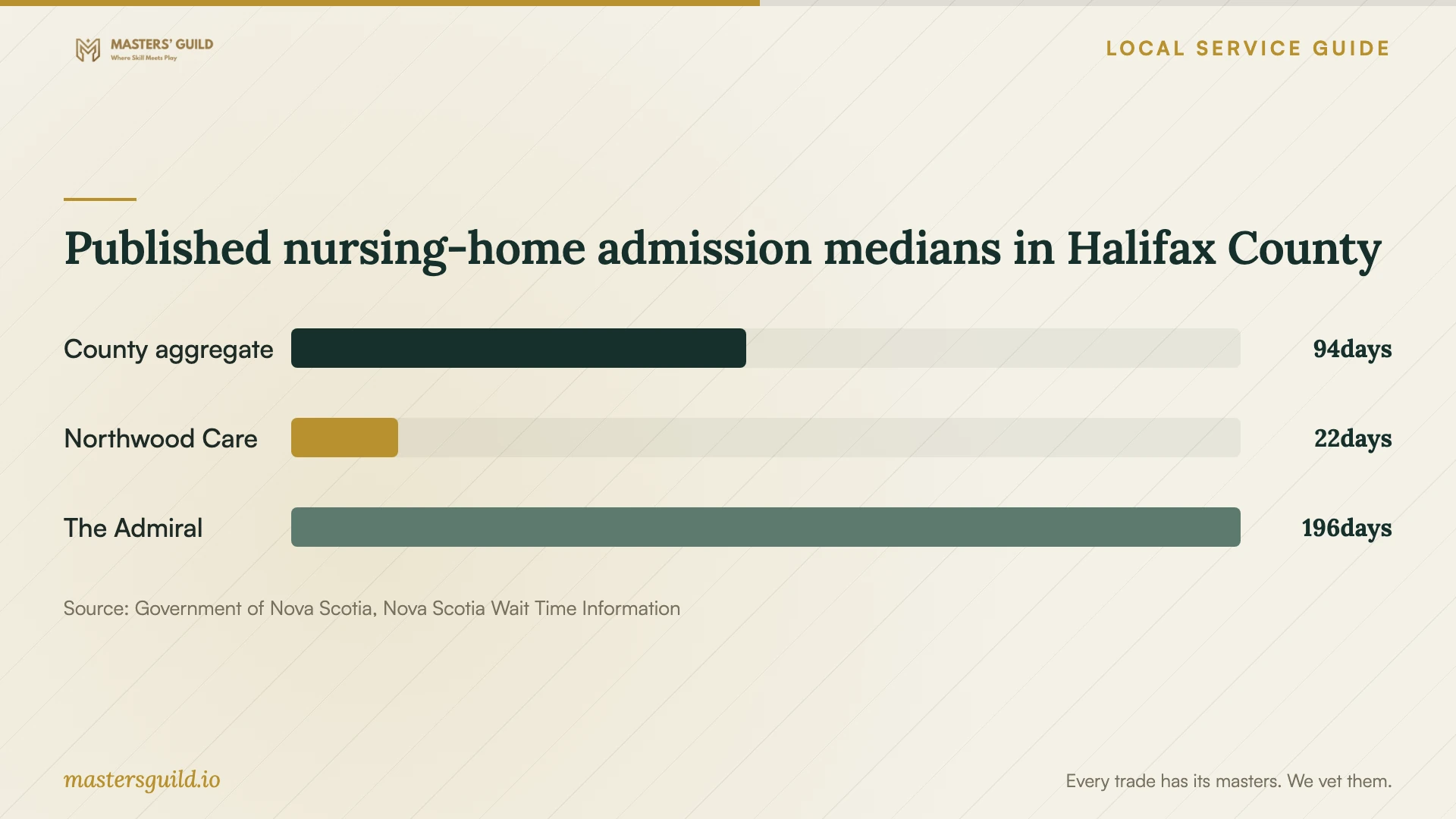
For a nursing-home transition, discuss interim support with the coordinator and ask private providers for cancellation and schedule-change terms. The provincial wait-time figures describe completed admissions. Individual waits vary with care needs, risk factors, facility choices and bed availability, so avoid treating a published median as a move-in date. [4]
For concerns about public home-care scheduling, shortened visits, cancellation fees or care quality, the province directs you to the service provider first. If you remain dissatisfied, contact your care coordinator. For disagreement with an assessment, ask the coordinator how to request a decision review. [1]
Published nursing-home admission medians in Halifax County
Local details that affect your job
HRM has a specific home rehabilitation route
Nova Scotia Health restricts Continuing Care community rehabilitation services to Central Zone, HRM. The program lists 902-487-0622, Monday to Friday, 8:00 a.m. to 4:00 p.m. It describes self-referral but also states that a referral is required and that some circumstances require a health professional’s referral. Ask the team which route applies before arranging an assessment. [2]
Check provincial caregiver support alongside paid help
Nova Scotia’s Caregiver Benefit pays $400 per month when both parties qualify. The caregiver must provide at least 20 hours of assistance per week and must not already receive payment for that assistance. The care recipient must meet income and assessed impairment criteria. Ask Continuing Care about eligibility; do not include the benefit in your budget until eligibility is confirmed. [5]
Choose the next step for your care needs
| Your situation | Route to discuss | Question to resolve |
|---|---|---|
| Help with personal care or essential housekeeping | Continuing Care home-support assessment | Which tasks qualify, what will they cost and when can visits start? |
| Dressing changes or catheter care | Continuing Care nursing assessment | What nursing support can the assessed service provide? |
| A family caregiver needs planned relief | In-home respite assessment | What duties and hours can respite cover? |
| Movement or equipment needs assessment at home | Central Zone community occupational therapy or physiotherapy | Does the person qualify, and which referral route applies? |
| Needs exceed available home care | Care-coordinator discussion about other options | What interim support and long-term-care planning are appropriate? |
Your hiring checklist
- Write the care plan with the person receiving care and record their preferences.
- List agreed family coverage and the gaps you want a provider to cover.
- Prepare questions about public services, charges and any waiting period for the assessment.
- Request comparable written quotes for the same duties and weekly schedule.
- Confirm worker qualifications for each proposed task and ask about supervision.
- Agree on absence cover, missed-visit contacts and cancellation terms.
- Set a review date and decide who will report changes in needs.
Frequently Asked Questions
Is public home care free?
Some services, including nursing, are free. Home-care charges depend on income and the services needed. Your care coordinator confirms costs during assessment. Ask for that information before deciding how much additional private care to budget for. [1]
Can I arrange respite for a family caregiver?
Nova Scotia Health offers assessed in-home respite through contracted home care agencies. It provides a planned, temporary break for caregivers. Contact Continuing Care at 1-800-225-7225 to request assessment and ask about fees and available coverage. [3]
Does the Halifax County nursing-home median predict our wait?
No. The published median describes historical completed admissions, excluding emergency admissions and transfers between facilities. Your wait can differ because of care needs, risk factors, chosen facilities and bed availability. Discuss interim care without assuming a specific admission date. [4]
What should I ask about an overnight private care quote?
Specify whether you need an awake worker or someone available to respond. Describe expected assistance, ask how interruptions affect the charge and confirm replacement coverage. Request the total for your proposed schedule and the terms for changing it.
Sources and scope
This guide combines the sources below with practical planning guidance. Figures apply to the stated geography and period; request a written quote for your property.